
随着传统的核心家庭在二十世纪作为主导空间的解体,在无序扩张后的城市中,需要一种新的家庭生活类型。庭院式住宅通过将传统的单户住宅集中到一个庭院式住宅中,重新构想了低密度的都市生活。
With the disintegration of the traditional nuclear family as the dominant spatial fix in the Twentieth Century, a new typology for family life is needed for the city post-sprawl. The Courtyard House re-conceives low-density metropolitan living by concentrating the traditional single-family residence into a courtyard house.
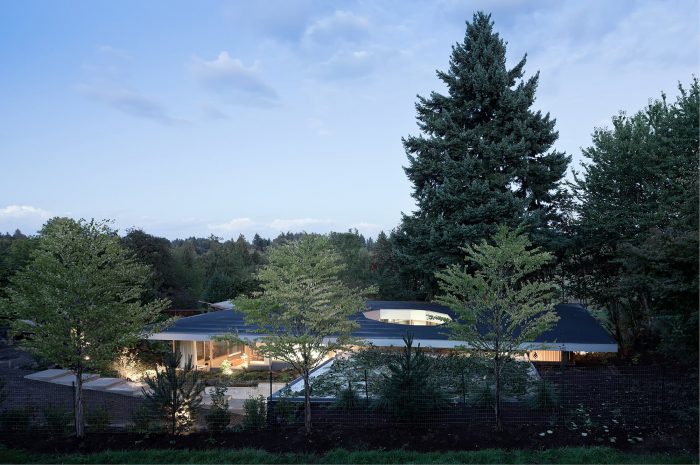
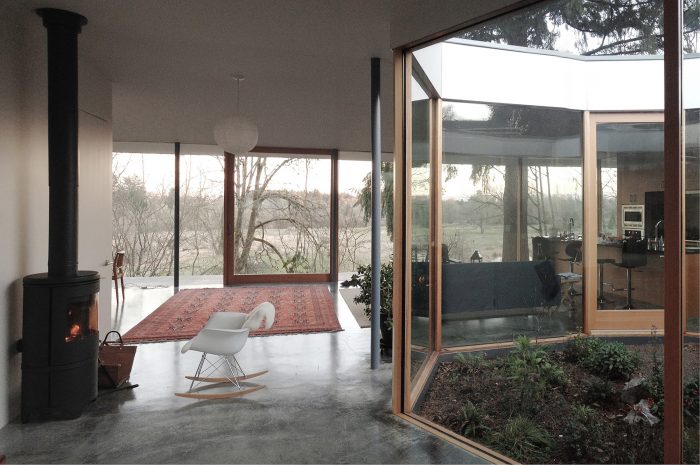
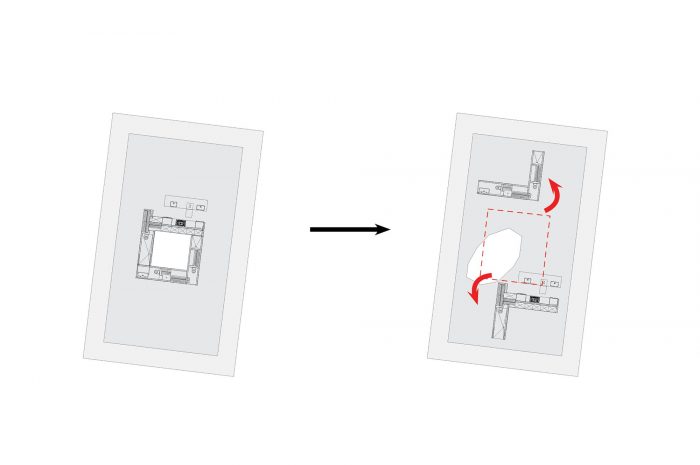
通过利用边缘场地和将传统住宅缩小1/3的规模,庭院住宅在不牺牲日常生活中必要的隐私的情况下,支持更多的集体和生态的生活形式。这种新的组织,一个水平的空间星座,从个人到集体的变化,同时将外部环境延伸到内部并扩大其社会性。在那里,跨代的家庭和朋友之间可以形成共同居住的活动,同时满足分散的老龄人口的新需求。
By utilizing a marginal site and downsizing the conventional house by 1/3, the Courtyard House sponsors more collective and ecological forms of life without sacrificing the necessary privacy of daily living. This new organization, a horizontal constellation of spaces, varies from individual to collective, while extending the exterior environment inside and expanding it socially. There, co-habitational activities may be forged between inter-generational families and friends, while fulfilling the new demands of a dispersed aging population.
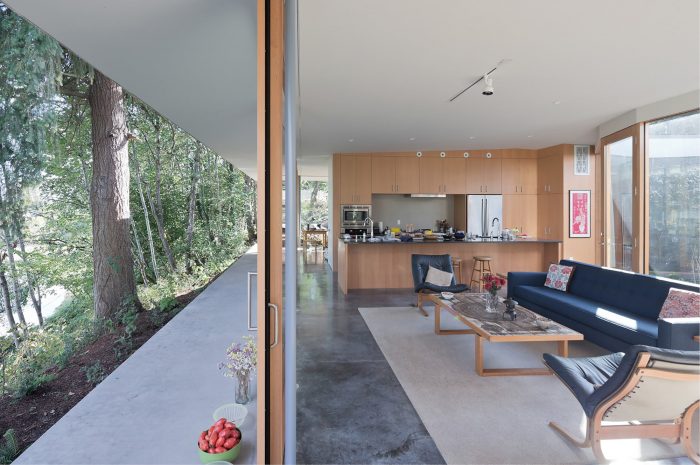
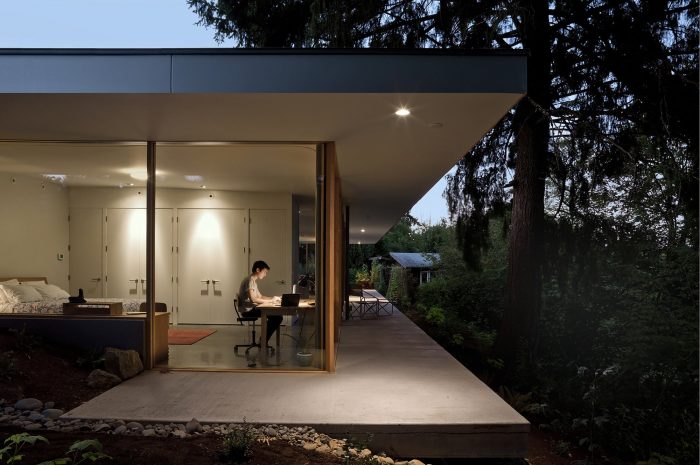
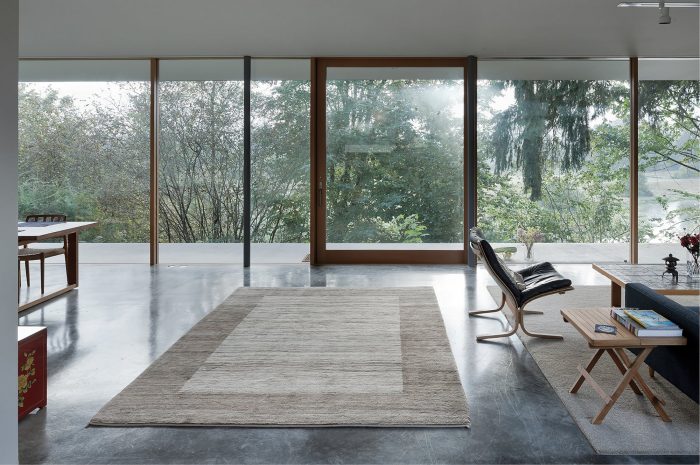
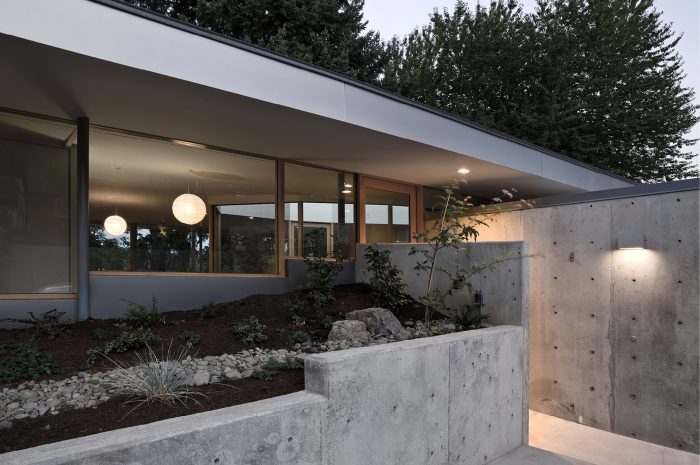
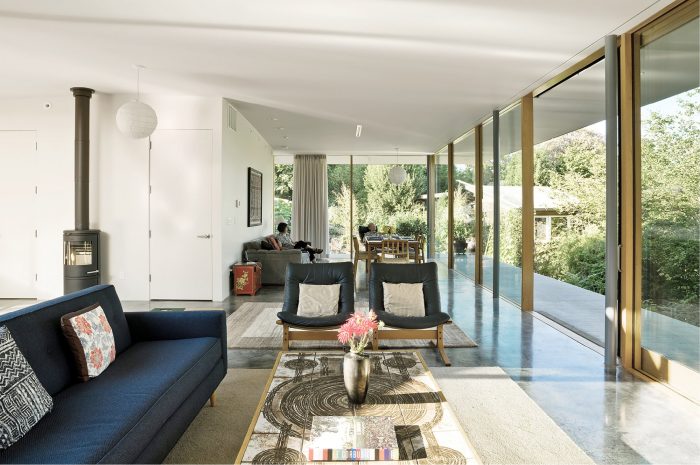
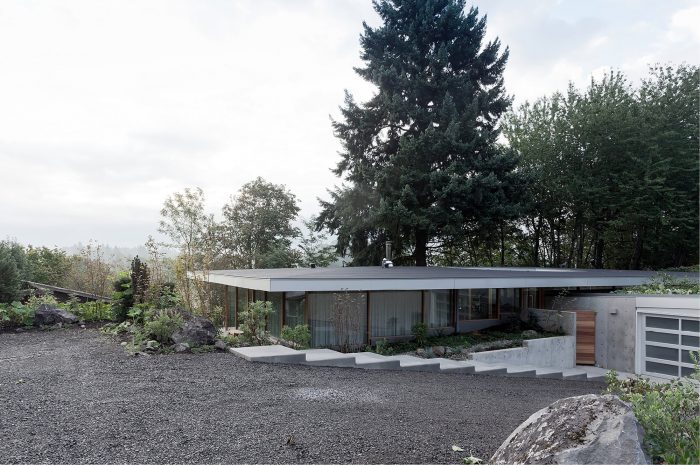
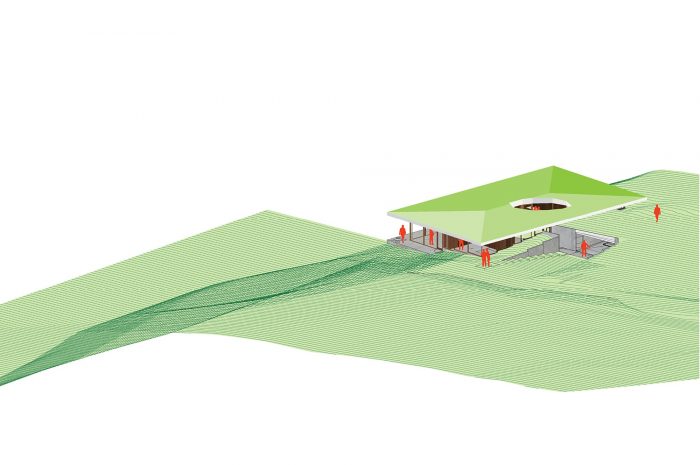
与传统的住宅相比,庭院住宅被规划为一个包含在现代主义板块中的居住景观:一个单层压缩在地板和屋顶平面之间。一个玻璃包层从屋顶边缘后退,创造了一个环绕式的有顶平台,通过物理和公共连接内部和外部,激活了周围的景观。在内部,这些房间被设想为一个连续的活动空间。每个房间都配备了不同的日常生活表演,以外部为框架,暗示了建筑的简单性和建筑与植物的和谐。
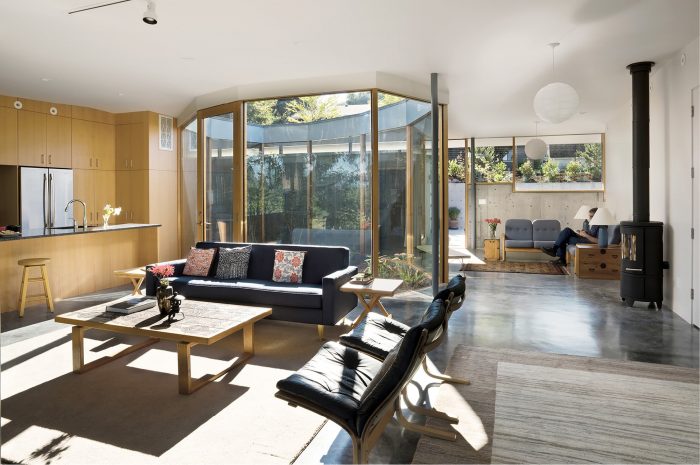
In contrast to a conventional residence, the Courtyard House is programmed as an inhabited landscape contained within a modernist slab: a single level compressed between a floor and roof plane. A glass wrapper is setback from the roof's edge to create a walk-around covered terrace that activates the surrounding landscape by physically and communally connecting inside to out. Inside, the rooms are conceived as a continuous sequence of event spaces. Each room is equipped for the varying performances of daily living, framed by the outside, suggesting an architecture of simplicity and harmony between the built and the vegetal.
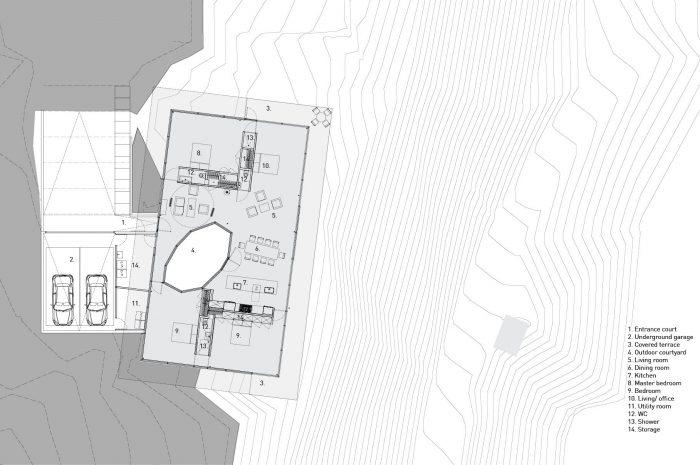
从一个地下车库进入,房子的六个空间围绕着一系列独立的浴室和储藏室核心连续流动,这些核心聚集和分散,使房间可以作为一个单一的阁楼或一系列的独立房间来体验。在最大限度地增加可用空间的同时,也最大限度地减少了浪费,每个存储核心都包含了日常生活的所有要求,厕所、淋浴、壁橱等;允许每个房间在开放时集体体验,或在关闭时私下体验。因为没有一个房间像传统住宅那样被分割和隔离,所以每个房间都可以在白天成为生活空间,在晚上成为睡眠空间。内部连续的周边循环与外部有顶的屋顶露台平行。
Entered through an underground garage court, the house's six spaces flow in a continuous loop around a series of separate bathroom and storages cores that flock and disperse to allow the rooms to be experienced as a single loft or as a series of individual rooms. Maximizing usable space while minimizing poché, each storage core contains all of the requirements of daily living, WC, shower, closets, etc; allowing each room to be experienced collectively when open or privately when closed. Because no room is compartmentalized and isolated as in a conventional home, every room can be a living space during the day and a sleeping space at night. Continuous perimeter circulation inside parallels the covered roof terrace outside.
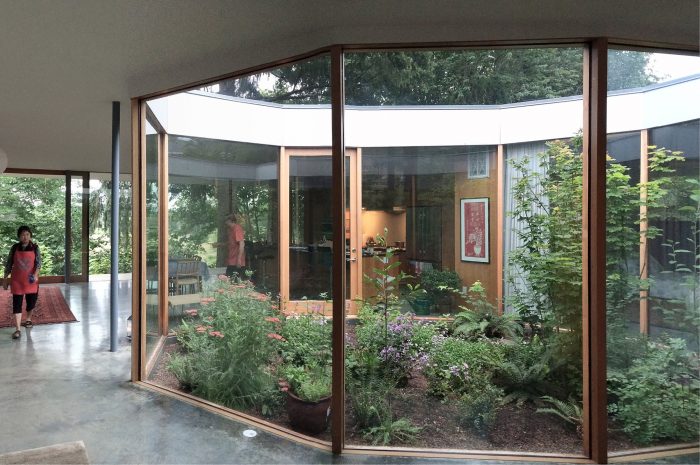
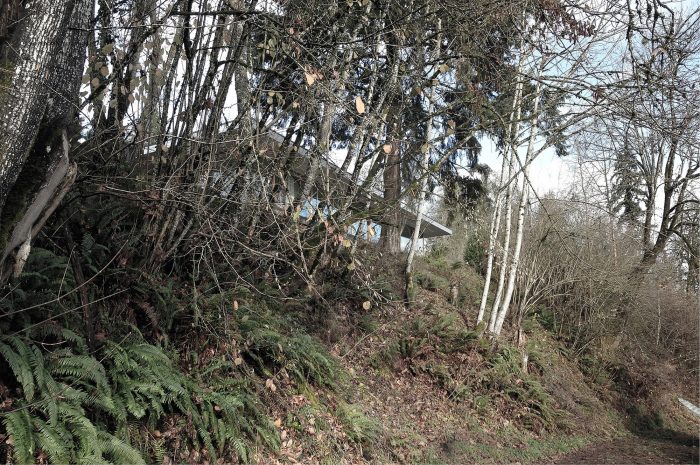
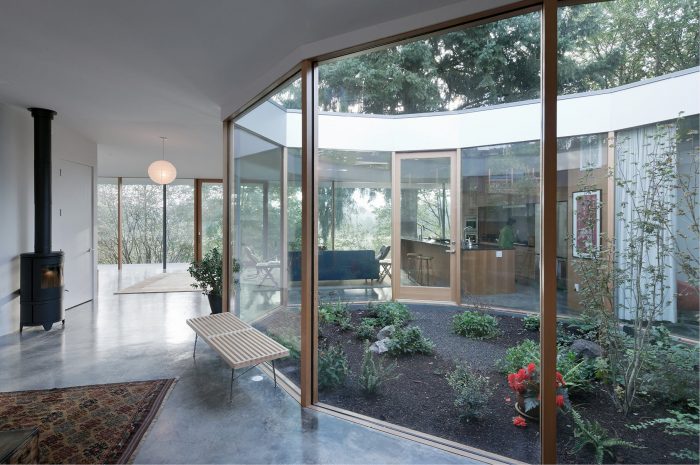
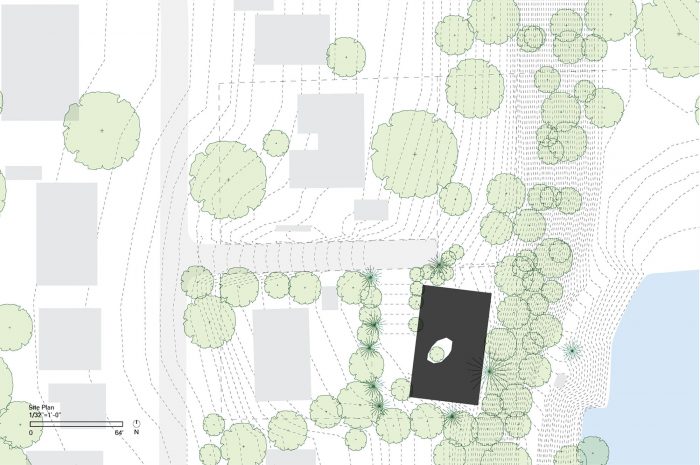
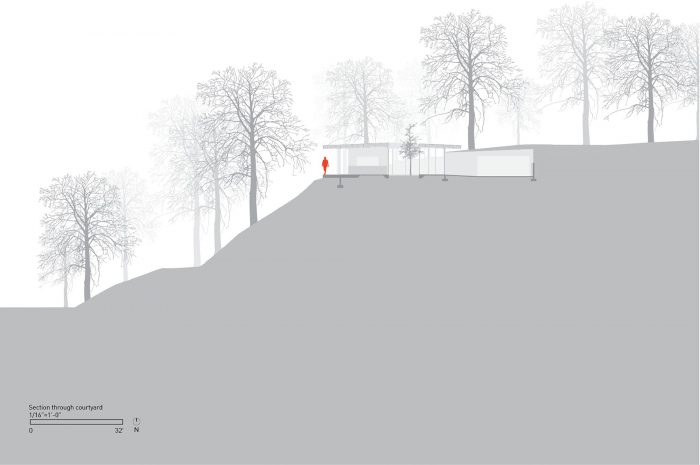
框住中央生活空间的是一个单一的院子。院子的种植延续了周围的本土景观,被设想为一个空间分隔物,就像一个家庭营地,以巩固和分享日常生活中的欢愉和负担,而不会在晚上感到过于拥挤。院子在平面上被挖掘出来,以优化视野和被动的太阳增益,让光线和空气进入室内,同时将房子沉入山坡,以最大限度地提高隔热性和与城市环境的亲密关系。
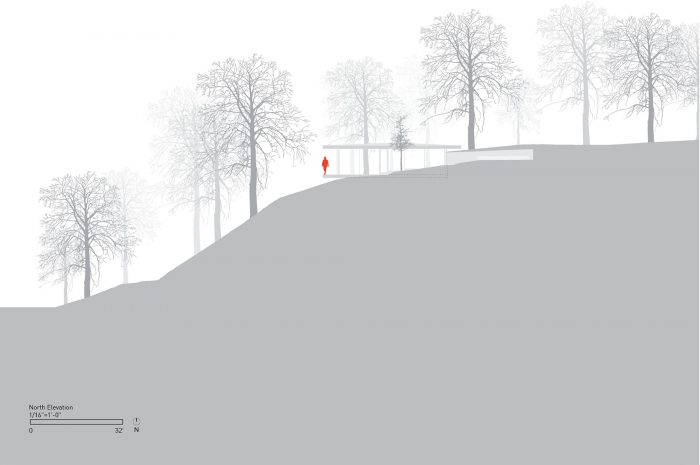
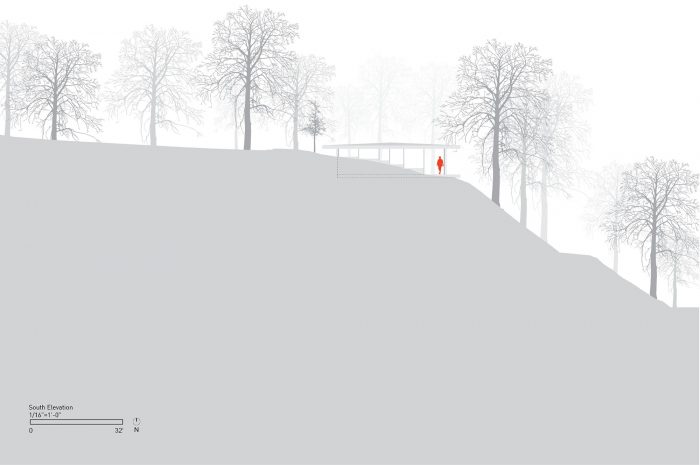
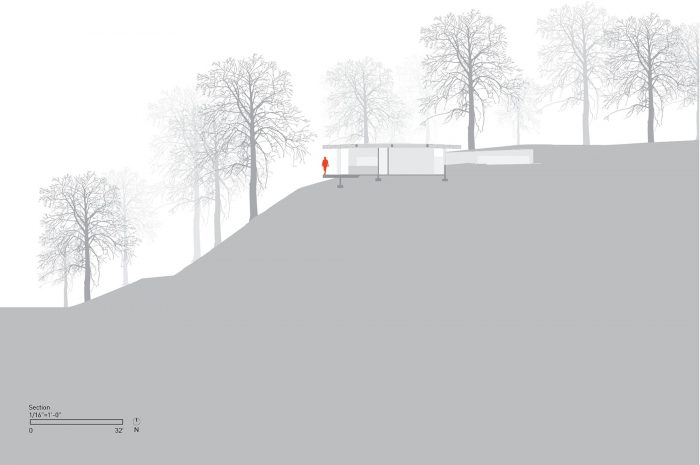
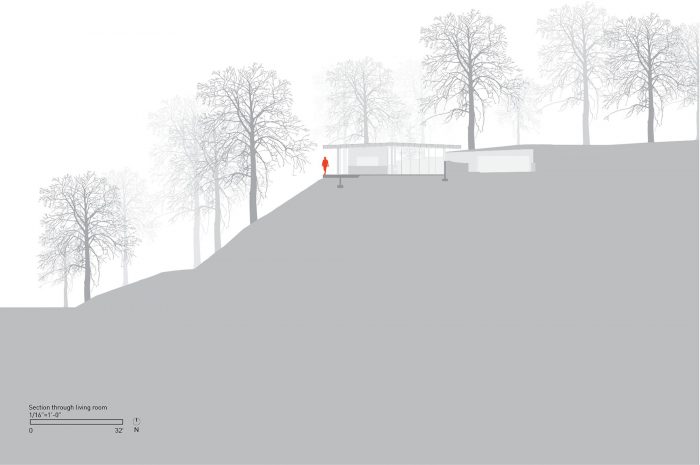
Framing the central living spaces is a single courtyard. Planted to continue the surrounding indigenous landscape, the courtyard is conceived as a spatial divider, like a family camp, to consolidate and share the conviviality and burdens of daily living without feeling overcrowded at night. The courtyard is excavated in plan to optimize views and passive solar gain, allowing light and air inside, while sinking the house into the hillside to maximize thermal insulation and intimacy from the urban context.
Architects: NO ARCHITECTURE
Year : 2013
Photographs :Iwan Baan, Michael Weber, NOA
Collaborators : WBS Construction Inc., Madden & Baughman
Budget : $575.000
Architect In Charge : Andrew Heid
Project Team : Christopher Purpura, Jack Hogan, Noa Peer
City : Aurora
Country : United States