
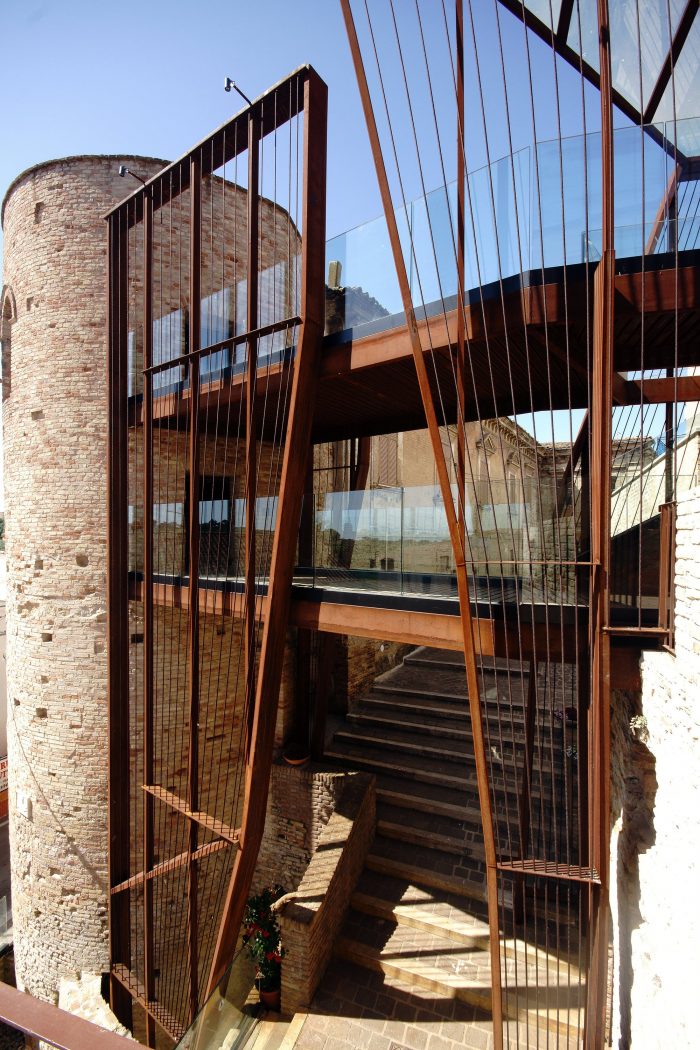
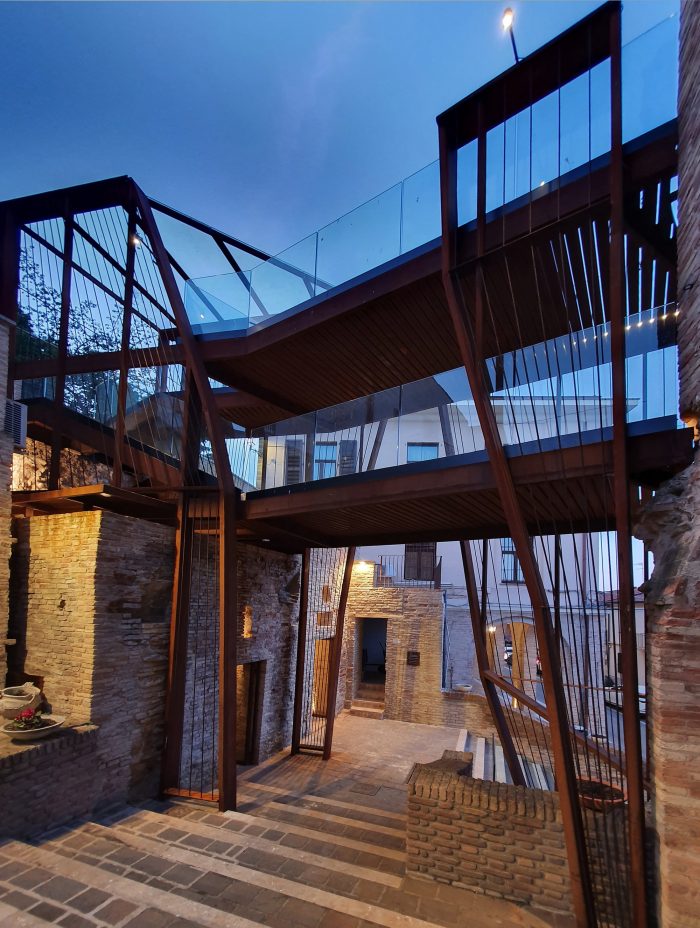
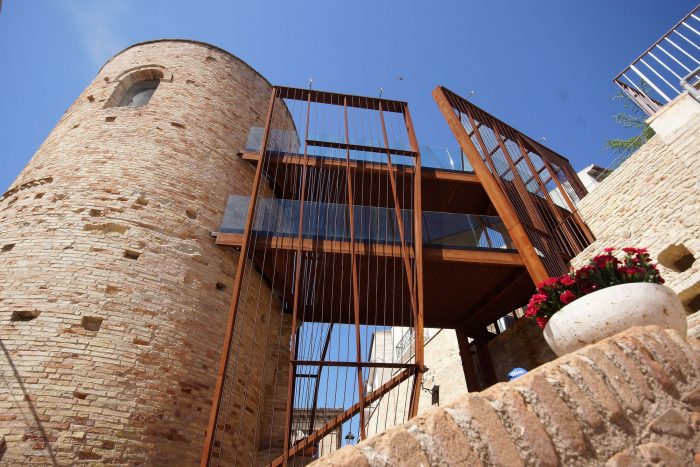
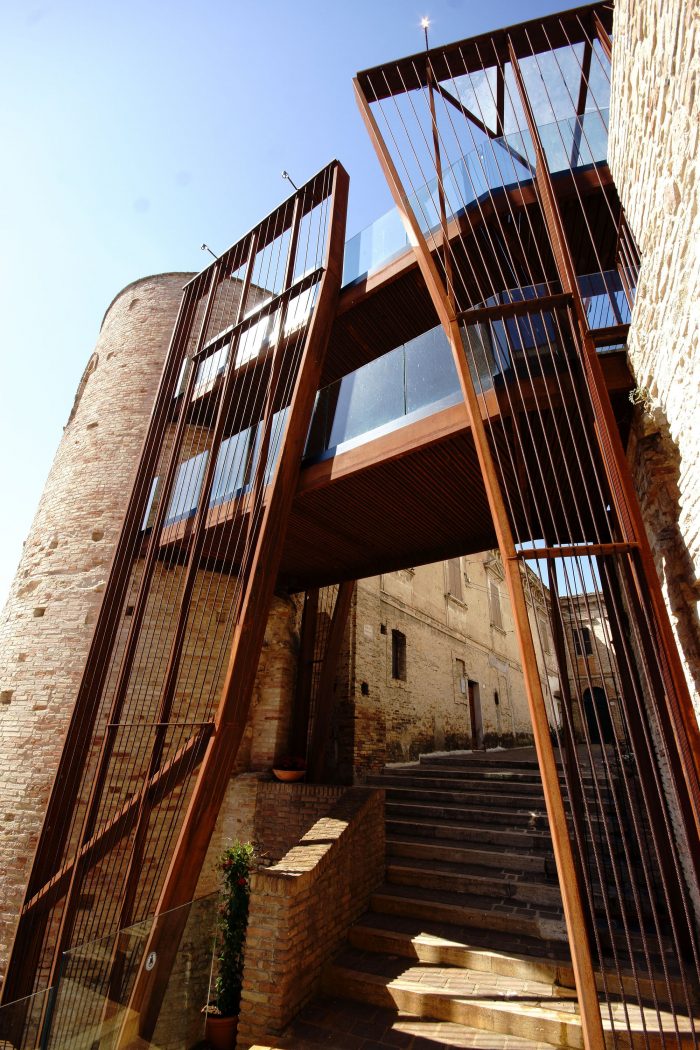
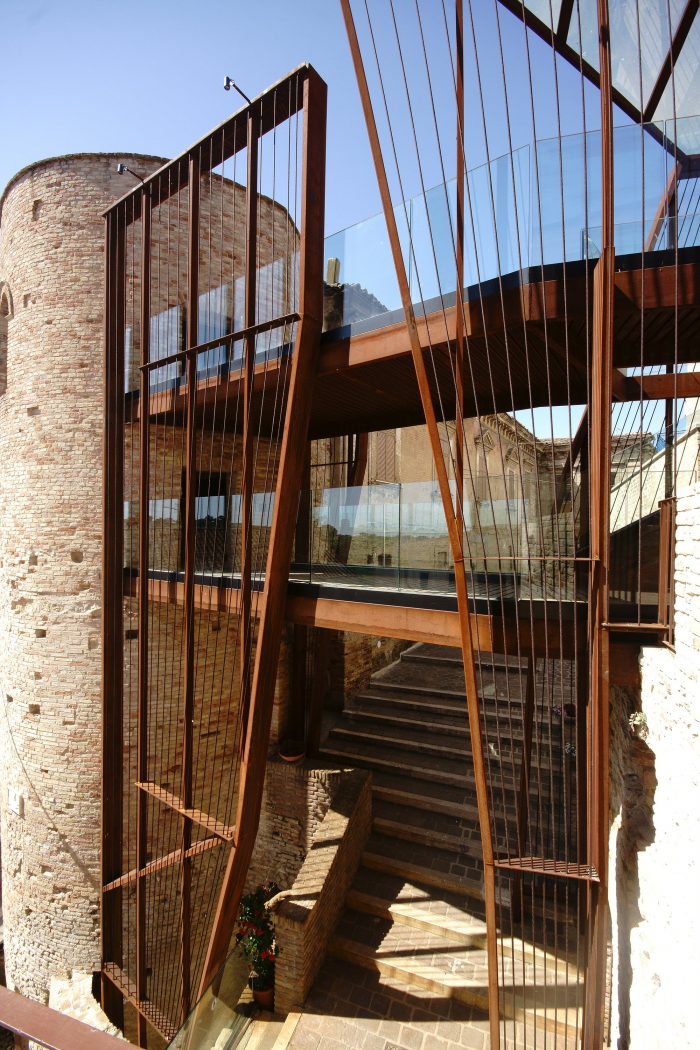
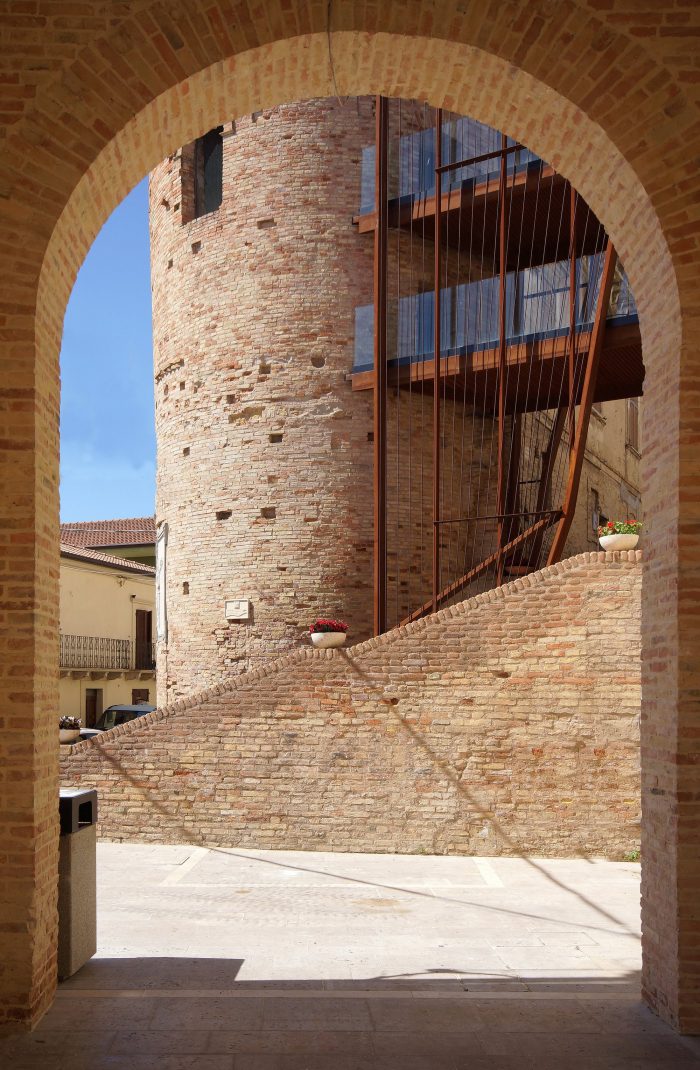
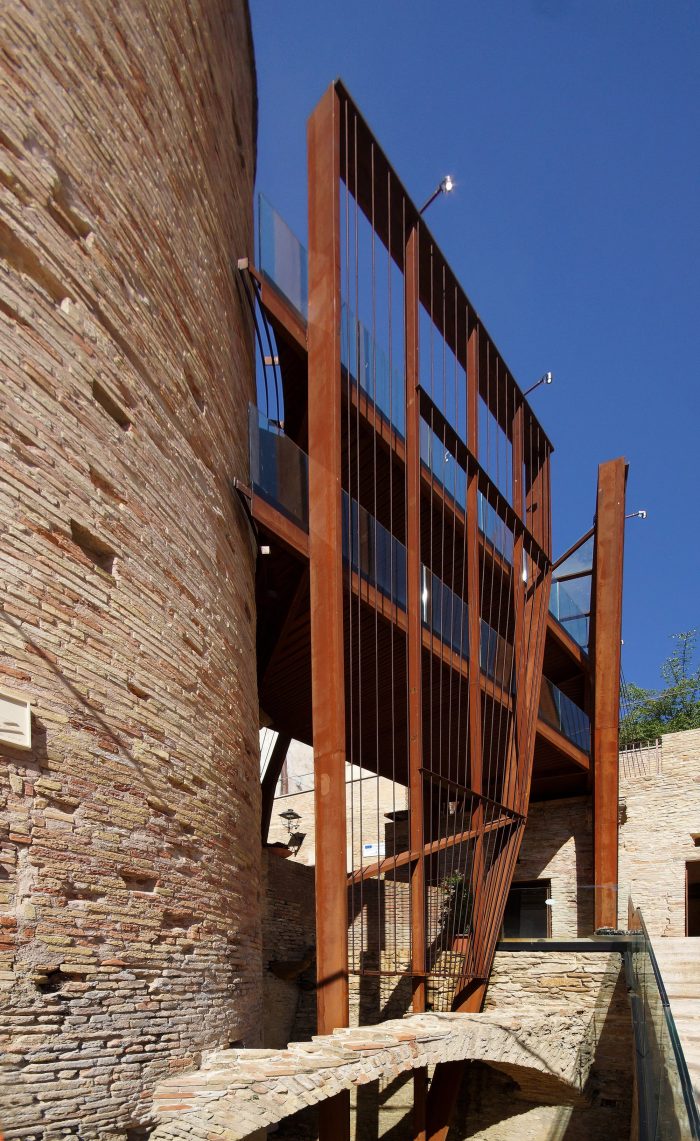
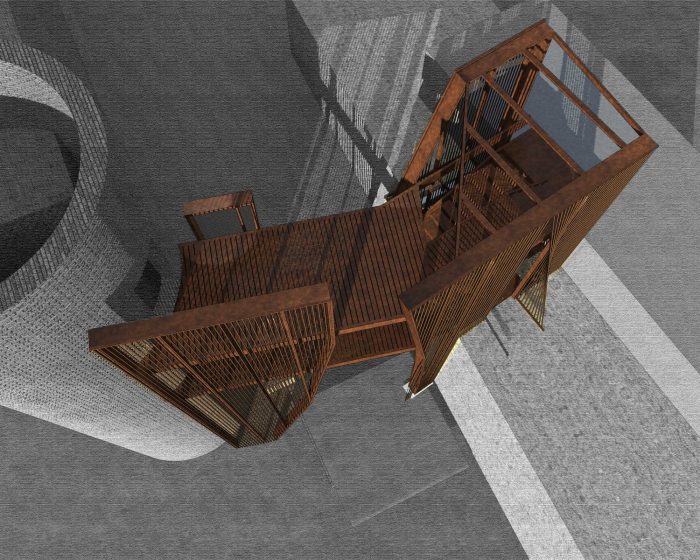
Ripa Teatina的废墟 "Porta Gabella "通过插入一个明显区别于背景的建筑元素,即一个由垂直弦线围成的cor-ten钢结构,通过一个充满中世纪建筑回声的现代语言,得到了恢复。对中世纪大门的梦幻般的诠释,其形状暗示了两个向外开放的风格化门叶的隐喻形象。
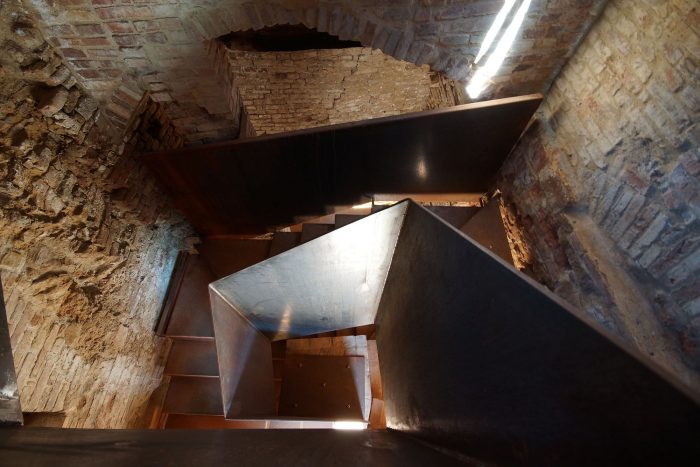
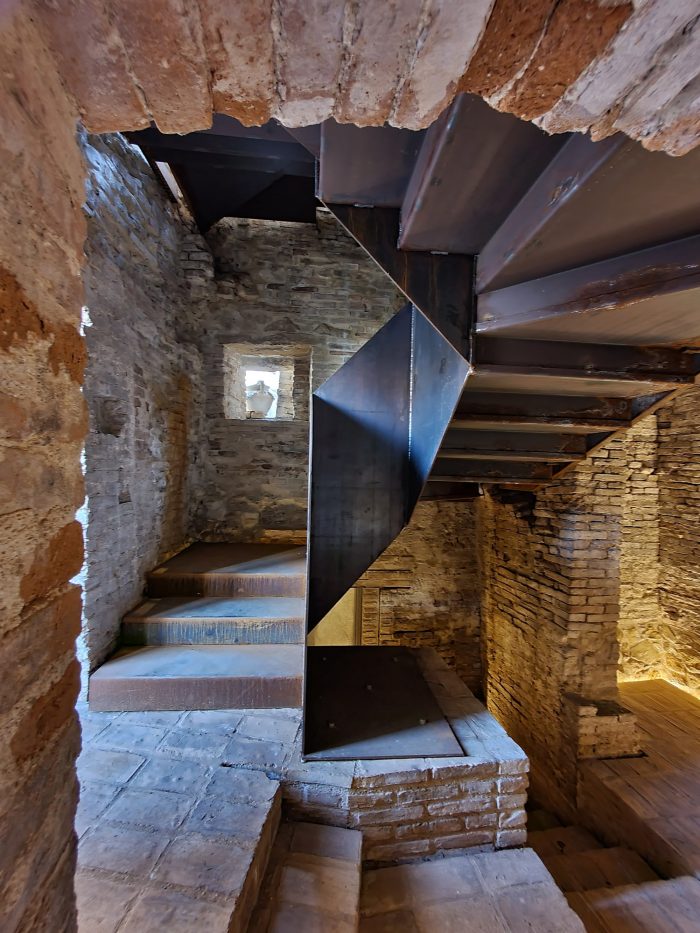
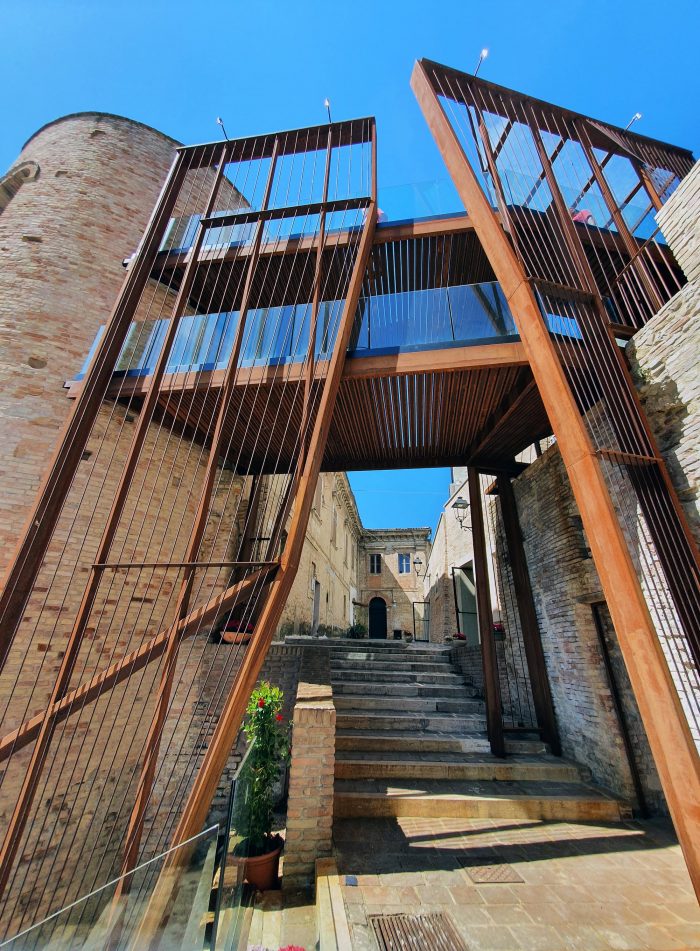
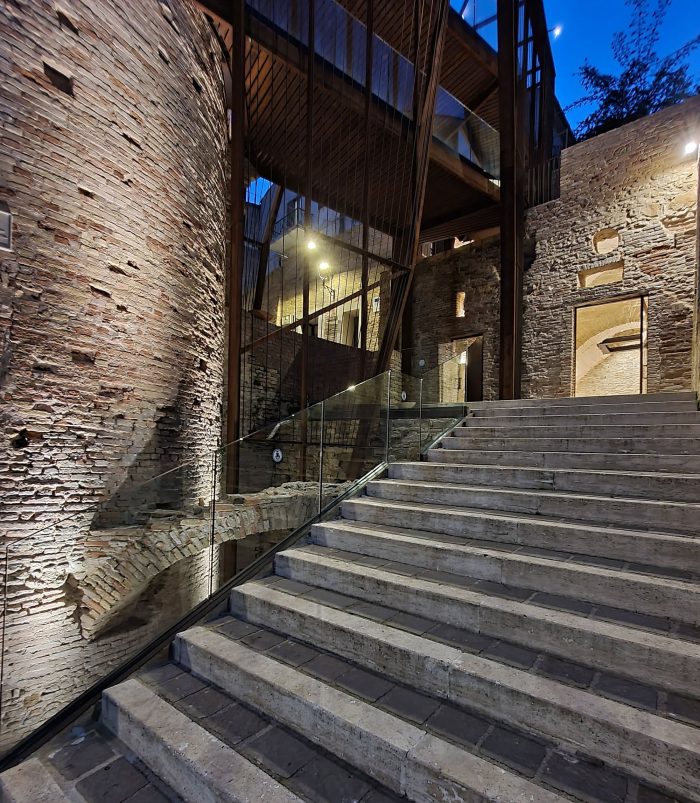
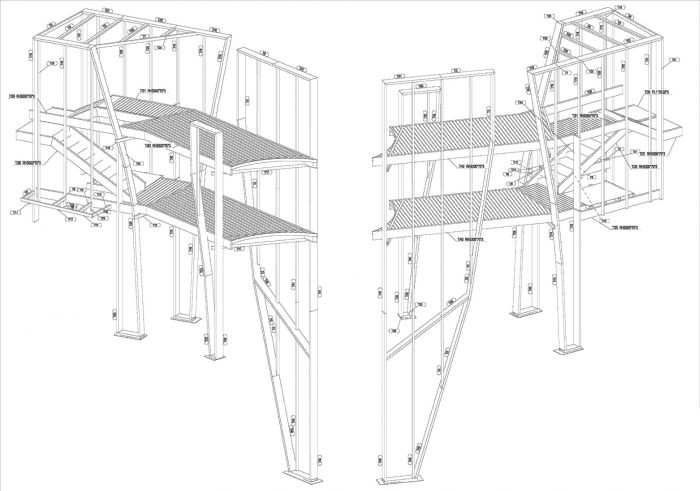
The ruined “Porta Gabella” of Ripa Teatina has been revived with the insertion of a clearly distinguishable architectural element from the context, a cor-ten steel structure, enclosed by an envelope of vertical strings, through a contemporary language full of echoes of medieval architecture. A dreamlike interpretation of the medieval gate, its shape suggests a metaphoric image of two stylized door leaves that open outwards.
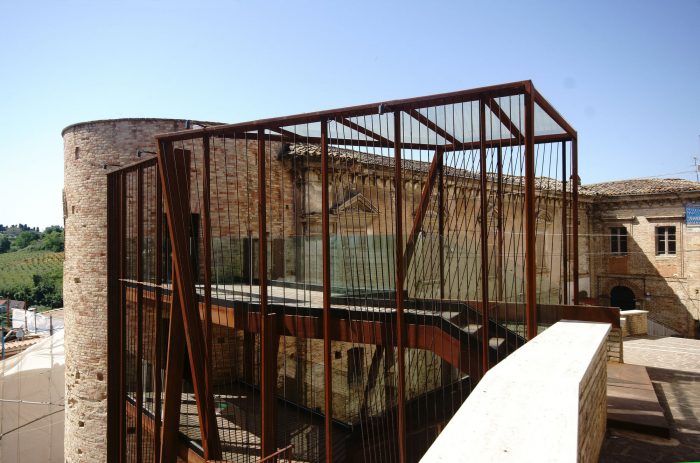
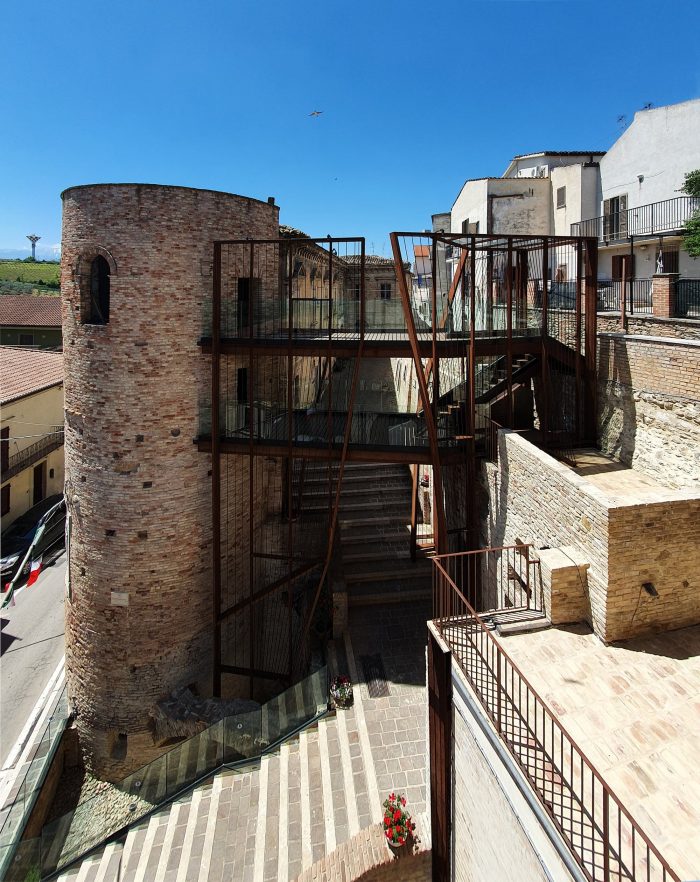
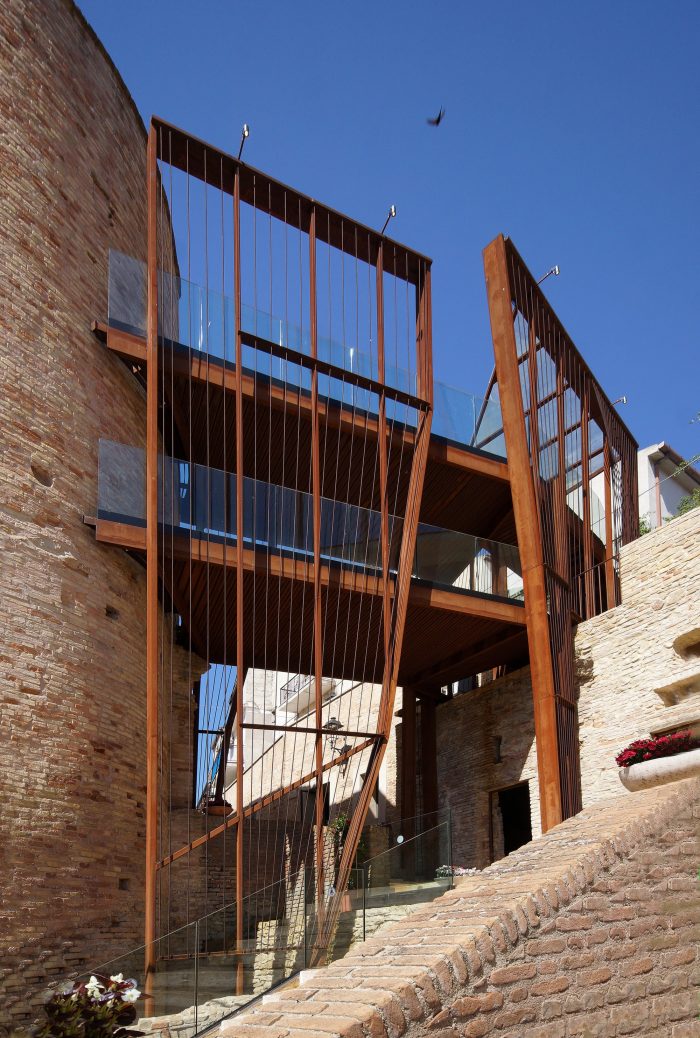
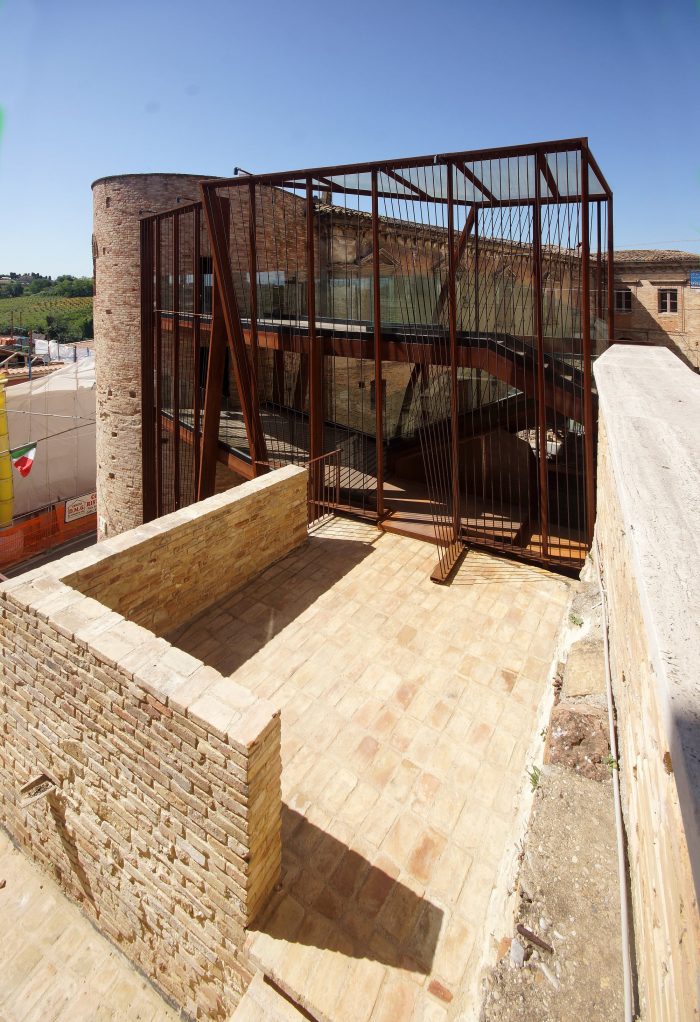
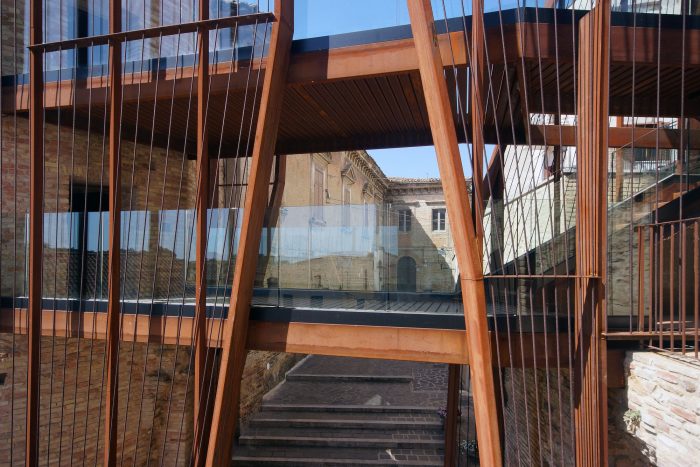
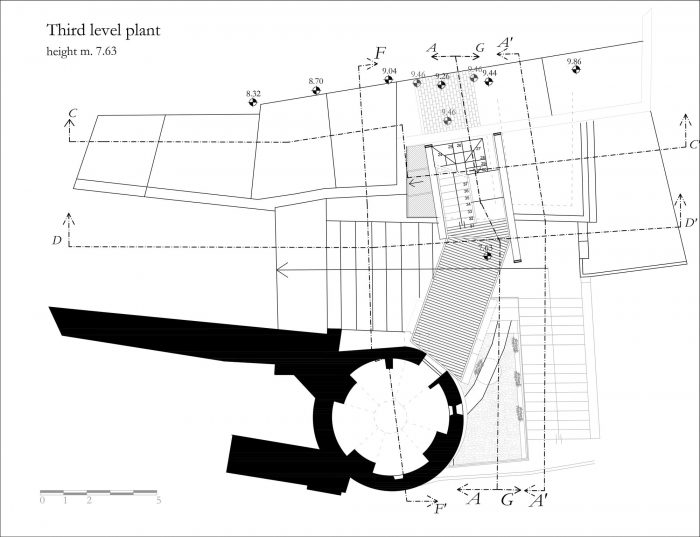
连接各个结构的悬空走道,从中世纪的木质走道中获得灵感,倚靠着防御墙,使防御塔之间得以连接。主要目标是用一个多功能的结构来缝合城市结构,能够连接古老的环境和老城区的人行道,但也要创造一个能够变成户外舞台的结构,用于音乐和艺术表演。
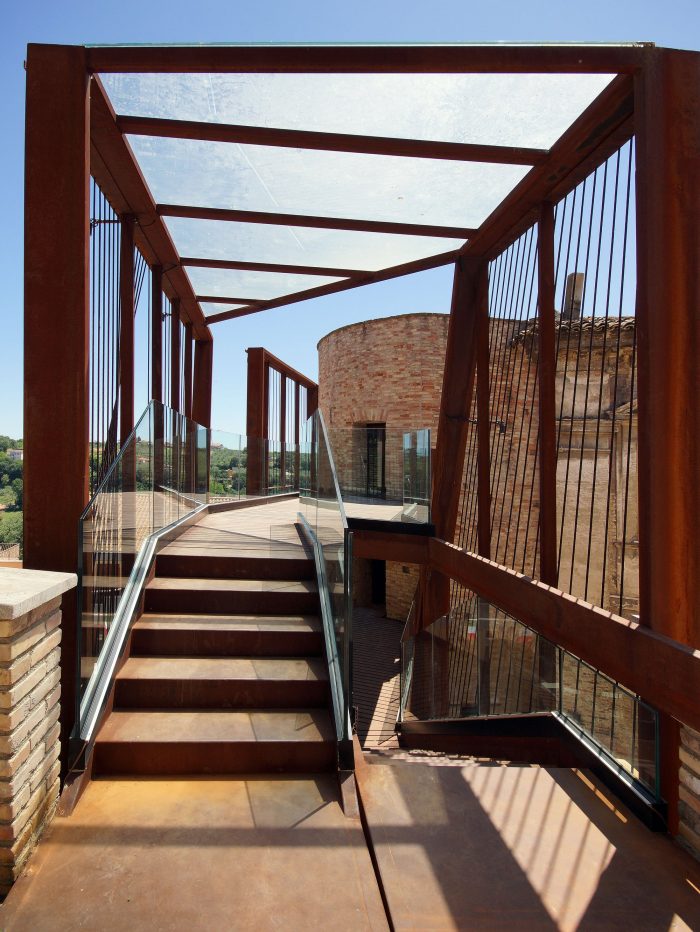
The suspended walkways, that connect the various structure, take inspiration from the medieval wood walkway, leaning against the fortification walls that allowed the connection between the defensive towers. The main goal was to sew up the urban fabric with a polyfunctional structure able to connect the ancient environments and the pedestrian pathways of the old town but also to create a structure capable to turn in an outdoor stage for musical and artistic performances.
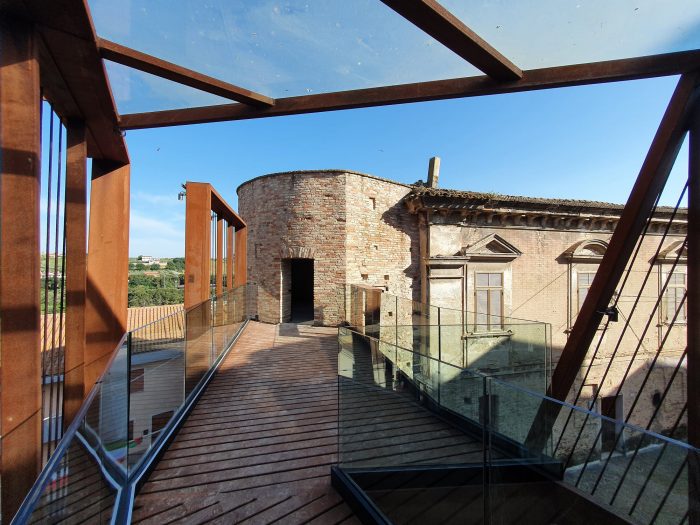
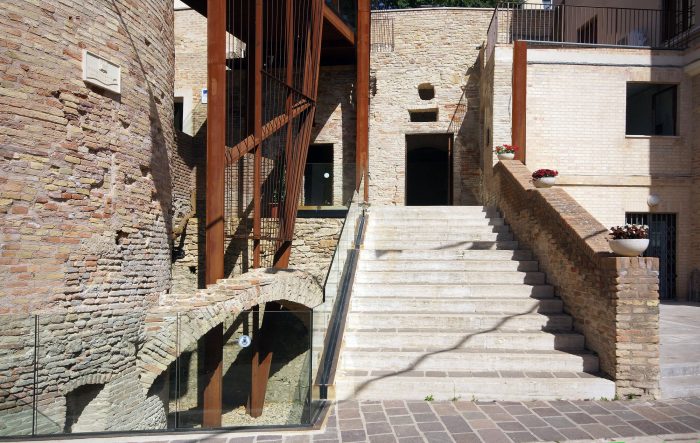
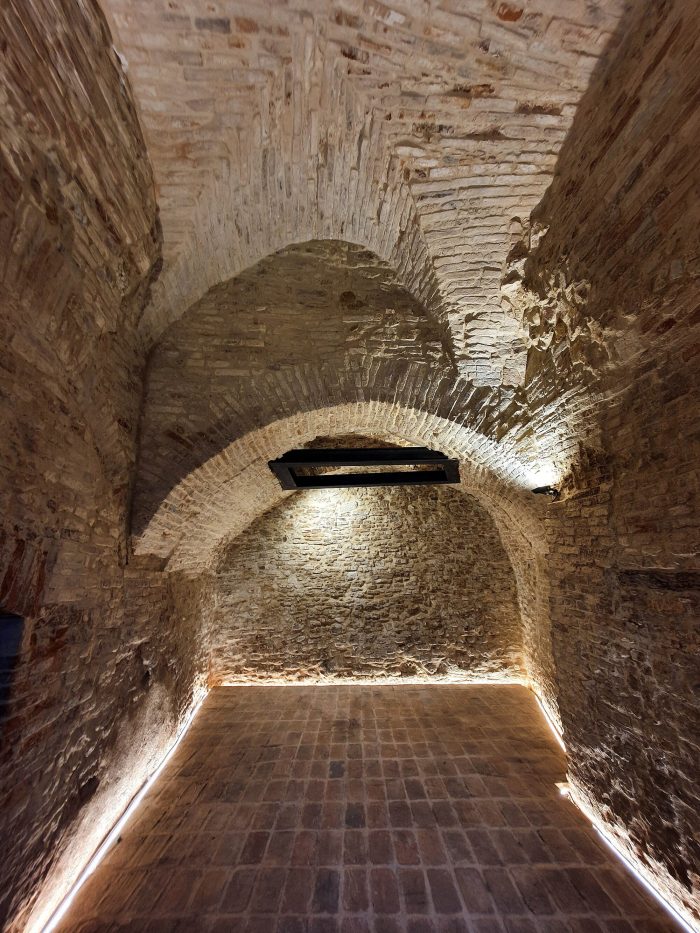
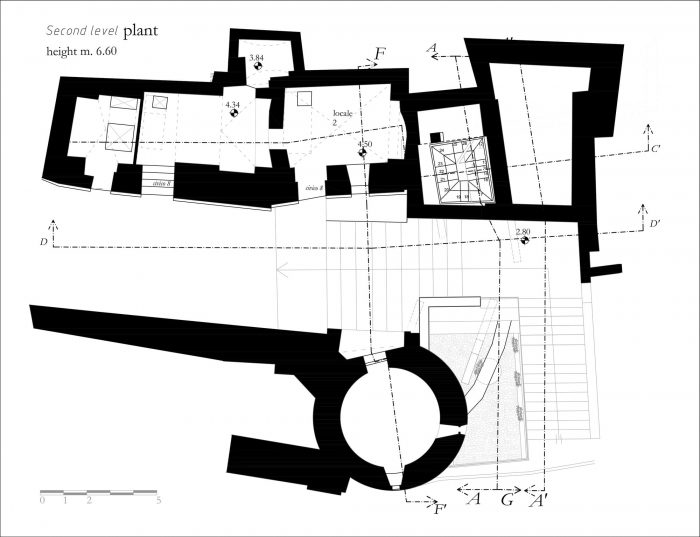
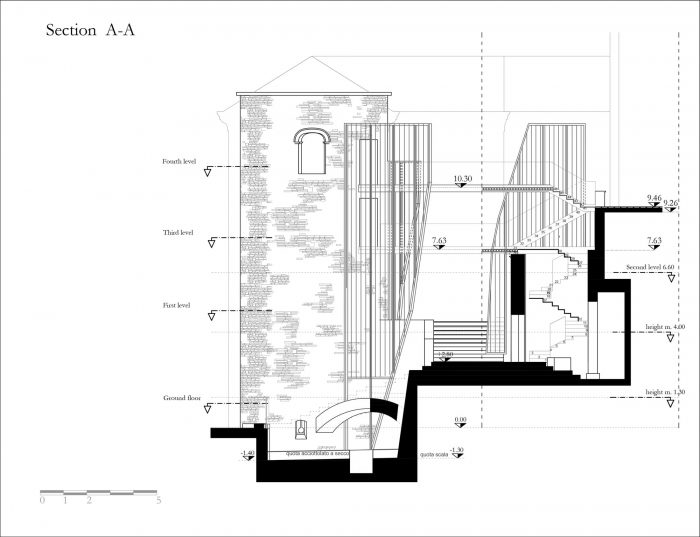
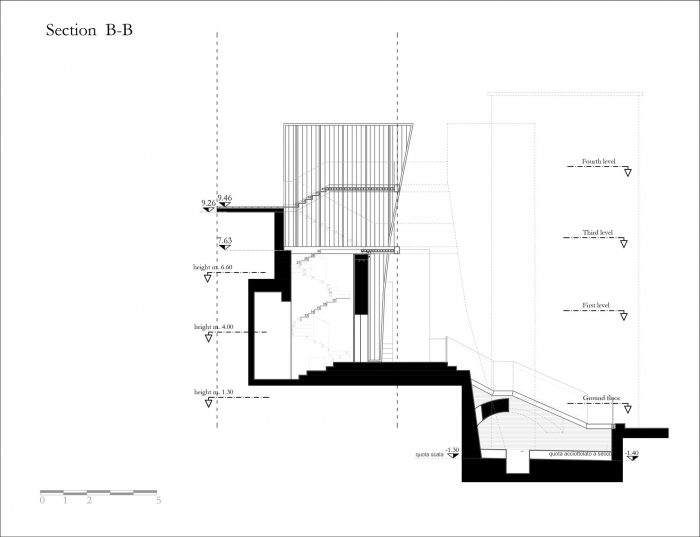
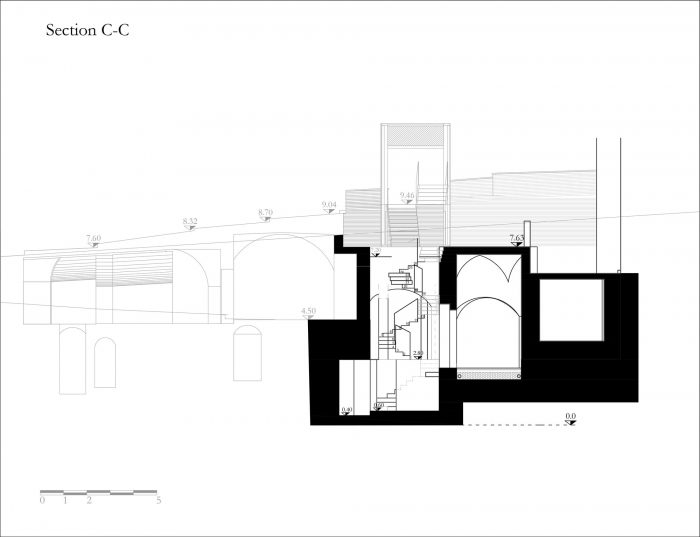
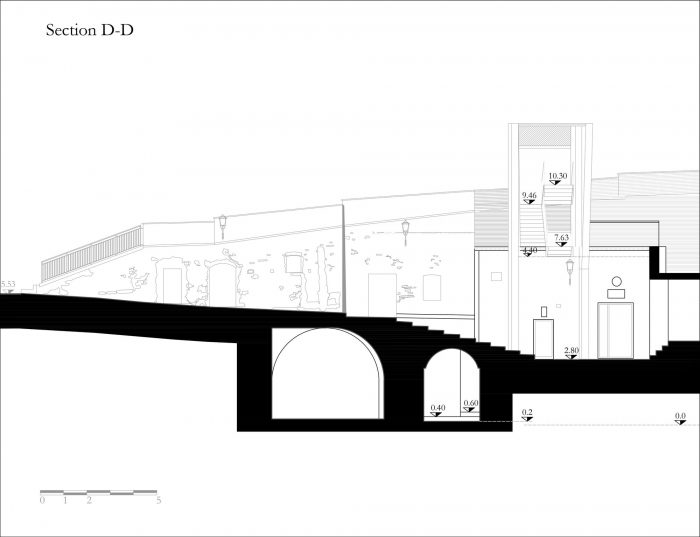
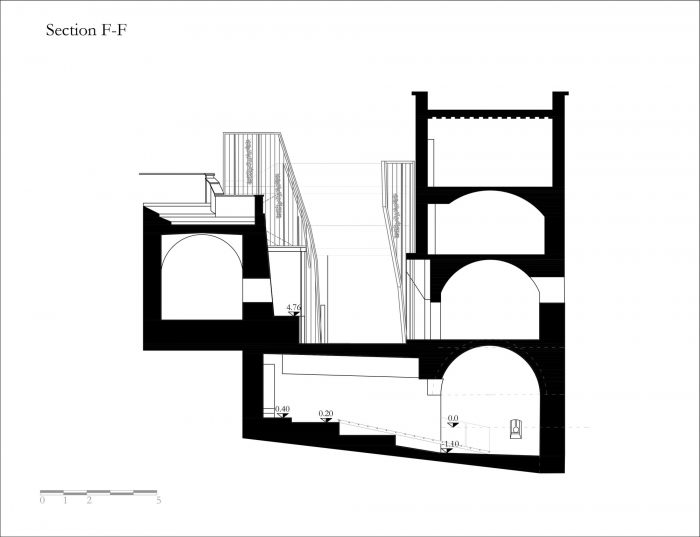
从塔楼的底层,通过一个现有的地下通道,你可以进入相邻建筑的房间,由于一个新的楼梯以及用可纹钢建造的人行道,我们实现了阿拉贡塔楼的房间、卫戍区的房间和老城的小巷之间的联系。Ripa Teatina的防御性城墙,配备了圆形的瞭望塔,是在十五世纪阿拉贡人征服后增加的,从东南方向包围了居住区;通过两扇大门和另一个瞭望塔的侧面可以进入该镇。
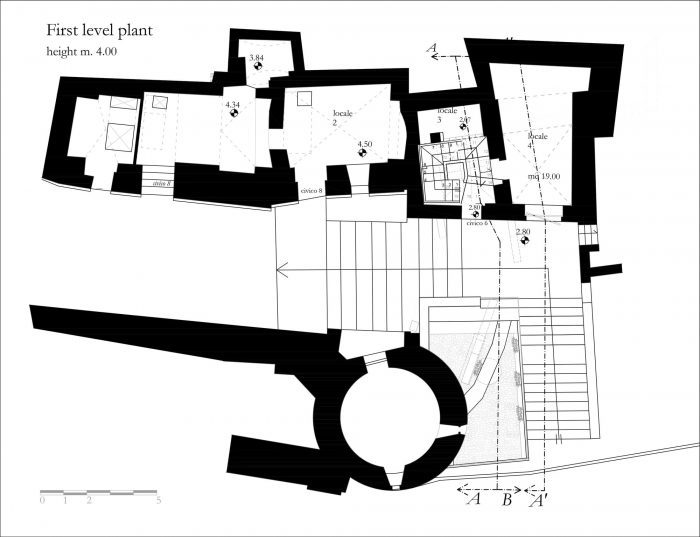
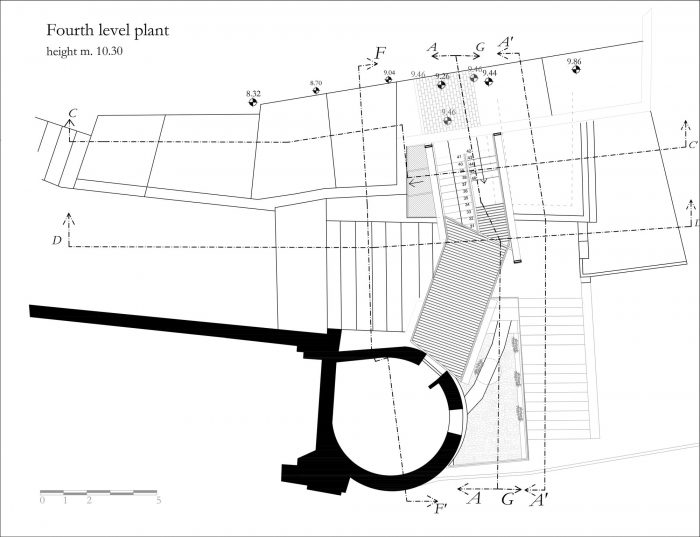
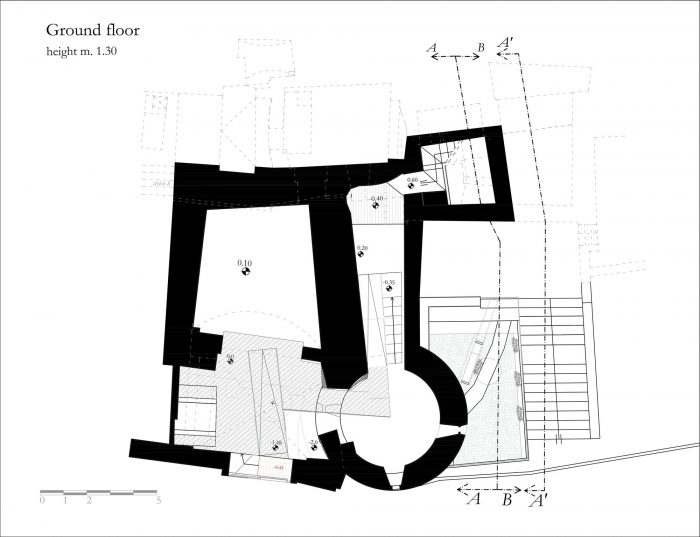
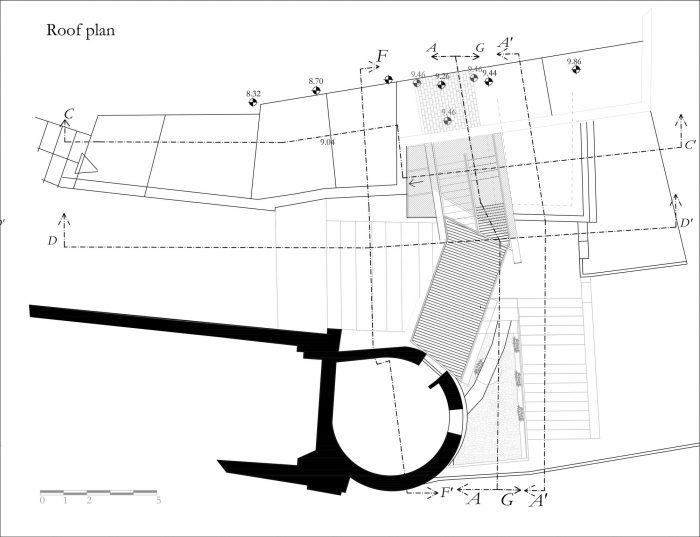
From the ground floor of the tower, through an existing underground tunnel, you enter the rooms of the adjacent building, and thanks to a new stairway and walkways in cor-ten steel we realized a link between the rooms of the Aragonese tower, the rooms of the garrisons and the alleys of the Old Town. The defensive walls of Ripa Teatina, equipped with circular watchtowers, added in the XV century, after the Aragonese conquest, encircled the inhabited area from the southeast; the town was accessible through two large gates flanked by another watchtower.
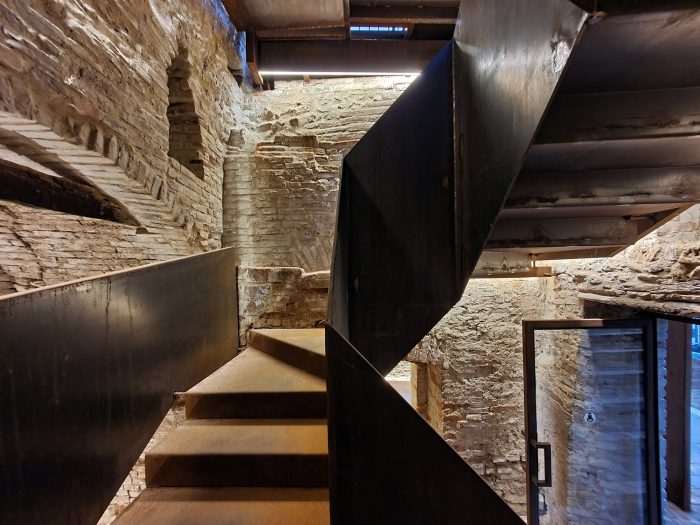
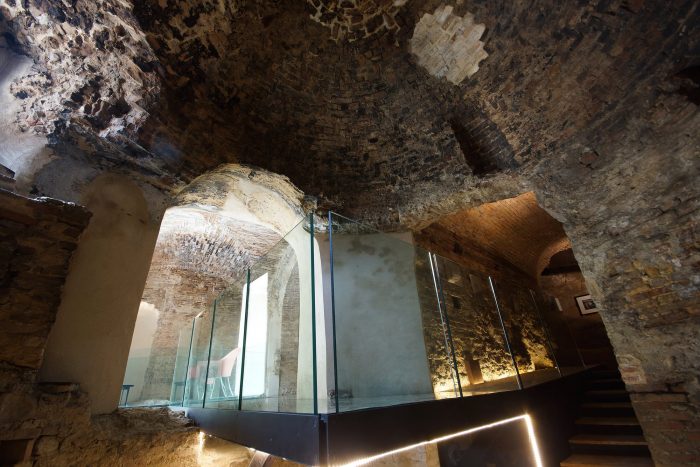
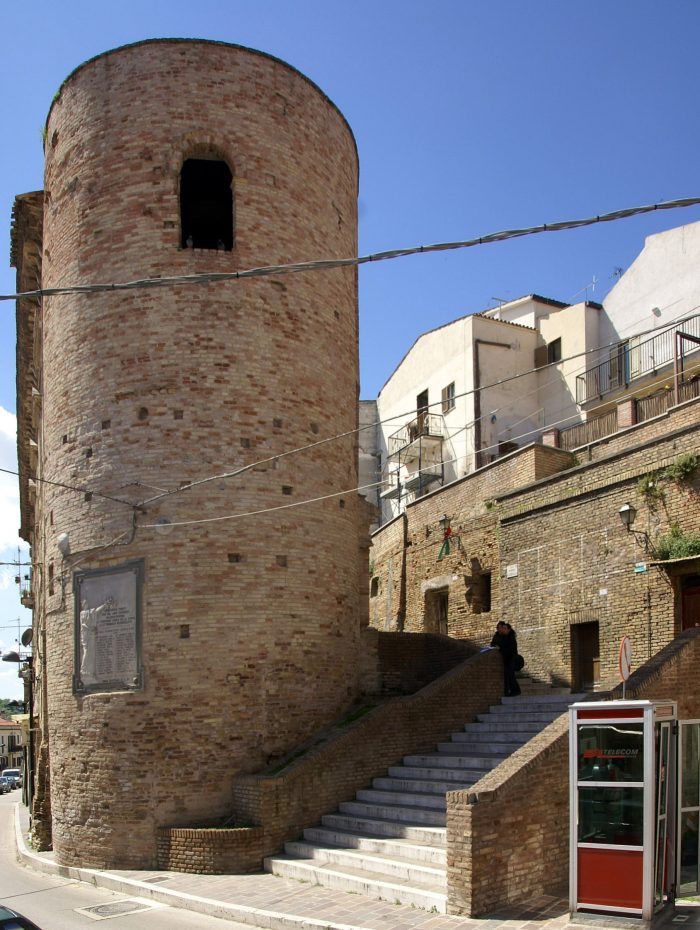
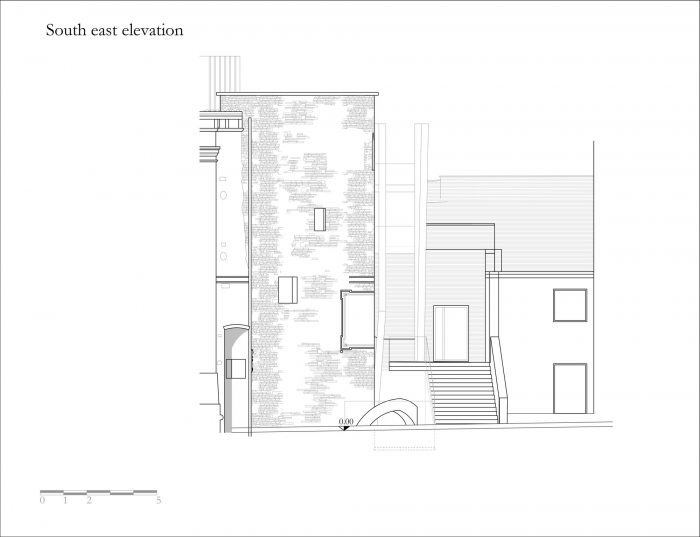
大门在第二次世界大战期间被拆除,留下了一个城市空白,以及防御结构和城镇中心之间的断裂。在加贝拉门曾经存在的地方,只有一个大楼梯。从平面图的研究和历史照片中,我们可以重建塔楼的原始形状。最初,它看起来是通过一个横向的砖石结构与相邻的建筑相连,允许两个机构之间的直接通道,并使塔的所有楼层都可以进入。
The gates were demolished during the Second World War, leaving an urban void and a disconnection between the defensive structures and the town center. Where once the Gabella gate stood, there was just a large stairway. From the studies of the floor plans and from the historical photos It’s been possible to reconstruct the original shape of the tower. Originally it looked connected with the adjacent building through a transversal masonry structure that allowed the direct passage between the two bodies and made all the levels of the tower accessible.
Architects: Rocco Valentini Architecture
Area : 300 m²
Year : 2022
Photographs :Rocco Valentini
Manufacturers : Italiafili s.r.l., L&L Luce&Light, Metalglas Bonomi Srl
Lead Architects : Rocco Valentini
Architect : Chiara Valentini, Pierluigi Di Nola
Engineer : Maringela Flammivio, Milena Vizzarri
Restoration Of Ancient Buildings : Impresa Edile F.lli Nicolo' S.r.l.
Surveyor : Alessandra D'Alessio
Projet Manager : EUROIMPINATI s.r.l.
City : Ripa Teatina
Country : Italy