
南孟买或SoBo--被亲切地称为--可以说是印度领先的艺术区,散发着让人联想到过去的特点,但也是现在的一部分。该地区被称为 "建筑博物馆",是文化和遗产的广阔天地,其风格兼容并蓄--新古典主义、哥特式、维多利亚式和装饰艺术--再加上当代的天赋--证实了这个地方的独特精神和美学。这家建筑和设计公司希望在该区找到一个有利于其感觉的工作室空间--一个对自然光有强烈亲和力的空间,一个方便公共交通的空间,同时也能满足其需求。
South Bombay or SoBo - as it is affectionately called - arguably is India’s leading art district that exudes a character that is reminiscent of yesteryear, yet very much part of the present. Labeled as a “museum of architecture”, the area is an expanse of culture and heritage with an eclectic blend of styles – Neo-Classical, Gothic, Victorian, and Art Deco - coupled with a flair for the contemporary - that corroborates the unique spirit and aesthetic of the place. The architecture and design house wanted to land a studio space, within the district, which would be conducive to its sensibilities - a space with a strong affinity for natural light, one that would be easily accessible by public transit, and could also respond to its needs.
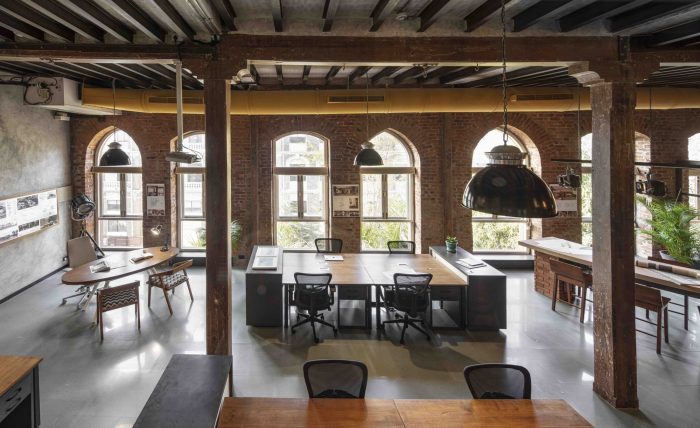
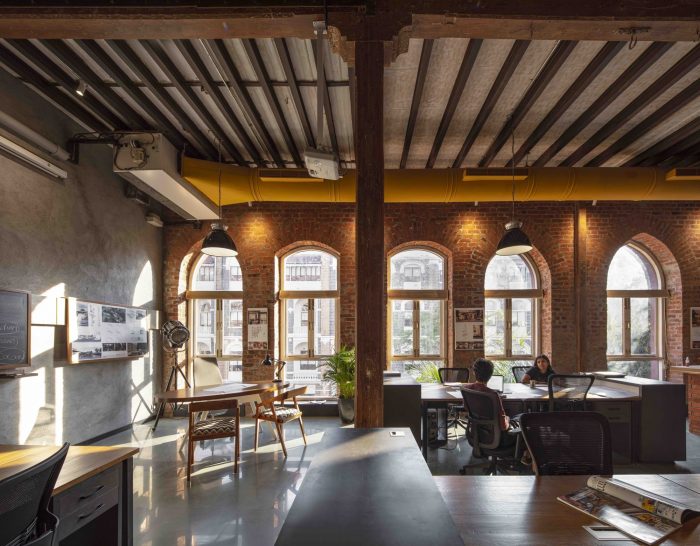
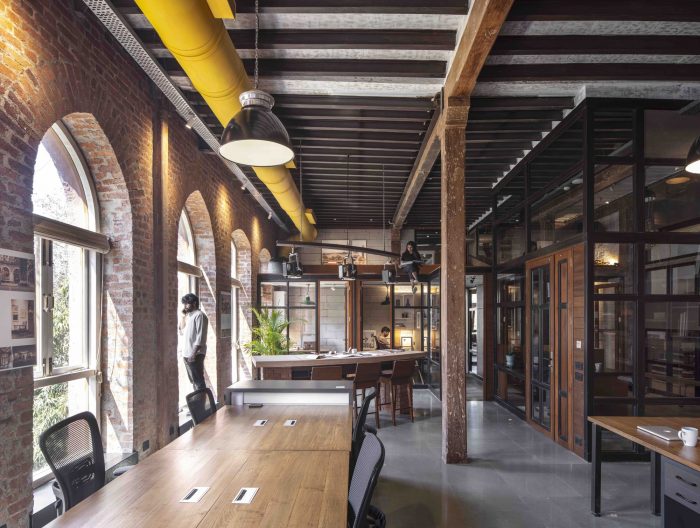
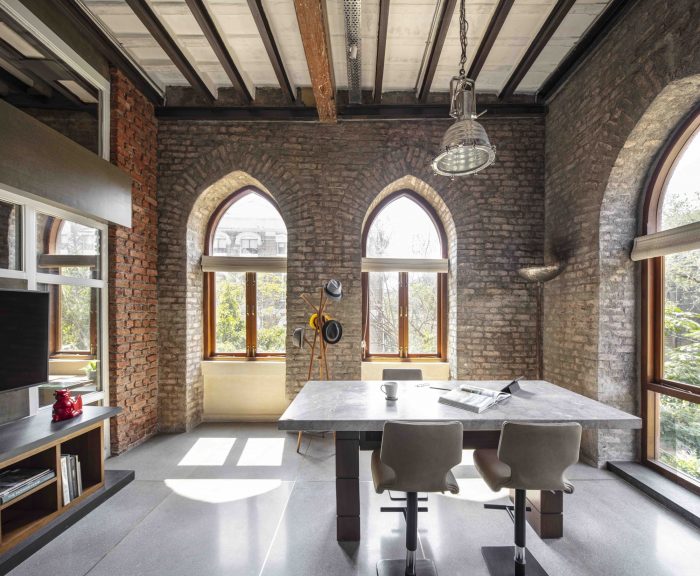
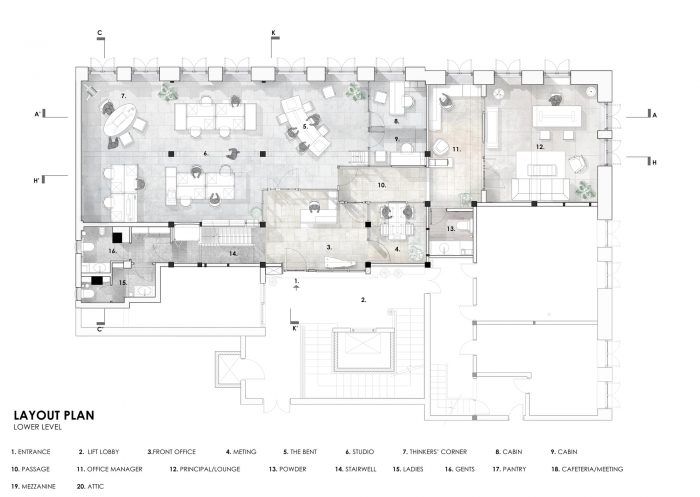
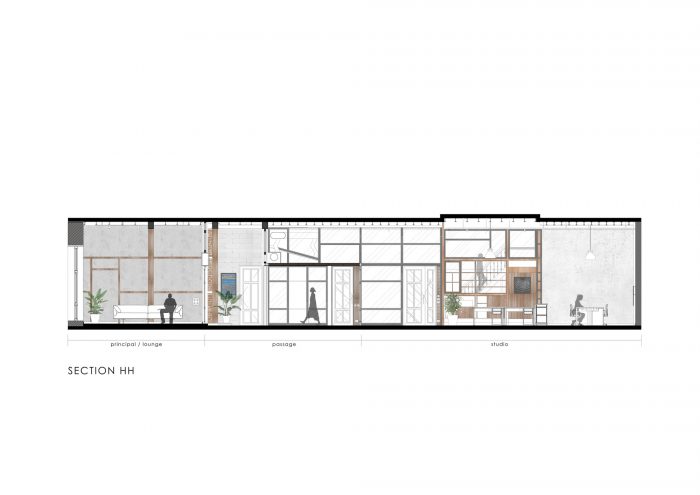
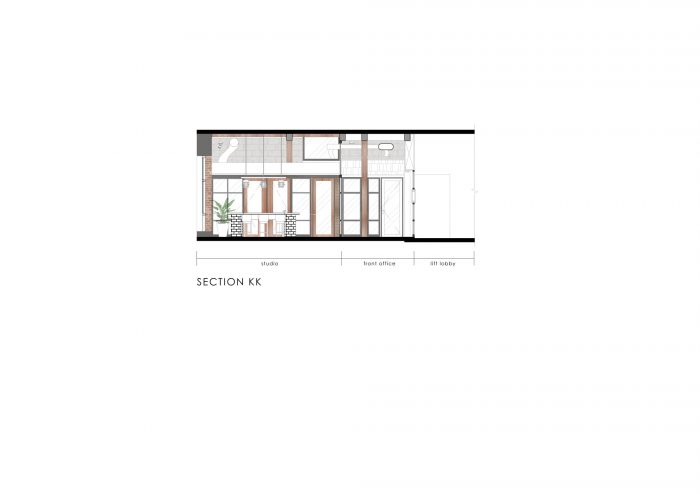
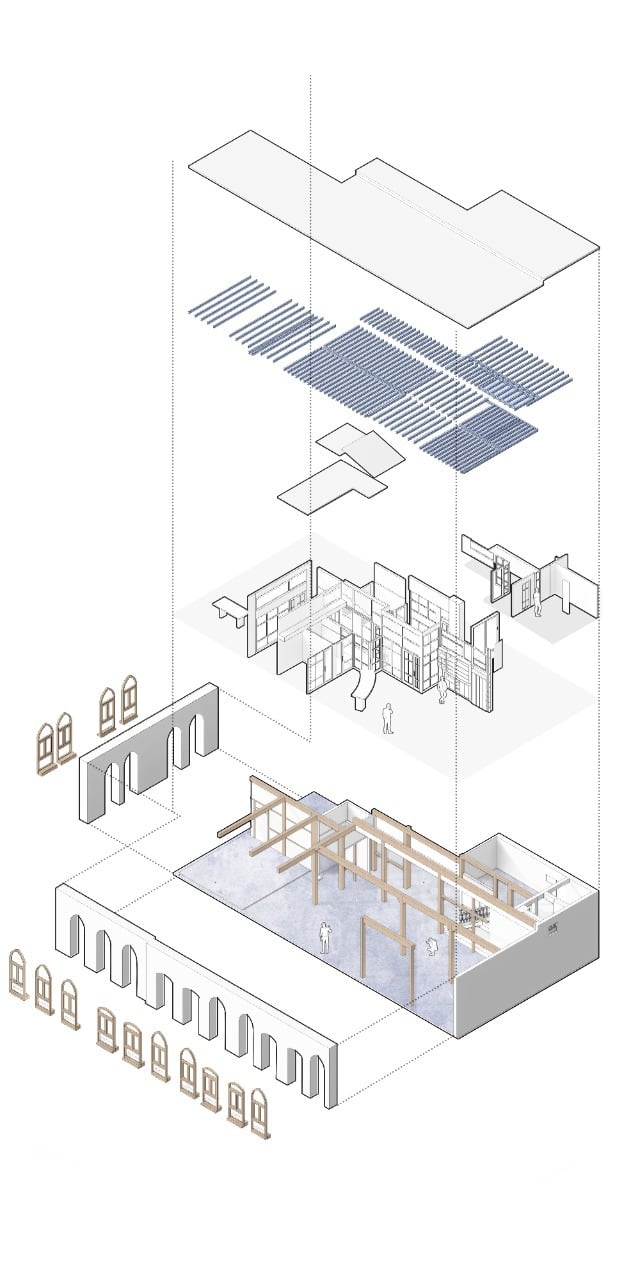
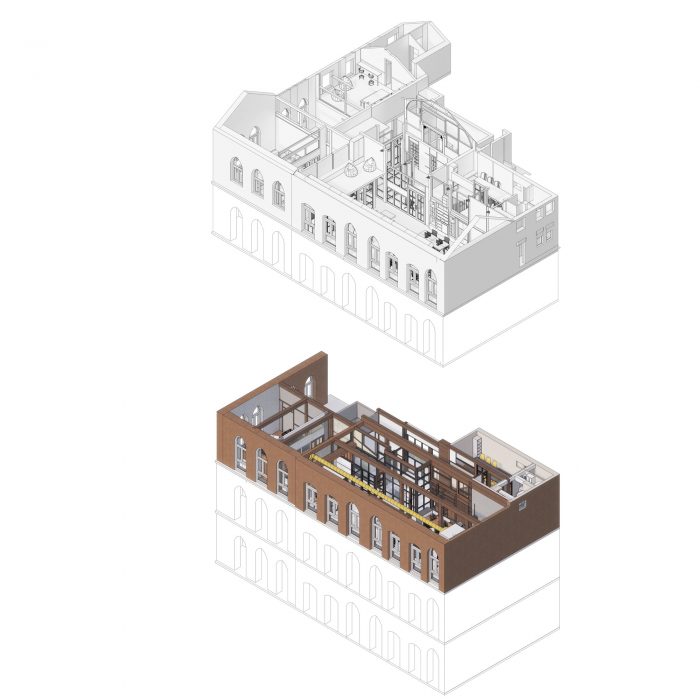
东边是维多利亚总站,南边是画廊和博物馆,西边是广阔的麦当劳,该办公室正好位于环境和文化的最佳位置--有效地让工作室成为这个艺术区复苏中的城市文化身份的集体意识的一部分并作出贡献。 这个空间是一个遗产结构的一部分,被收购时,窗户被封死,木柱被改装成金属支架,非承重砖墙将各个区域围起来并相互隔离。因此,需要对继承的空间做出批判性的反应,诚实地反映环境,并以务实的功能设计秩序来忠实于手头的空间。
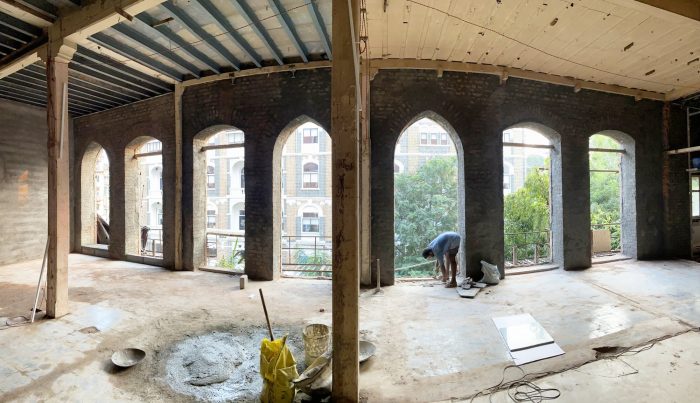
With Victoria Terminus to the East, galleries, museums to the South, and sprawling maidans to the West, the office falls neatly in the contextual and cultural sweet spot – effectively allowing the studio to be part of and contribute to this collective sense of an urban cultural identity amidst a resurgent artistic precinct. The space, a part of a heritage structure, was acquired with the windows boarded up, the wooden columns retrofitted with metal bracings, and non-Load bearing brick walls enclosing and segregating zones from one another. Therefore, the need for a critical response to the inherited space, an honest reflection of the context, and a pragmatic functional design order would be true to the space at hand.
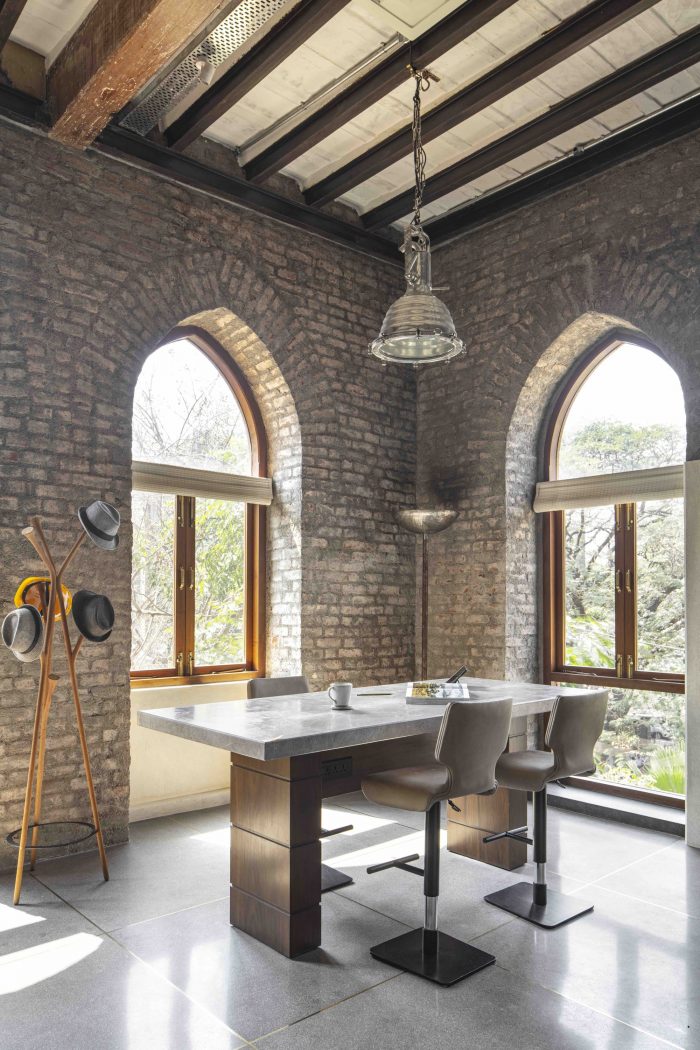
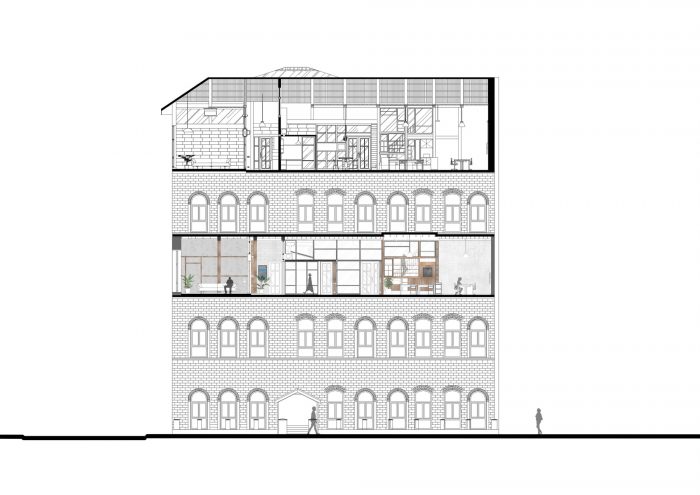
设计方法和意识形态--分层。 时间、发现和期待。工作室位于SoBo的文物区,在一栋有100年历史的维多利亚时代的建筑的二楼,工作室的空间探索了固有的触感,并突出了文物结构的完整性。 我们有意识地对空间进行了严格的探索、生活和呼吸,以便在 "剥离 "层和暴露空间的自然特征的过程中,进行简单的停顿,退后几步,再向前走--类似于有节奏的顿挫。
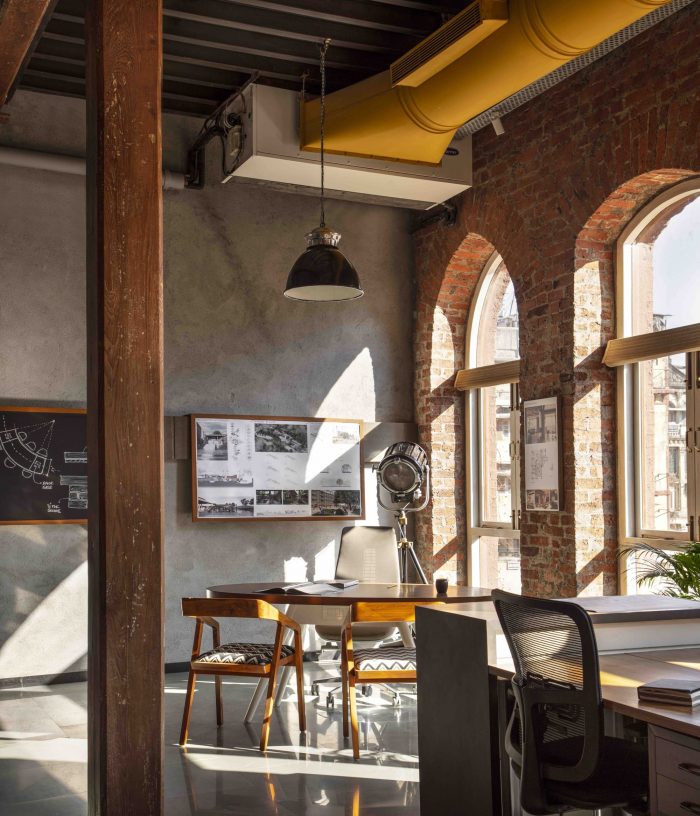
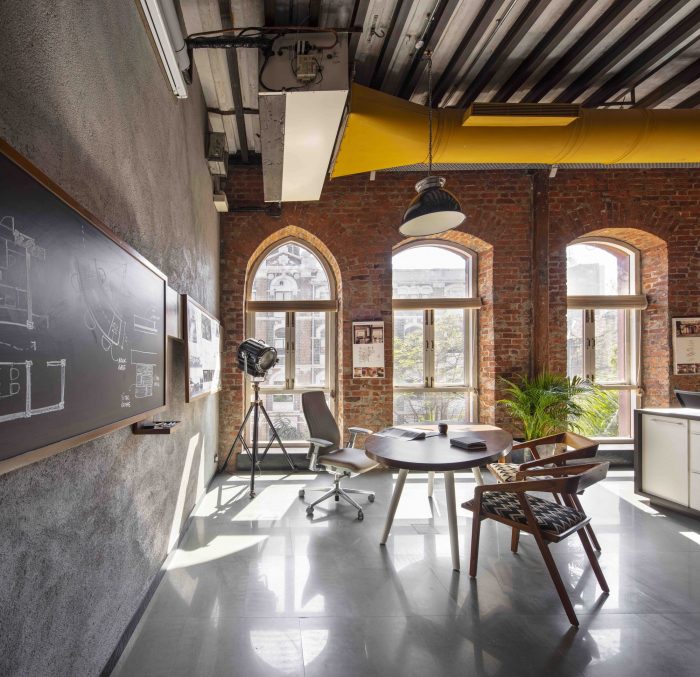
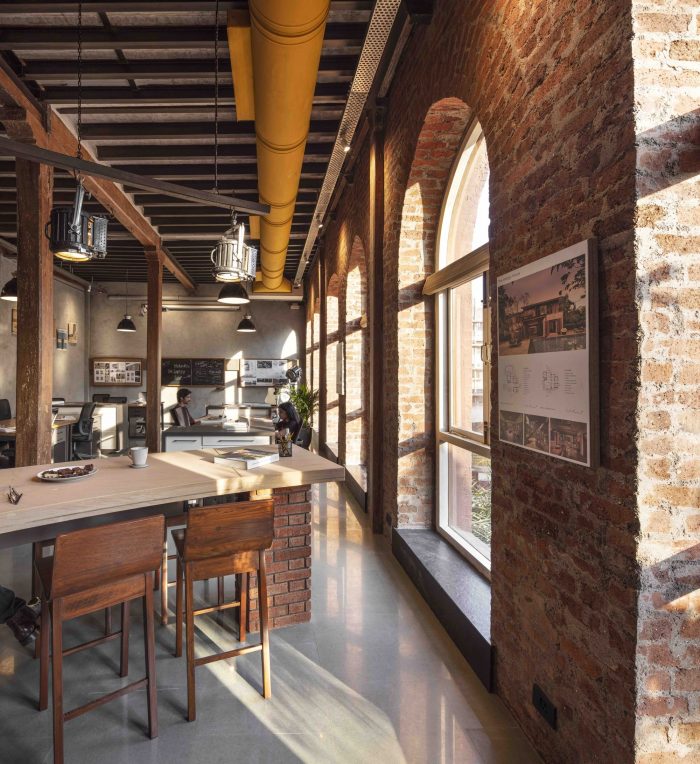
Design Approach and Ideology - Layers: Of Time, Discovery and Anticipation. Located along the heritage mile of SoBo, on the 2nd floor of a 100-year-old Victorian-era building, the studio space explores the innate tactility and highlights the structural integrity of the heritage structure. A conscious effort was made to rigorously explore, live and breathe the space so that the process of “peeling away” layers and exposing the natural character of the space followed simple acts of pausing, taking a couple of steps back, and moving forward again - akin to a rhythmic staccato.
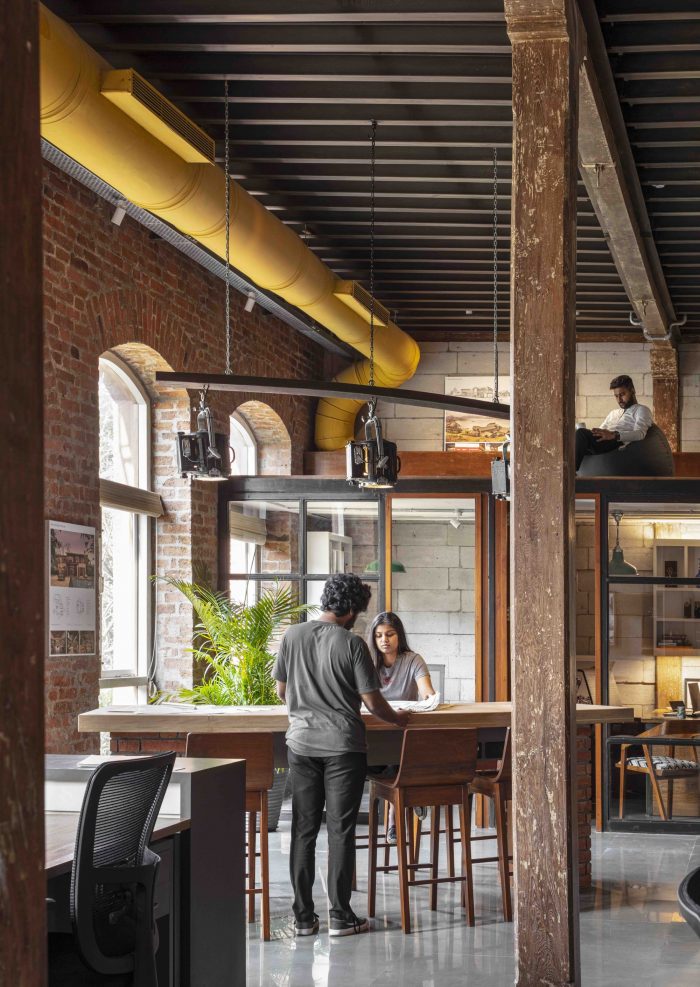
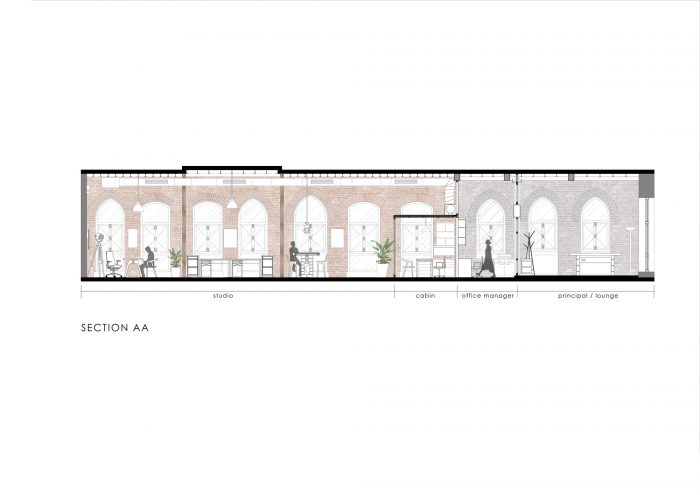
采用发掘和发现的想法,而不是一个固定的强制性方法,不仅是为了尊重、保留和庆祝这个地方的精神,也是为了回应这个空间可能提供的无数体验。 在设计这个空间时,自然光、通风(在城市的办公空间中几乎不存在)以及充分利用各种有利位置的目标是最重要的。巨大的体量、不加掩饰的触感以及与SoBo外部和内部空间之间的视觉联系,使该空间引发了一种情感反应,唤起了反思、发现和存在的间隙时刻。实际上,这个空间已经体现了一个不可分割的时间层,它陶醉于与不同时代的不同组成部分交融的能力。
The idea of unearthing and discovering, rather than a set mandatory approach, was adopted not only to respect, retain and celebrate the spirit of the place but also to respond to the myriad experiences the space could possibly offer. Natural light, ventilation (virtually non-existent in office spaces in the urban sphere), and the objective of utilizing the various vantage points to the fullest were of utmost importance while designing the space. Accentuated by the sheer volume, the unapologetic tactility, and the visual connection with SoBo outside and between the spaces within - the space elicits an emotional response that evokes interstitial moments of reflection, discovery, and presence. In effect, the space has embodied an inextricable layer of time that revels in its ability to intermingle with disparate components of distinct eras.
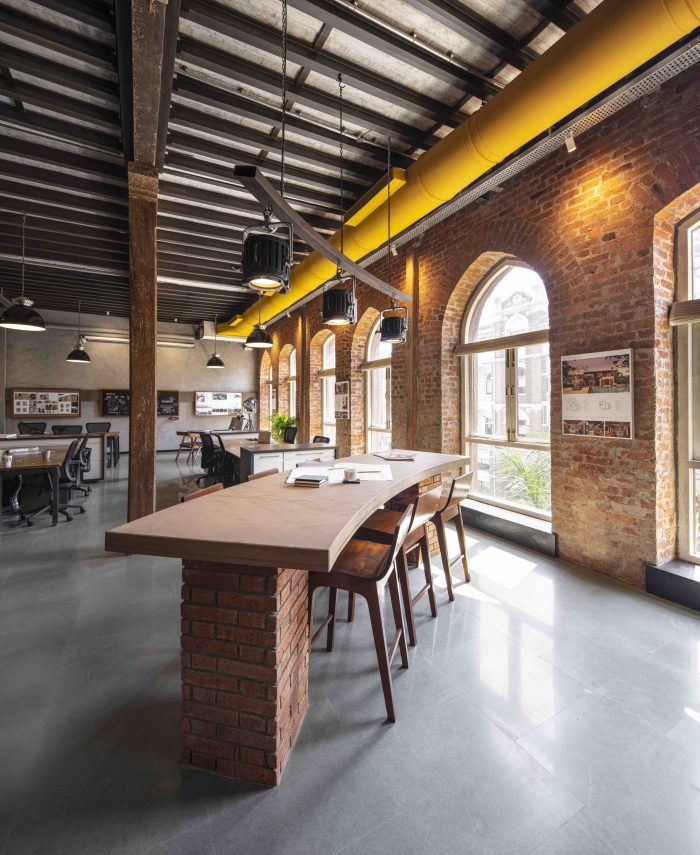
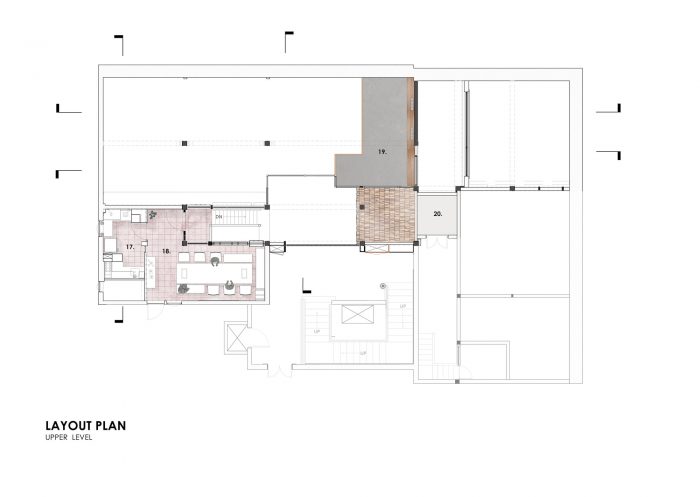
探索。关于回收和再利用--虽然工作室可能已经从以前的空间--在同一栋楼的四楼--搬走了,但阁楼仍然是工作室固有的和不可分割的一部分。
Explorations: Of Recycling & Re-using- While the studio may have moved from its previous space - on the 4th floor of the very same building - The Loft remained an intrinsic and inextricable part of the studio’s DNA.
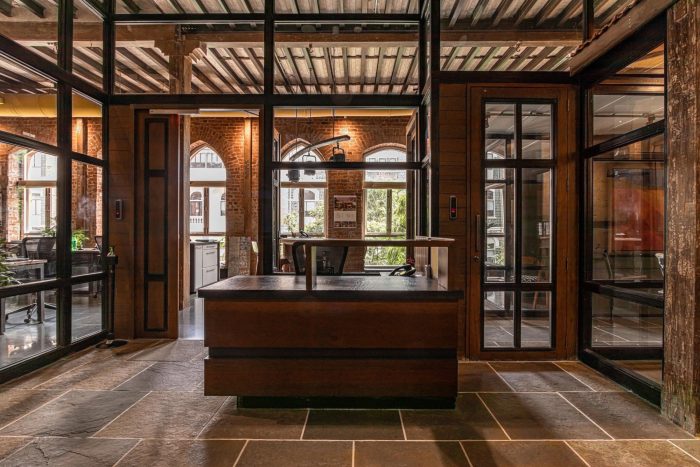
重新定义的阁楼 "通过回收原工作室空间的元素和材料,将 "适应性再利用 "的概念向前推进了一步--这意味着仔细拆解、重新使用并最终重新利用设计的现有组件的任务。这个具有挑战性但又令人满意的过程有助于为一个不仅新鲜而且熟悉的干预措施注入活力。通过保留固有的特征,触感忠实于空间的原始、不修边幅和呆板的性质;在表面的油漆和灰泥层下揭示出表面;重新循环利用元素,如从城市中被拆除的建筑中抢救出来的废弃的门,并为它们注入新的生命。
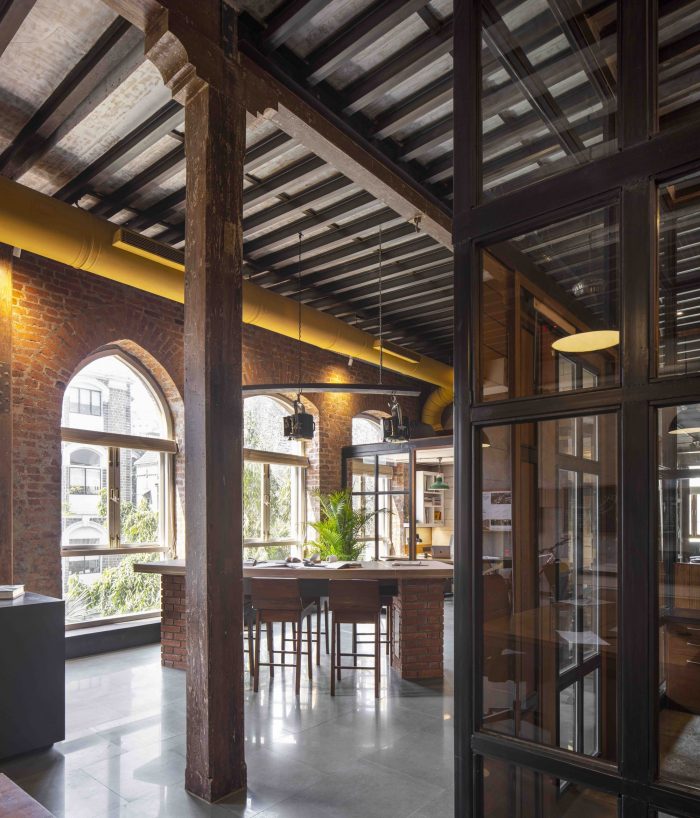
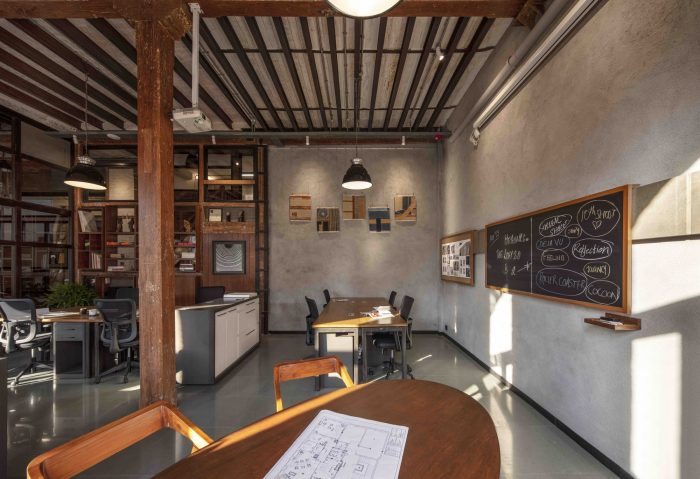
The Loft | Redefined takes the concept of Adaptive Re-Use a step further by recycling elements and materials of the original studio space - signifying the task of carefully dismantling, re-using, and ultimately re-purposing the existing components of the design. This challenging yet gratifying process helped breathe life into an intervention that would not only be fresh but also familiar. The tactility stays true to the raw, unkempt, and stark nature of the space by retaining the inherent character; revealing surfaces beneath superficial layers of paint and plaster; and re-cycling elements such as discarded doors, salvaged from demolished buildings within the city, and breathing new life into them.
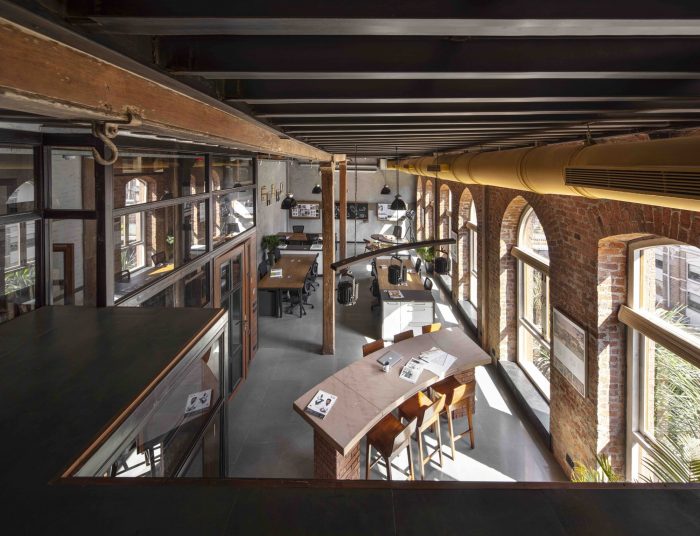
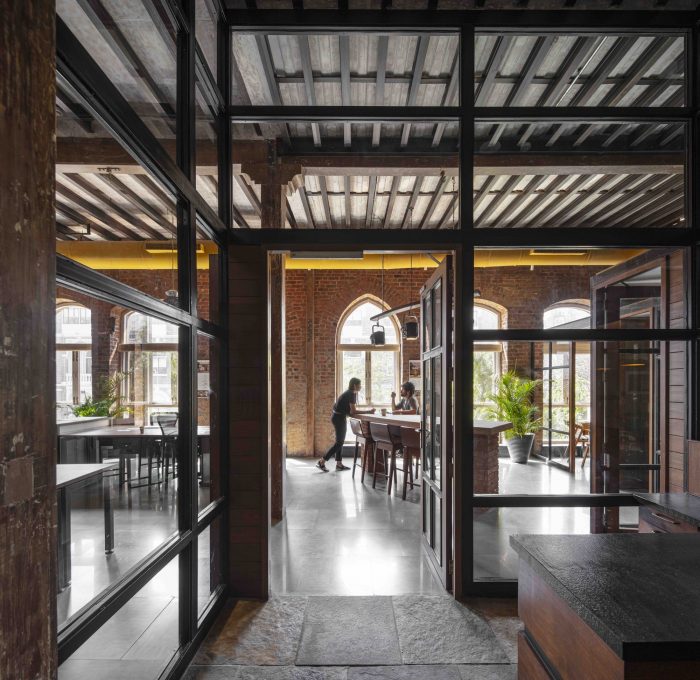
限制新材料的引进,这些材料既轻便又具有成本效益--水泥块和木板、木材、空心金属部分和石头--补充而不是减损了这个地方的本质。另一方面,玻璃作为一个有趣的出发点,与粗糙的质地相对应,带来了透明和深度的维度。空间的转变暗示了一次时间的旅行--回忆过去,生活现在,并展望未来。该工作室被设想为一个多功能和灵活的设计方案。它突破了传统工作空间的界限--在这里可以举行合作会议、研讨会和展览,在兄弟会内带来新的讨论,并在学生和专业人士之间架起桥梁。阁楼是一种诗意的表达,其中允许创造和现有结构的性质来控制和推动设计的发展。
Limiting the introduction of new materials, that was lightweight as well as cost-effective – cement blocks and boards, wood, hollow metal sections, and stone – complements rather than detracts from the essence of the place. Glass, on the other hand, acts as an interesting departure and counterpoint to the roughness of textures that brings forth dimensions of transparency and depth. The transformation of the space alludes to a journey through time – remembering the past, living the present, and looking out to the future. The studio has been envisioned as a multi-functional and flexible design solution. One that pushes the boundaries of conventional workspaces - where collaborative sessions, workshops, and exhibitions can be held, bring forth a new discourse within the fraternity, and bridge the gap between students and professionals. The Loft is a poetic expression wherein the creation and the nature of the existing structure are allowed to take the reins and drive the design forward.
Architects: Studio PKA
Area : 2100 ft²
Year : 2022
Photographs :Niveditaa Gupta
City:MUMBAI
Country:India