
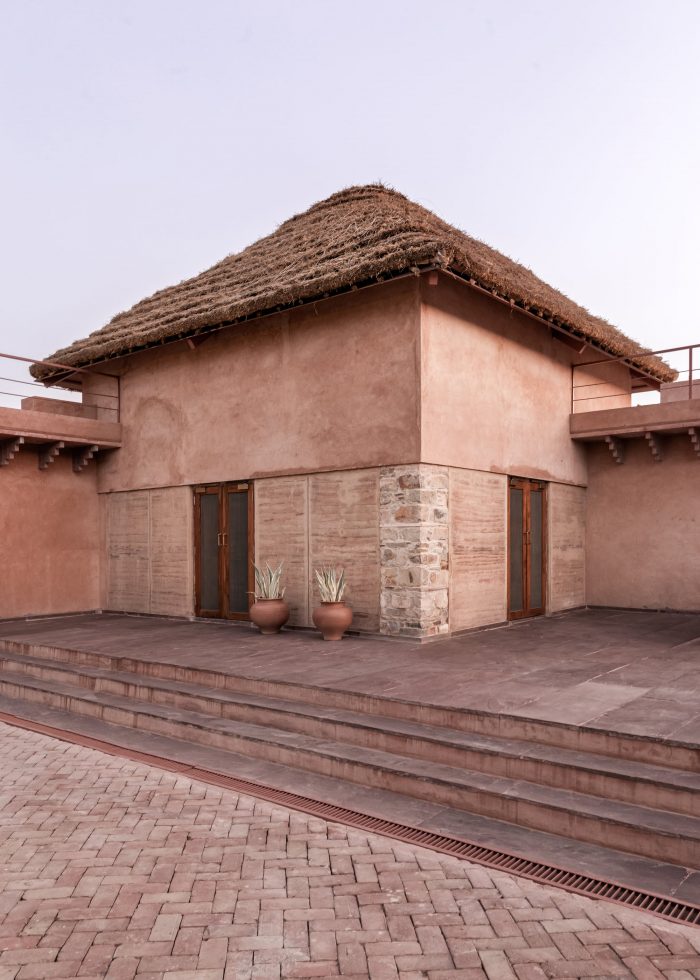
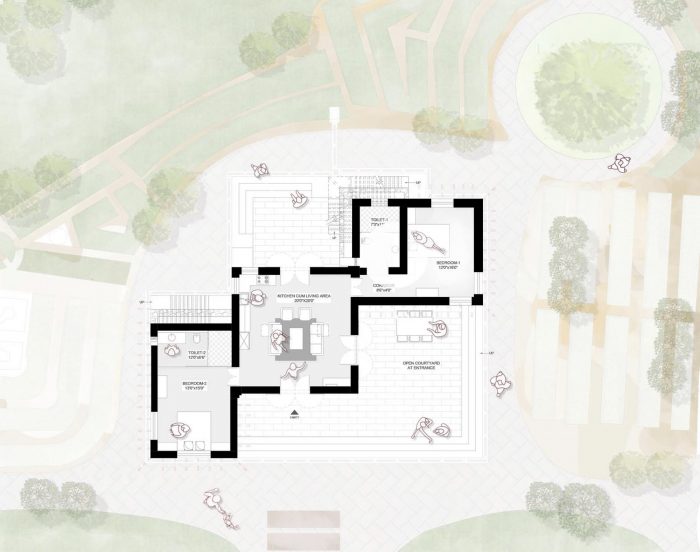
该结构是一个坐落在4英亩生态文化启发农场中心的住宅。这座房子有两个立面,入口处的门同时面向南方和北方。阿尔瓦经历了极端的气候,因此北方的空间在夏季更经常被使用,而南方的天井在冬季来临后成为一个日光浴的场所。这个房子有两个独立的露台。这两个屋顶的楼梯都很有趣,灵感来自拉贾斯坦邦的阶梯井。金字塔形的屋顶是由茅草制成的。当地采购的高大的野草被用来绑在屋顶上。这种屋顶建筑是一种传统技术,有助于在一年中保持舒适的温度。墙壁是用现场的泥浆与石灰和葫芦巴种子等天然粘合剂混合制成的夯土。渣滓和一种流行的印度药用叶子,楝树,也被添加到混合物中,作为天然驱虫剂。
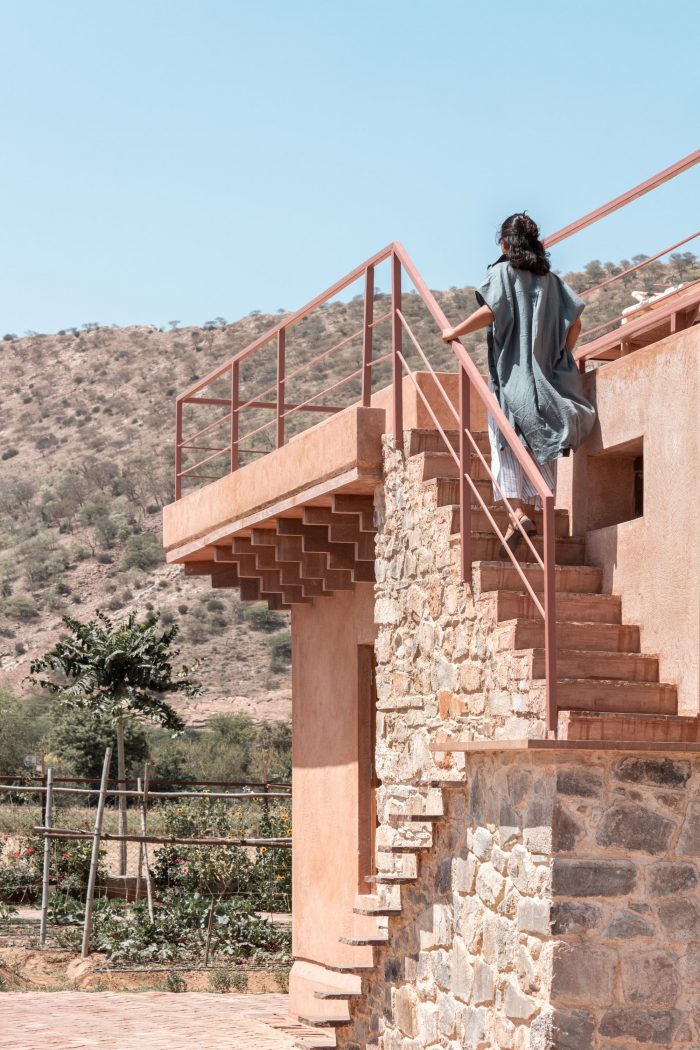
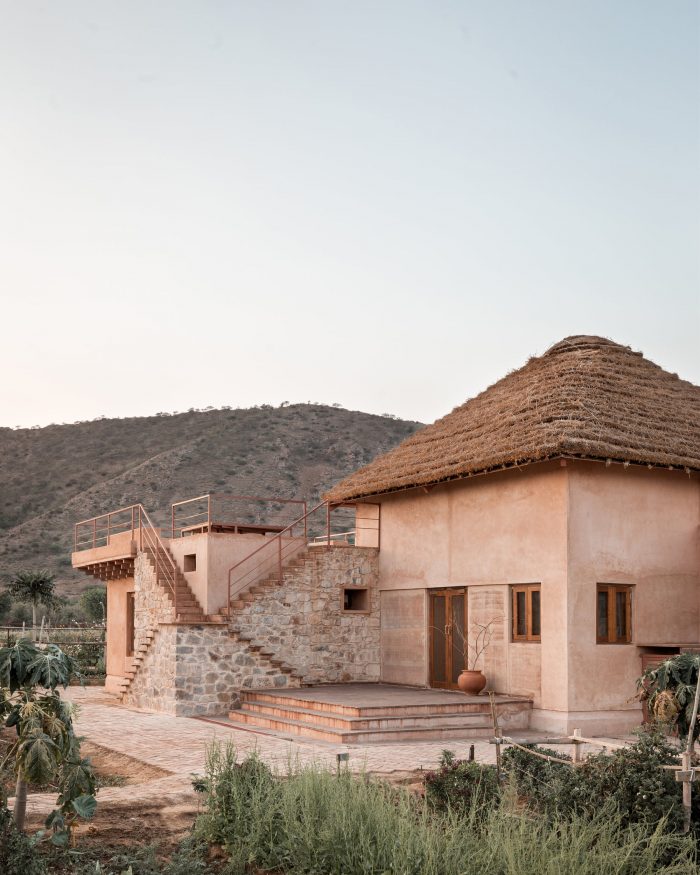
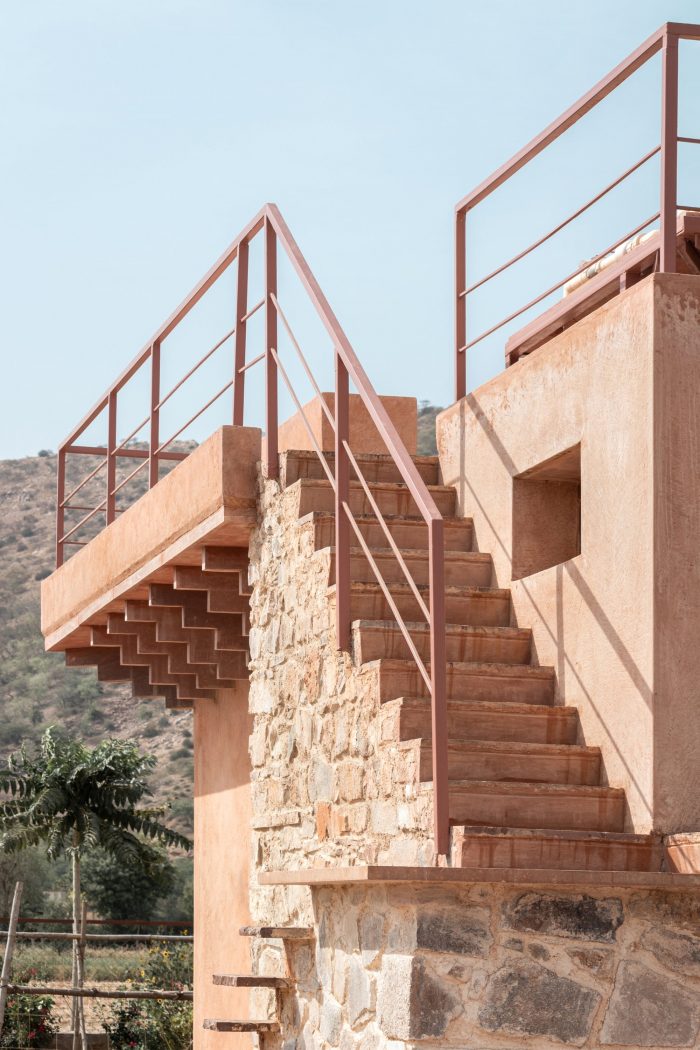
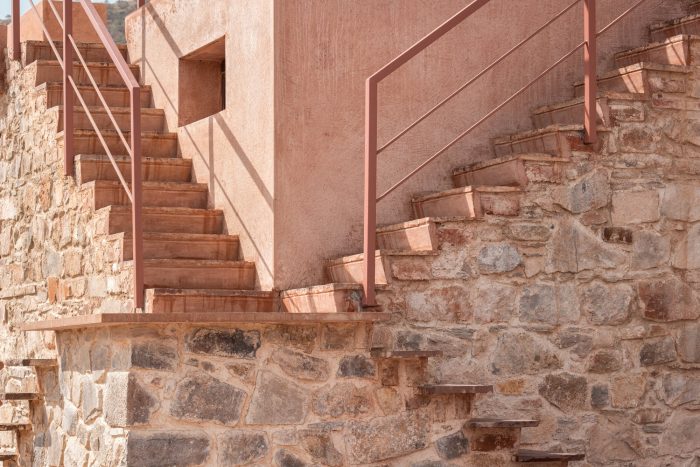
The structure is a home sitting in the center of a 4-acre permaculture-inspired farm. This house has two facades with entry doors facing both south and north. Alwar experiences extreme climates hence spaces in the North are more frequently used during the summer and the south patio becomes a sunbathing spot after winter set in. This house has two independent terraces. The stairs for both these roofs are playful and inspired by the step-wells of Rajasthan. The pyramidical roof is made of thatch. Locally procured tall wild grasses are used to tie the roof. This roof building is a traditional technique that helps in maintaining comfortable temperatures throughout the year. Walls are made on rammed earth using mud from the site mixed with natural binders like lime & fenugreek seeds. Edibles like jaggery and a popular Indian medicinal leaf, Neem, were also added to the mix which acts as natural insect repellents.
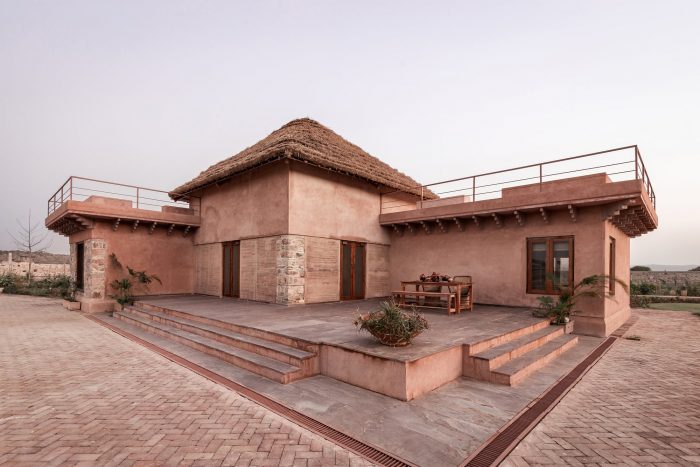
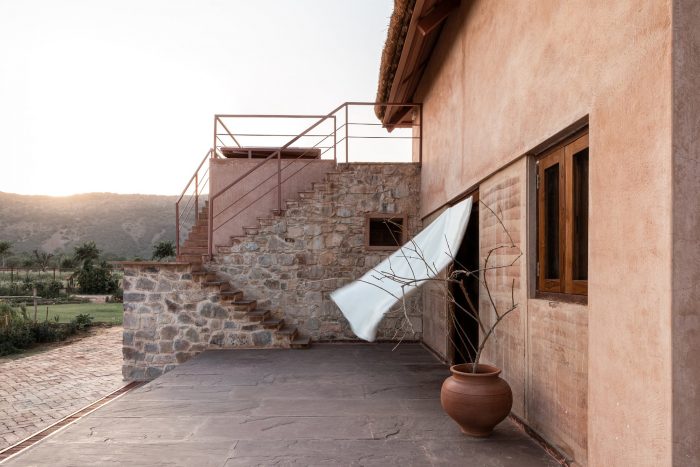
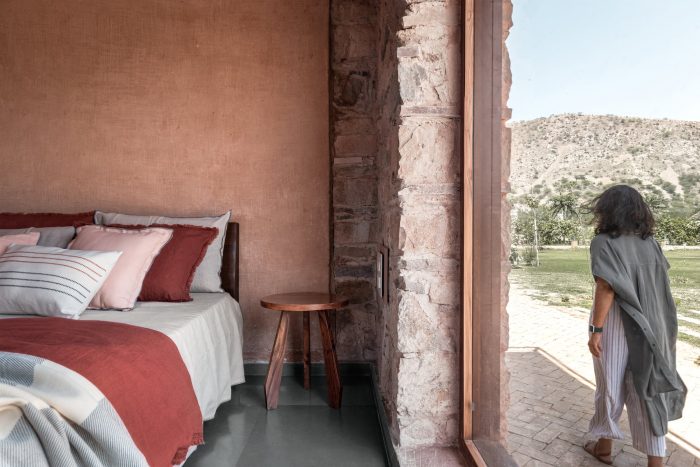
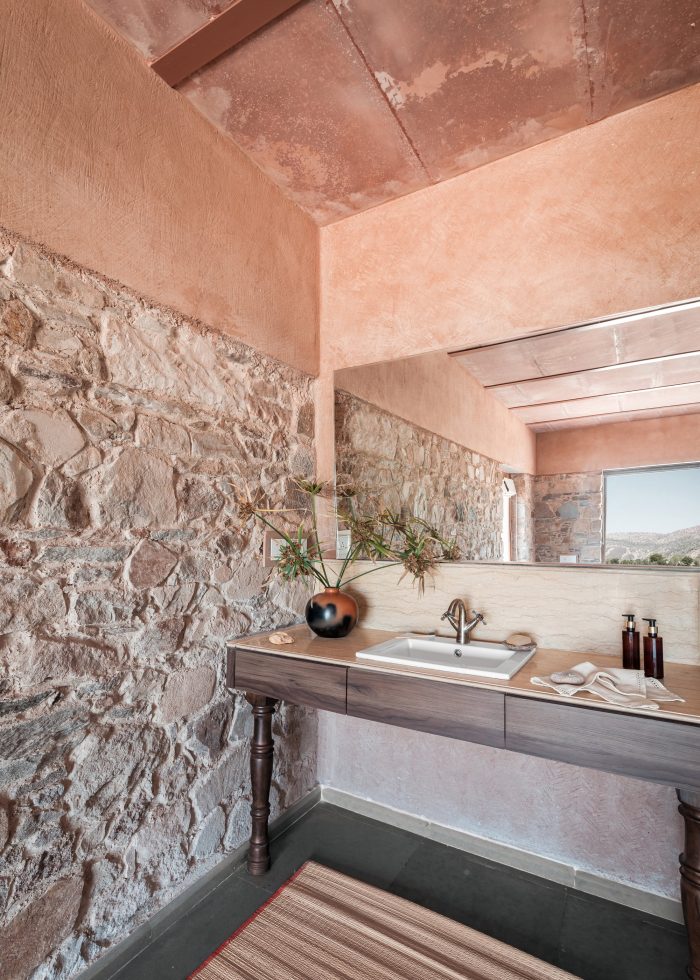
除了泥浆,回收的石头也被用于建造墙壁和地基。我们没有使用水泥来建造这个结构,以减少建筑的碳足迹。石材砌筑所用的砂浆是Bagra。Bagra是石灰窑在加工石灰石后留下的废物。使用石灰废料进行建筑的可持续技术已经被附近的村庄使用了几个世纪。卧室朝东和朝西,窗户的位置很有讲究,以便在室内获得最佳的日出和日落景色。房子是一个承重结构,我们用石头支架拉出悬臂,以获得更大的露台,并保护窗户不受雨淋。石头支架就像装饰品,为建筑增加了美丽的细节。
Apart from mud reclaimed stone has been used for the construction of walls and foundations. We used no cement to build this structure to reduce the carbon footprint for construction. The mortar used for stone masonry was Bagra. Bagra is waste that is left behind in lime kilns after processing limestone. The sustainable technique of building with lime waste has been used by nearby villages for centuries. Bedrooms face east and west with windows located strategically to get the best of sun rise and sun set views from indoors. The house is a load-bearing structure, we used stone brackets to pull out cantilevers to get a bigger terrace and protect windows from the rains. Stone brackets are like adornments and add beautiful detail to the building.
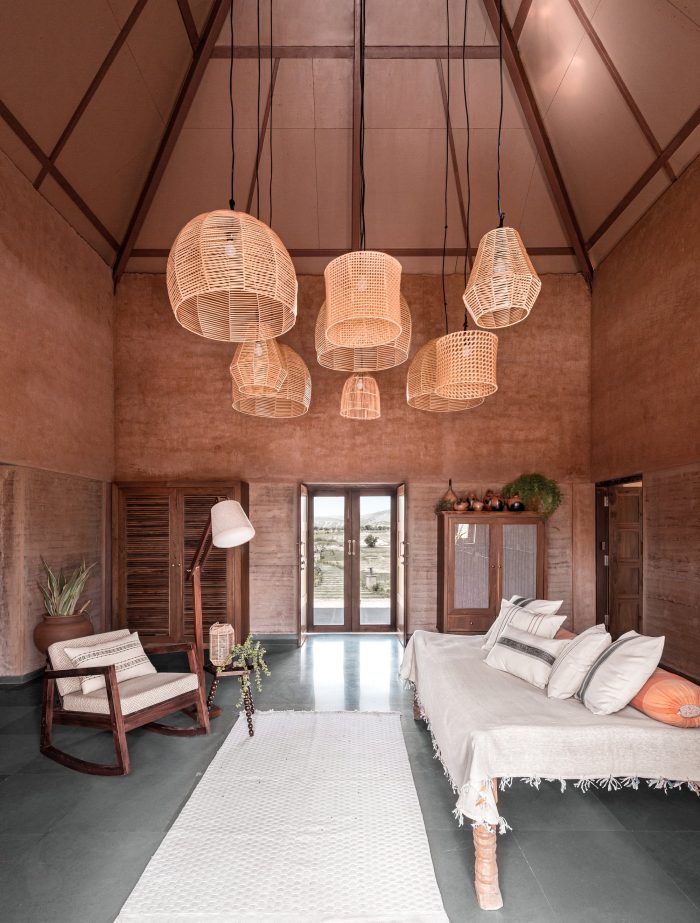
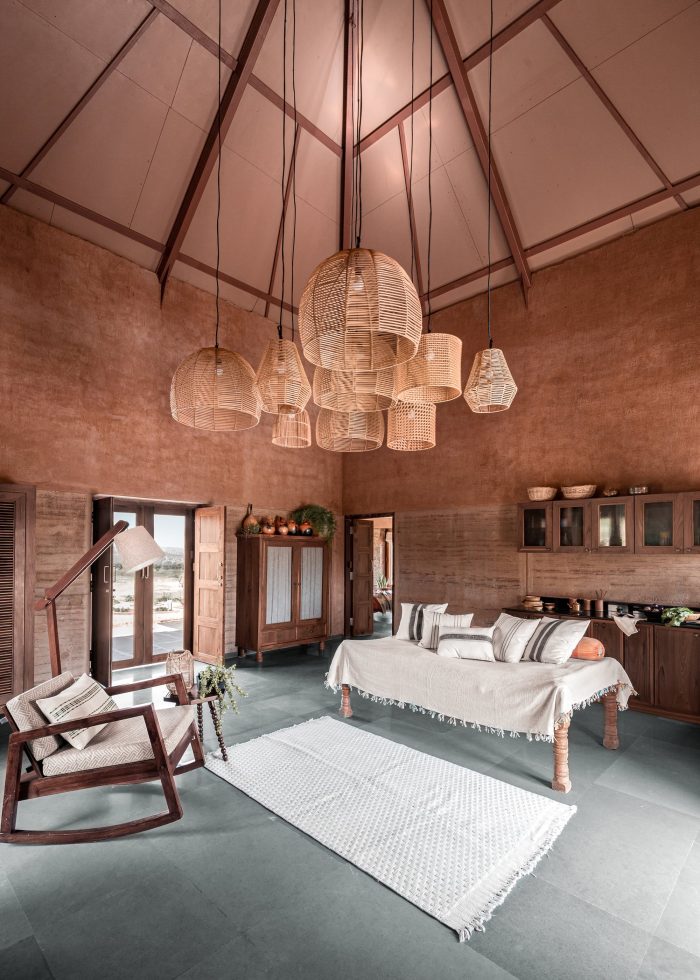
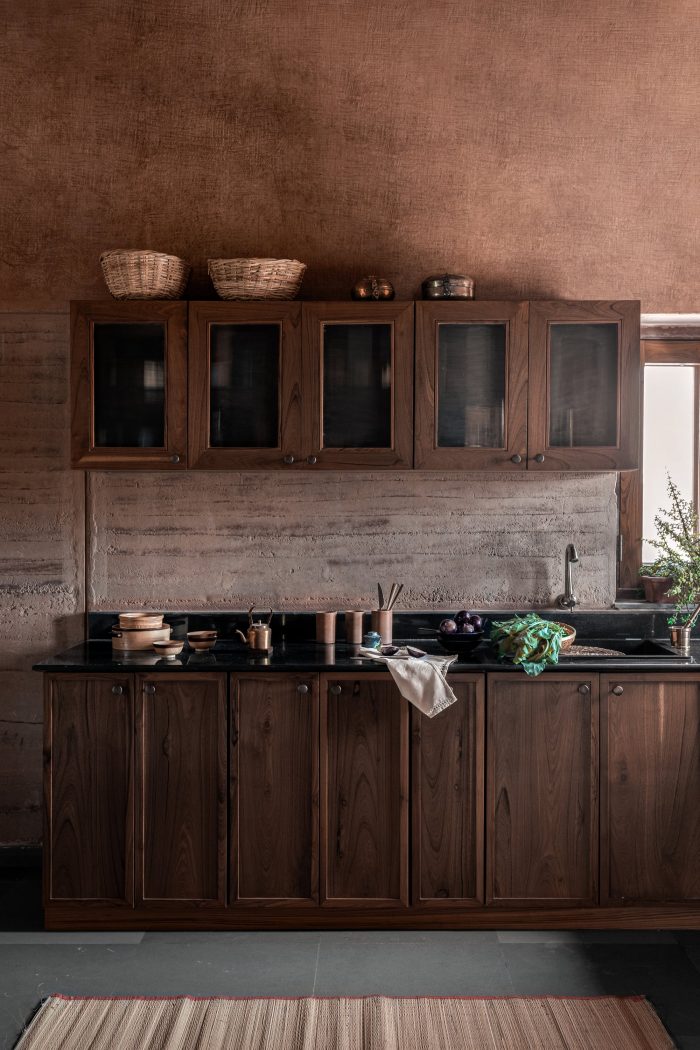
进入中央客厅也有一个小厨房,这是一个双高的大厅,带来更广阔的感觉。这个房间可以俯瞰农场的四面,带来可爱的绿色景观。天花板上悬挂着一簇当地制作的藤条灯,作为进入客厅的人的焦点。整个房子的设计及其元素都集中在使用当地材料和工艺上。客厅里的一张日光床也是这样的例子。传统上被称为khaat,是从当地工匠那里挑选的,他们已经制作了几代人。两个卧室都有多个窗户,可以俯瞰农场周围的景色。两个房间的墙壁都有不同的主导装饰。
Entering into the central living room also houses a kitchenette, this is a double-height hall bringing a more expansive feel. The room overlooks all four sides of the farm bringing in lovely green views. A cluster of locally made cane lamps hang from the ceiling and act as a focal point for anyone entering into the living room. The design of the entire house and its elements are focussed on using local materials and craftsmanship. A daybed in the living room is also an example of the same. Traditionally called khaat, was picked from local artisans who have been making these for generations. Both bedrooms have multiple windows overlooking views from around the farm. The walls in both rooms have different dominant finishes.
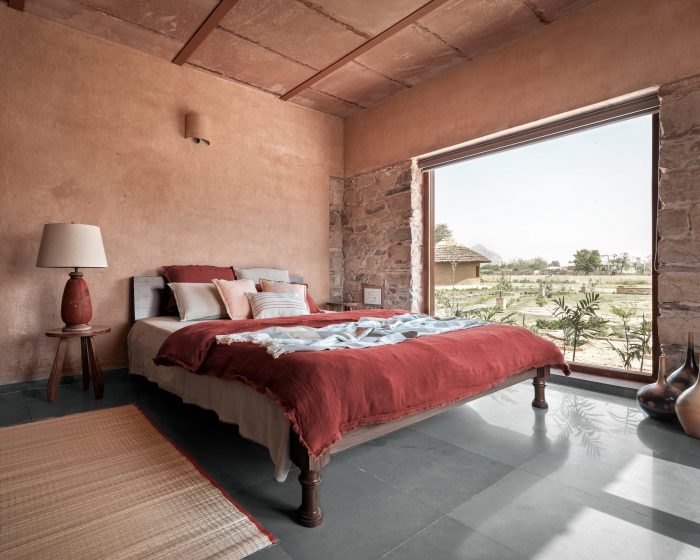
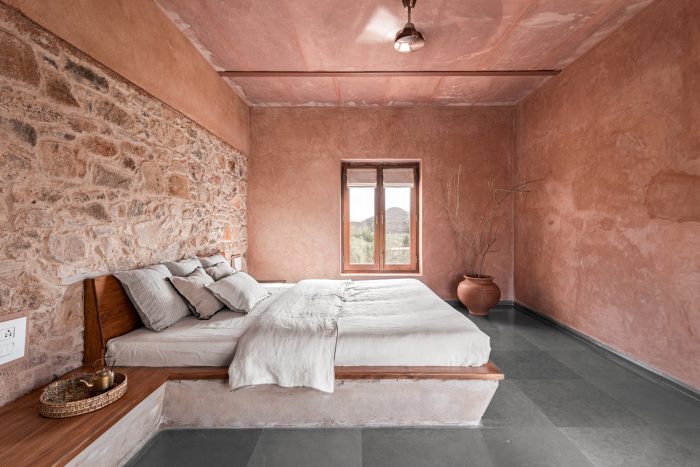
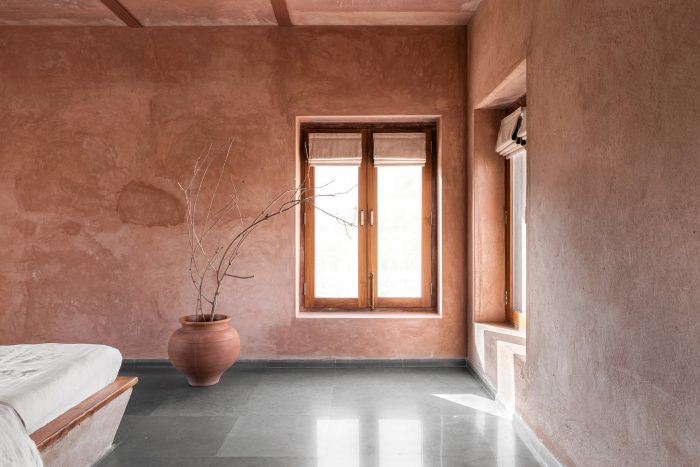
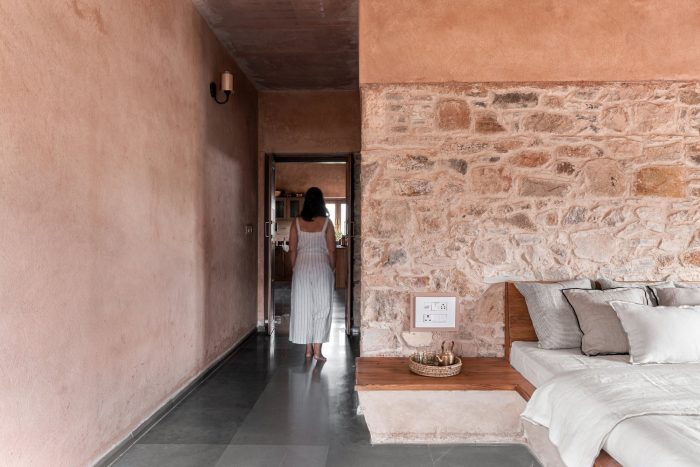
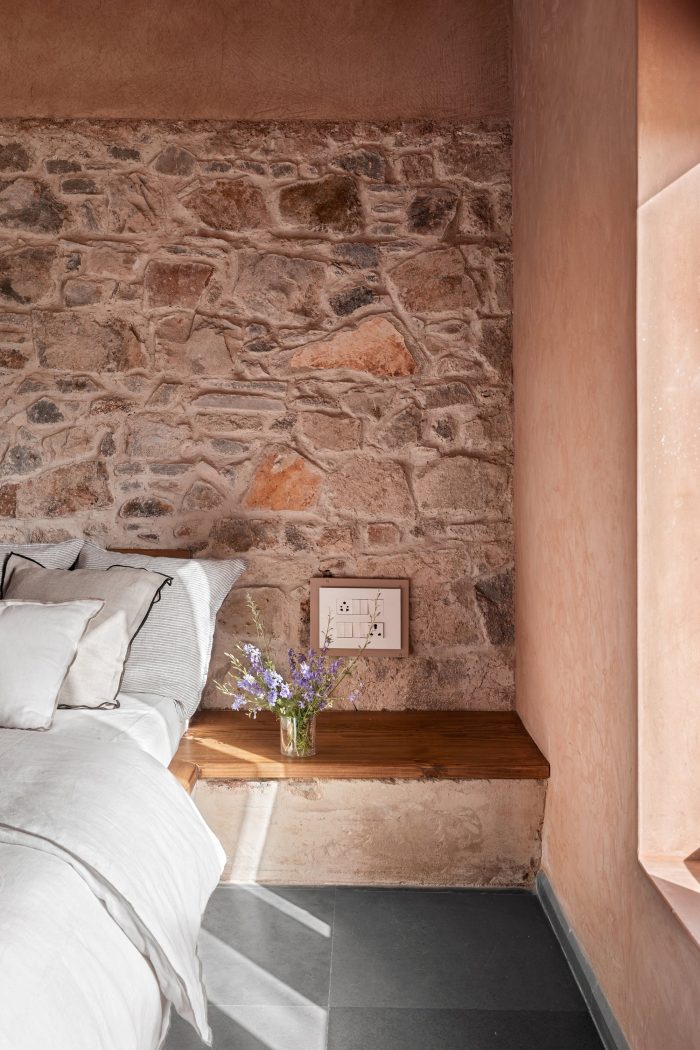
其中一个用土袋建造的房间已经用石灰石膏完成。砖粉与石灰混合,以获得墙壁上的铁锈色泽。这种抹灰技术只被少数工匠保留了下来。多层抹灰和拍打,以消除气穴,从而避免了裂缝。另一间卧室主要是用从附近的拆迁工地上捡来的再生石料建造的。装饰元素和软装饰品是在仔细考虑后引入空间的。选择了那些致力于促进手工艺和使用可持续材料的品牌。所选饰品的色调突出了建筑的色彩。
One of the rooms which are built in earthbag has been finished in lime plaster. The brick powder was mixed with lime to get the rust tinge on the walls. This plastering technique is kept alive only by a handful of artisans. Multiple layers were plastered and beaten to remove air pockets thus avoiding cracks. The other bedroom is primarily built using reclaimed stones that were picked up from nearby dismantled sites. Decor elements and soft furnishings were introduced into the space after careful consideration. Choosing brands that work to promote crafts and use sustainable materials. The tones of the chosen accessories accentuate the colors of the building.
在整个建筑过程中,我们试图专注于当地的手工建筑技术和材料,其形式与数百年前相同。大量的研究和与年长石匠的交谈帮助我们获得了所有的知识,这些知识有助于建造这所房子。这是我们通过其材料和可持续的生活方式使建筑更接近地球的努力。
Throughout the building process, we tried to focus on local artisanal building techniques and materials in the same form they were used hundreds of years ago. Much research and talking to elderly masons have helped gain all the knowledge which has helped build this house. It is our effort towards bringing architecture closer to Earth through its materials and sustainable lifestyle.
Architects: Sketch Design Studio
Area : 2000 ft²
Year : 2021
Photographs :Jeevan Jyot
Manufacturers : Kar Conscious Living, Live Linen, Ramgarh Clay Pottery
Designer And Builder : Shipra Singhania
Structural Consultant : Mangesh Jhadav
Shoot Styling : Rahul Kukreja
Consultant : Mangesh Jhadav
City : Alwar
Country : India