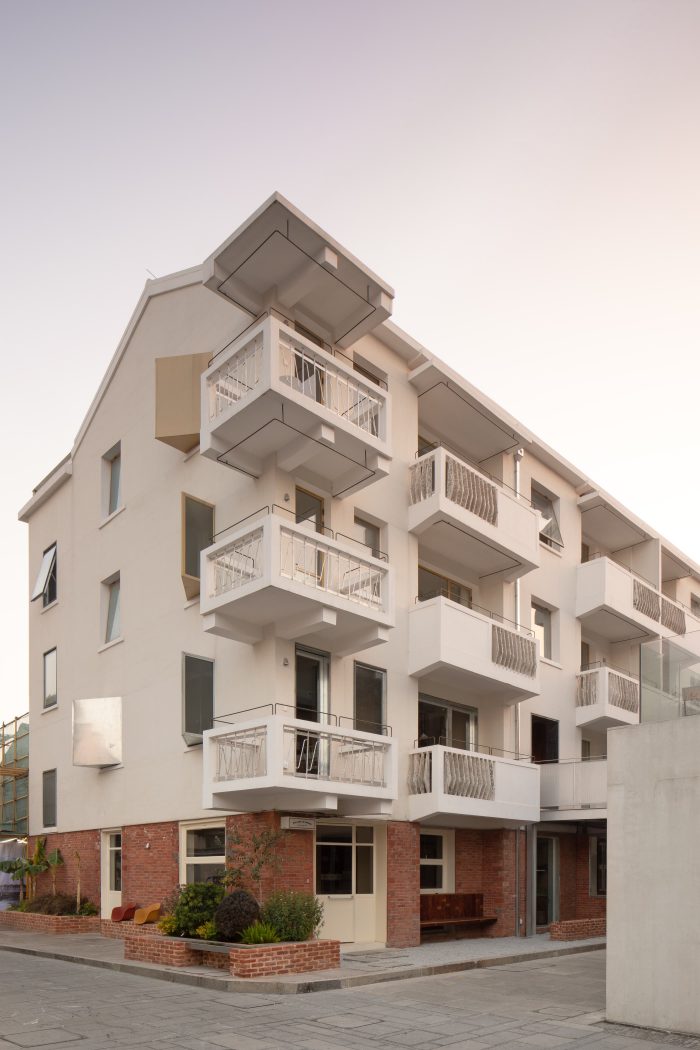
本项目为实在建筑工作室首个项目。位于南京秦淮区老城区内。初次来到项目地被城区内保留完好的烟火气所吸引。业主承租了其中4栋老建筑,希望将自身品牌中多元化业态融入其中,重新焕发其魅力。
This project is the first project of the firm. It is in the old city of Nanjing Qinhuai District. When I first came to the project site, I was attracted by the well-preserved atmosphere of the city. The owner has leased four of the old buildings and hopes to revive the charm of the buildings by incorporating diverse businesses from his own brand.
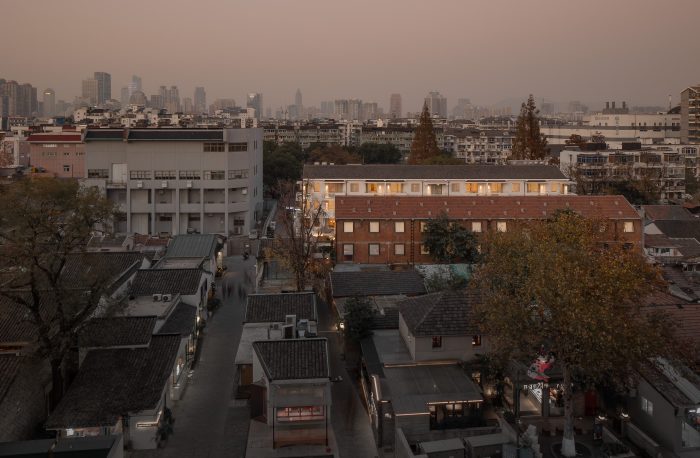
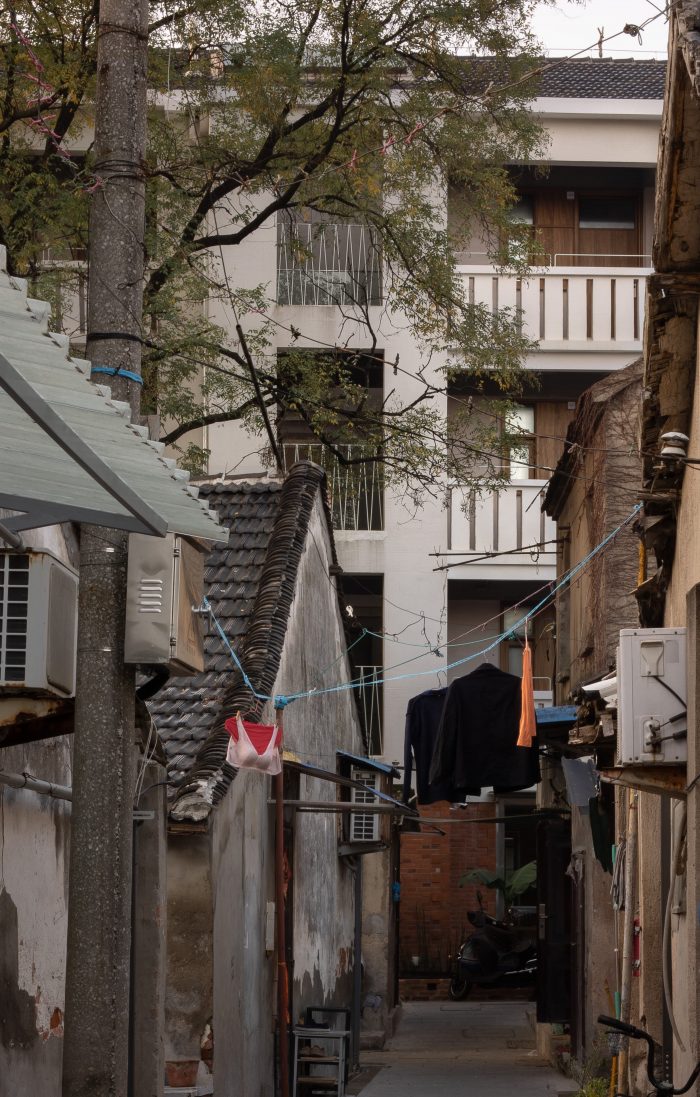
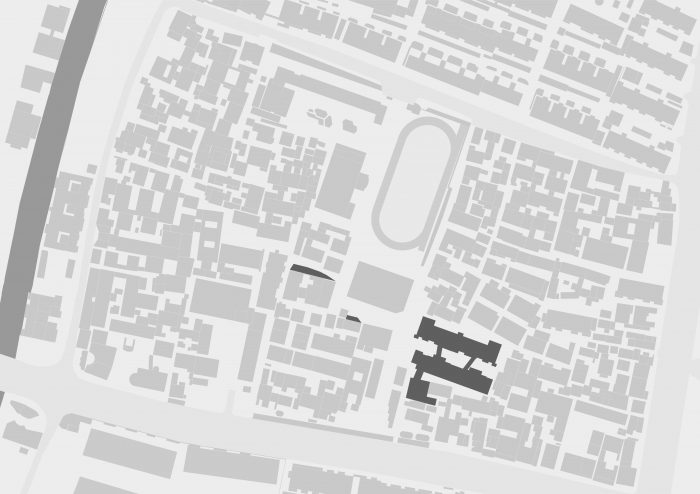
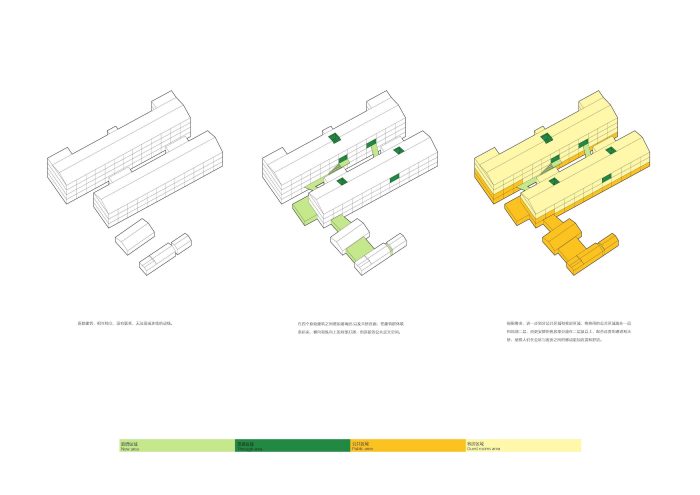
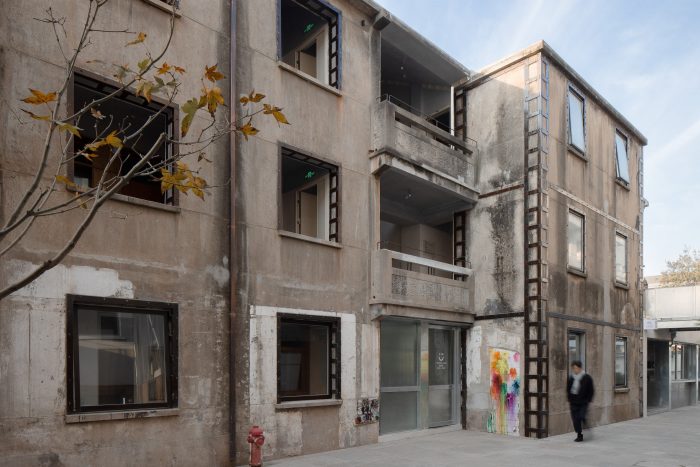
四栋建筑,其中两栋为单层木结构双坡建筑,木结构与建筑砖墙保存情况良好;另外两栋为多层砖混结构,室内开间非常局促,仅有3米,室内层高也非常有限,楼板之间也仅有2.6米。
我们面临的最大挑战在于如何解决新型业态所需要的连续大尺度空间与现有建筑狭小空间的矛盾。同时需要重新组织不同业态之间的动线,既能保证商业店铺所需求的大人流量又顾及到酒店住宿时的隐私。
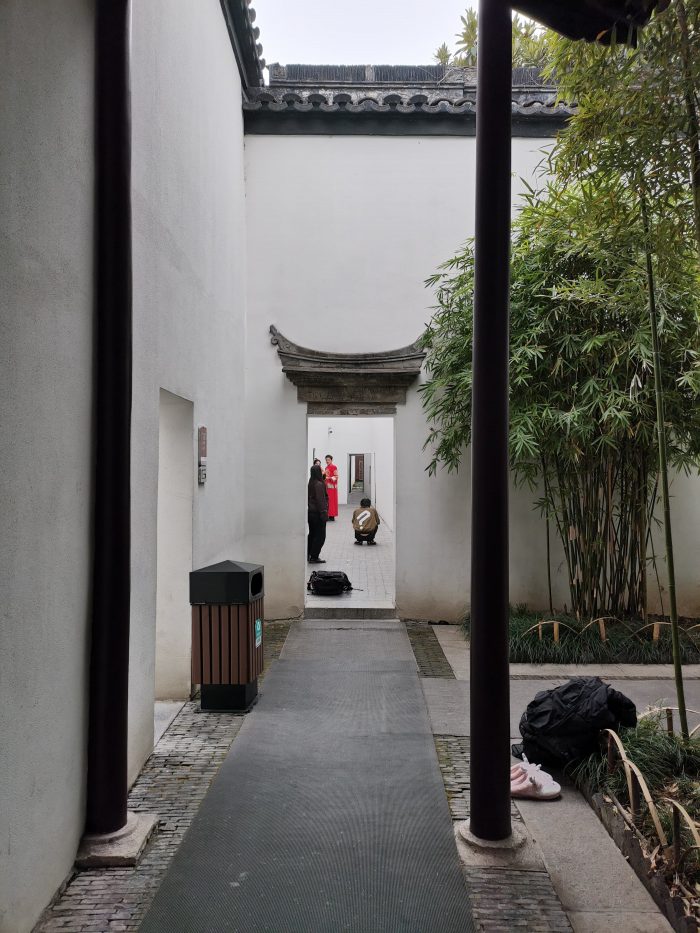
我们从南京人土风貌入手,前期做了大量时间的实地考察。设计团队参观了南京传统私家民宅的代表——甘煕宅第。其多进穿堂式的空间格局,1米左右的窄门串联相邻空间,形成层层嵌套的空间序列及严谨的南北轴线给团队带来了很大的启发,试图借鉴其空间格局解决本次设计难题。
Of the four buildings, two of them are single-story wood-frame double-slope buildings with well-preserved wood structures and building brick walls; the other two are multi-story brick buildings with very limited interior openings of only 3 meters and very limited interior floor heights, with only 2.6 meters between the floor plates.
The biggest challenge we faced was how to solve the conflict between the continuous large-scale space required by the new business and the small space of the existing building. At the same time, we needed to reorganize the movement lines between the different businesses to ensure the flow of people required by the commercial stores while considering the privacy of the hotel accommodation.
We started from Nanjing's local landscape and spent a lot of time on site visits. The design team visited the Ganshi Residence, a representative of traditional private houses in Nanjing. The spatial pattern of the house, with its multi-storey intersection, narrow doors of about 1 meter connecting adjacent spaces, forming a sequence of nested spaces and a strict north-south axis, inspired the team. The team was inspired by its spatial pattern and whether we could learn from it to solve this design problem.
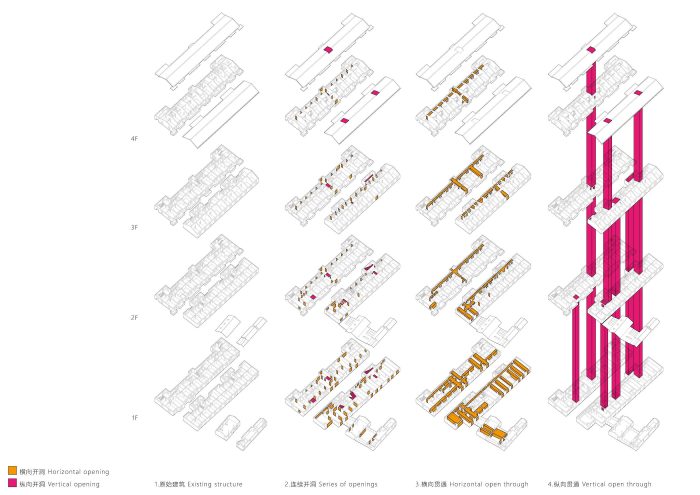
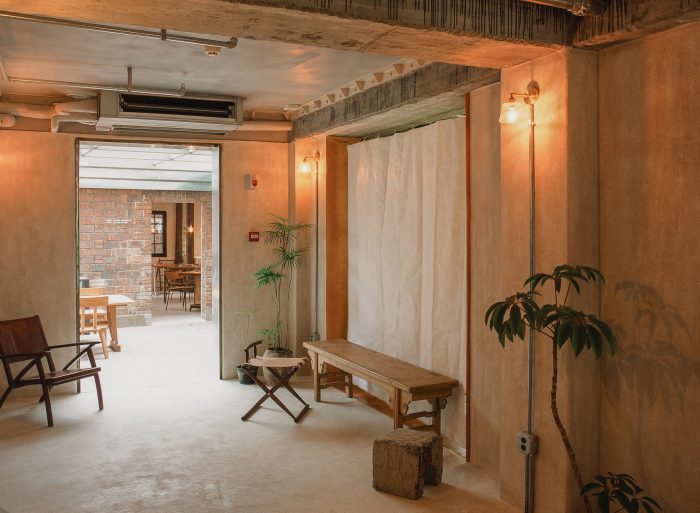
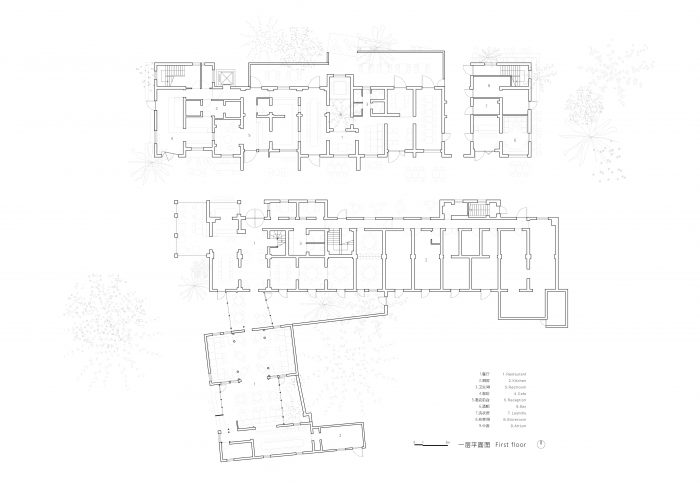
设计团队通过研究实体手工模型后,决定在处理29、31号楼底层室内商业空间时,在垂直于东西向的墙面上设置多个连续的大小不一的门洞,不对原始结构进行破坏的同时又能有效地控制整体项目预算。
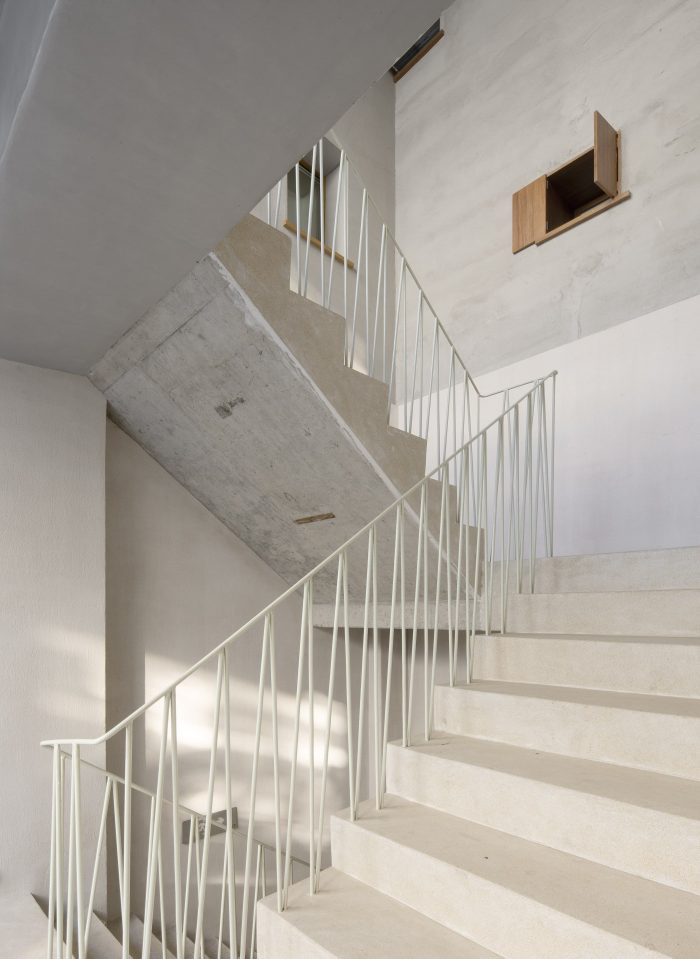
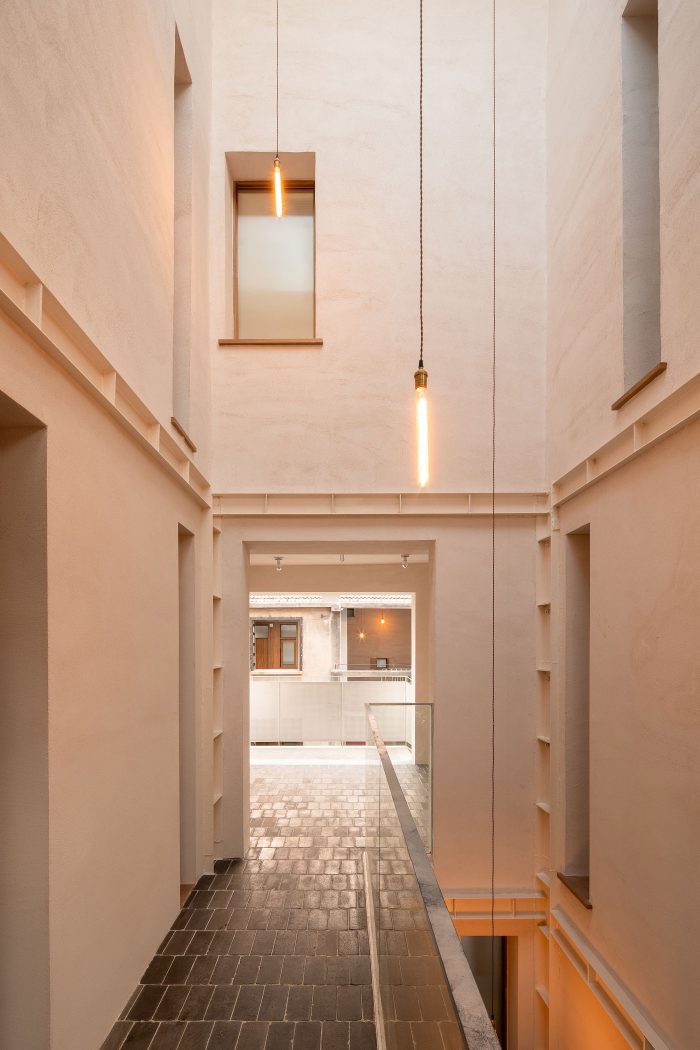
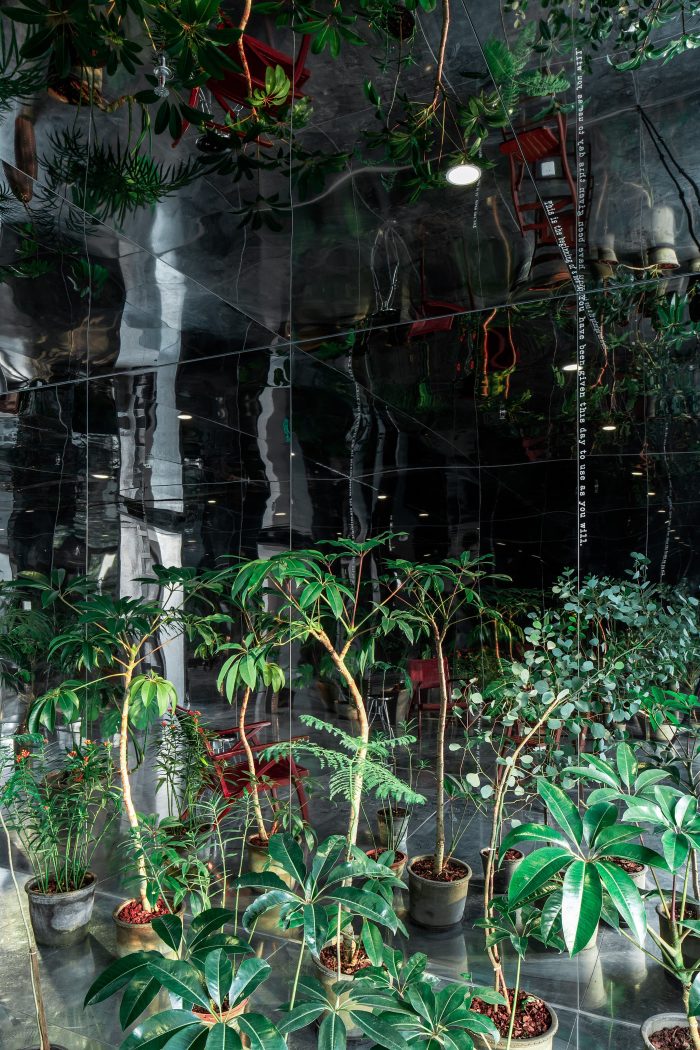
同时拆除原有29号楼中间及31号楼两侧的三部原始楼梯,打破原有的平层空间,形成新的挑空中庭,将阳光从顶层引入底层,解决建筑中部底层的采光不足、空间压抑等问题;并且作为楼层之间的过渡空间,使得不同楼层之间的人和景色互相渗透穿插,创造出符合现代商业需求的体验空间。
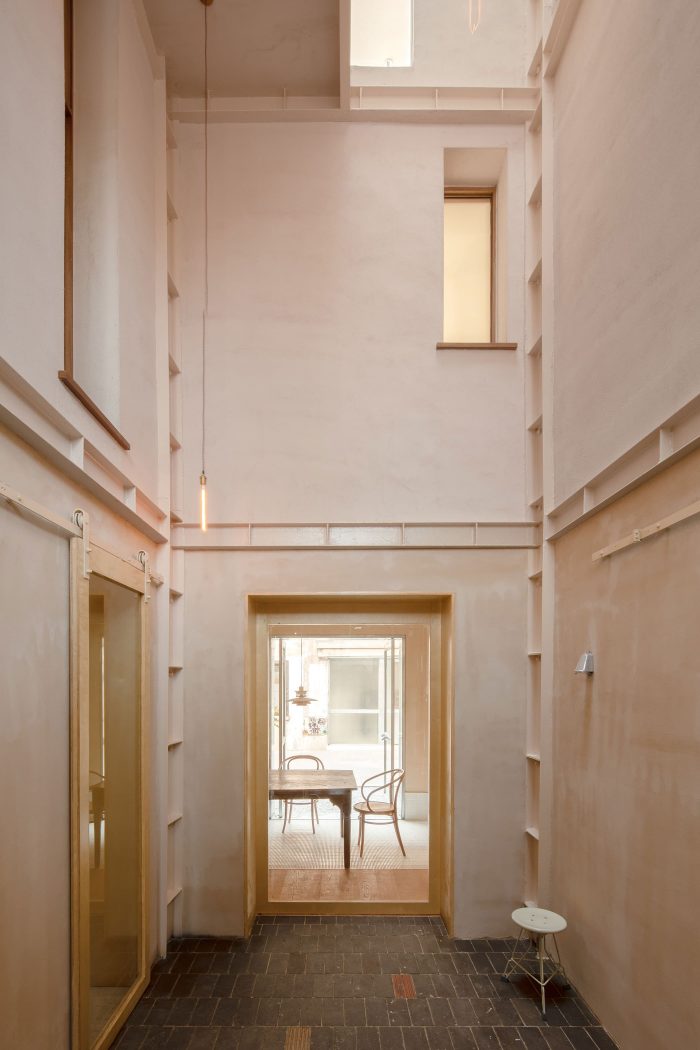
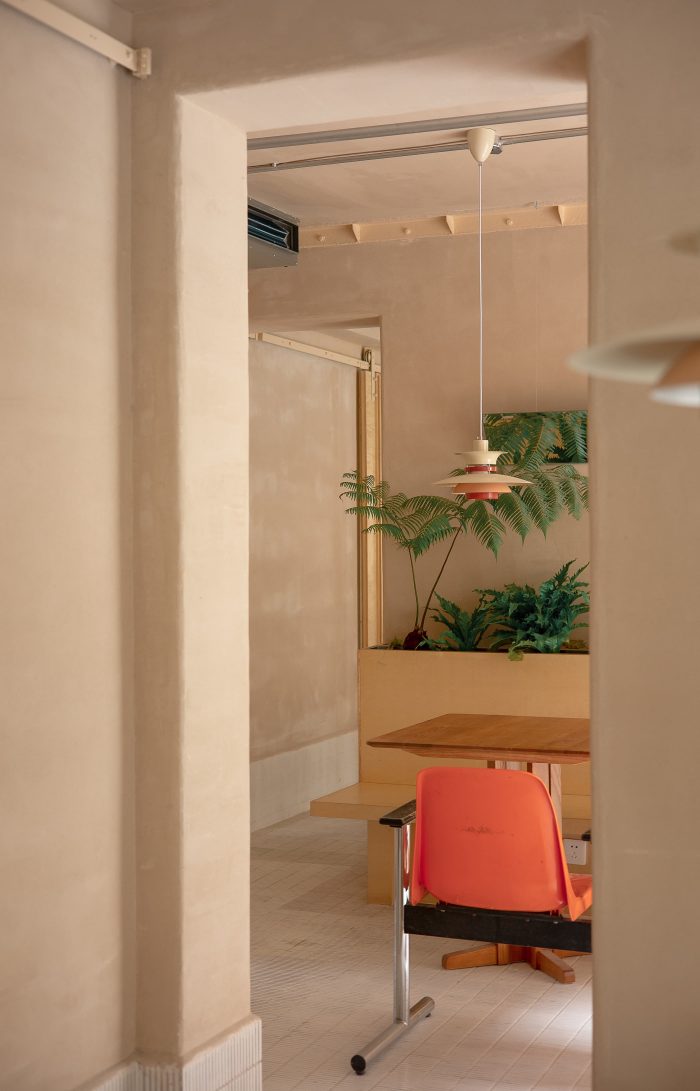
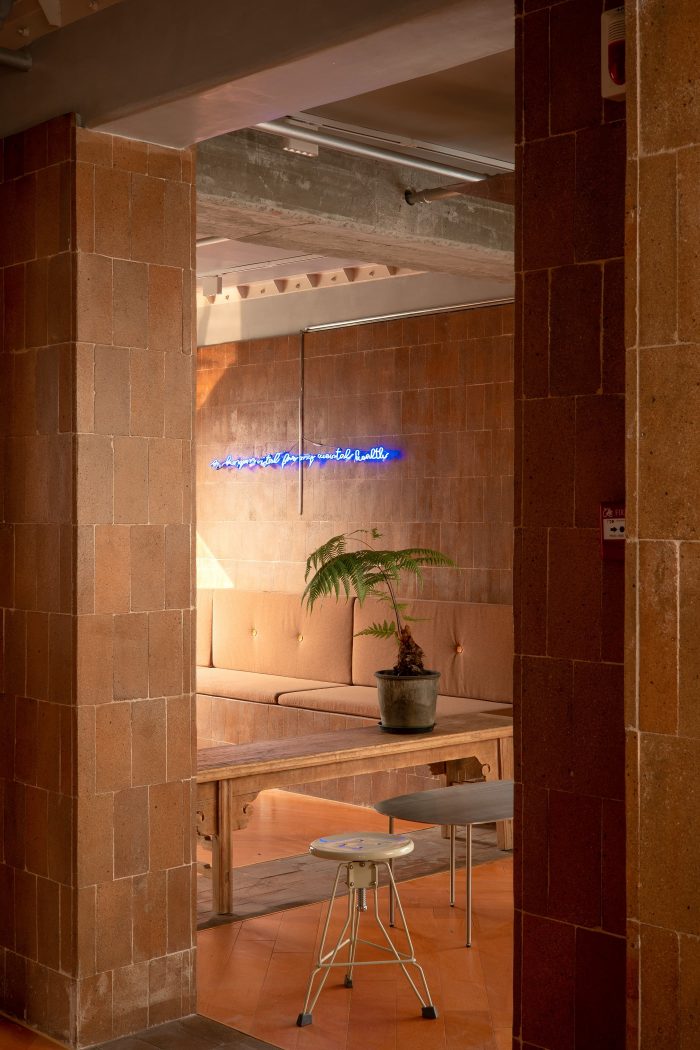
通过与结构方多次现场勘测、复核计算、反复调整后,新设置的门洞形成了全新的室内动线,将酒店前台、咖啡厅、餐厅等不同的商业组织起来,形成多条东西向贯穿的空间序列。不同的商业空间沿着一条轴线逐次展开,在四栋建筑内部中营造出洞内有景、景中有洞的空间体验。
After the design team studied the physical hand model, it was decided that when dealing with the interior commercial space on the ground floor of buildings 29 and 31, multiple continuous door openings of different sizes were set up on the walls perpendicular to the east-west direction, so as not to damage the original structure while effectively controlling the overall project budget.
At the same time, the original three staircases in the middle of Building 29 and both sides of Building 31 are removed to break the original flat floor space and form a new atrium, which brings sunlight from the top floor to the bottom floor and solves the problems of insufficient light and depressed space in the middle and bottom floors of the building; and as a transition space between floors, it makes people and scenery between different floors penetrate and intersperse each other, creating an experience space that meets the needs of modern business.
Through repeated on-site surveys with the structural party, review calculations and repeated adjustments, the newly set doorway forms a new indoor dynamic line, organizing different commercial such as hotel reception, café and restaurant, forming multiple east-west running spatial sequences. Different commercial spaces unfold one by one along one axis, creating a spatial experience of a cave within a cave and a cave within a cave within a cave in the interior of the four buildings.
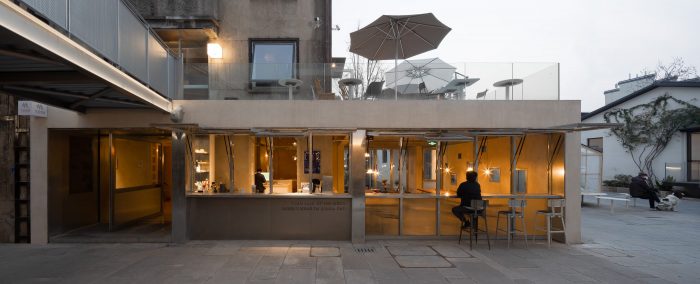
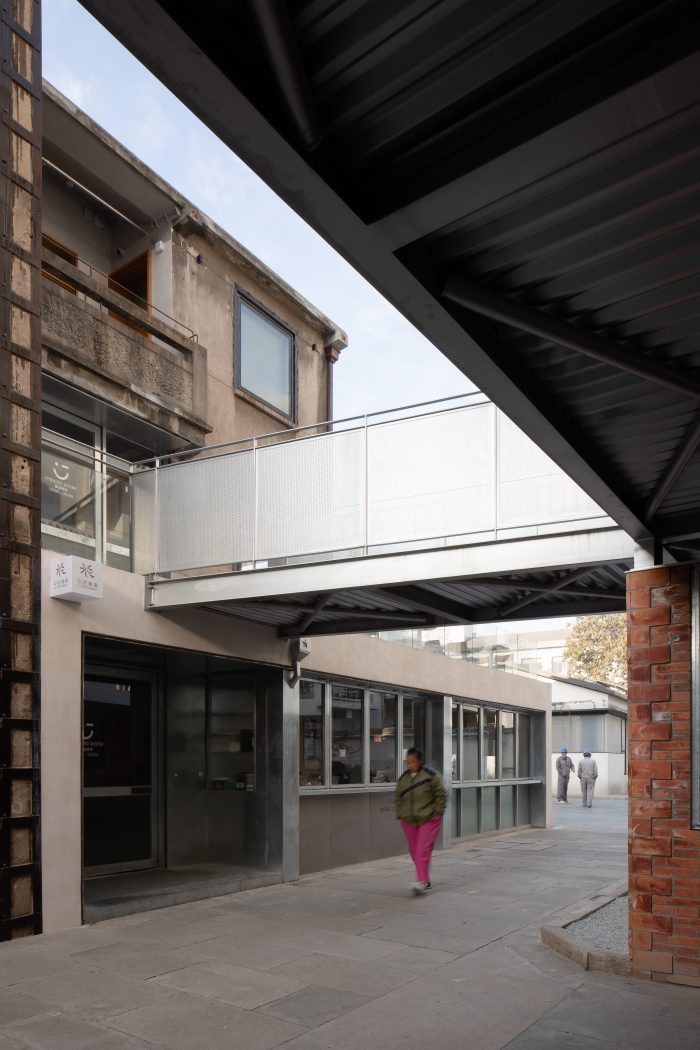
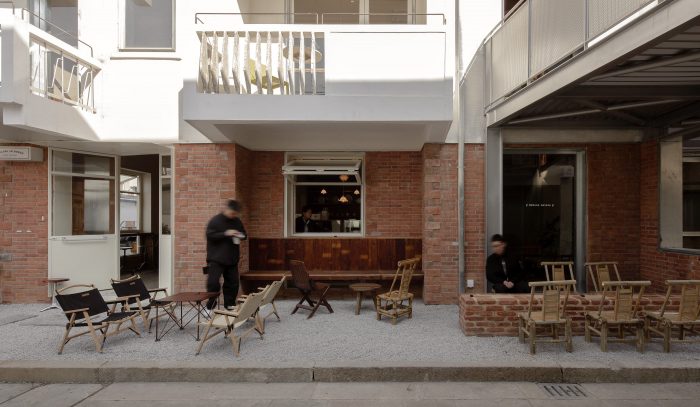
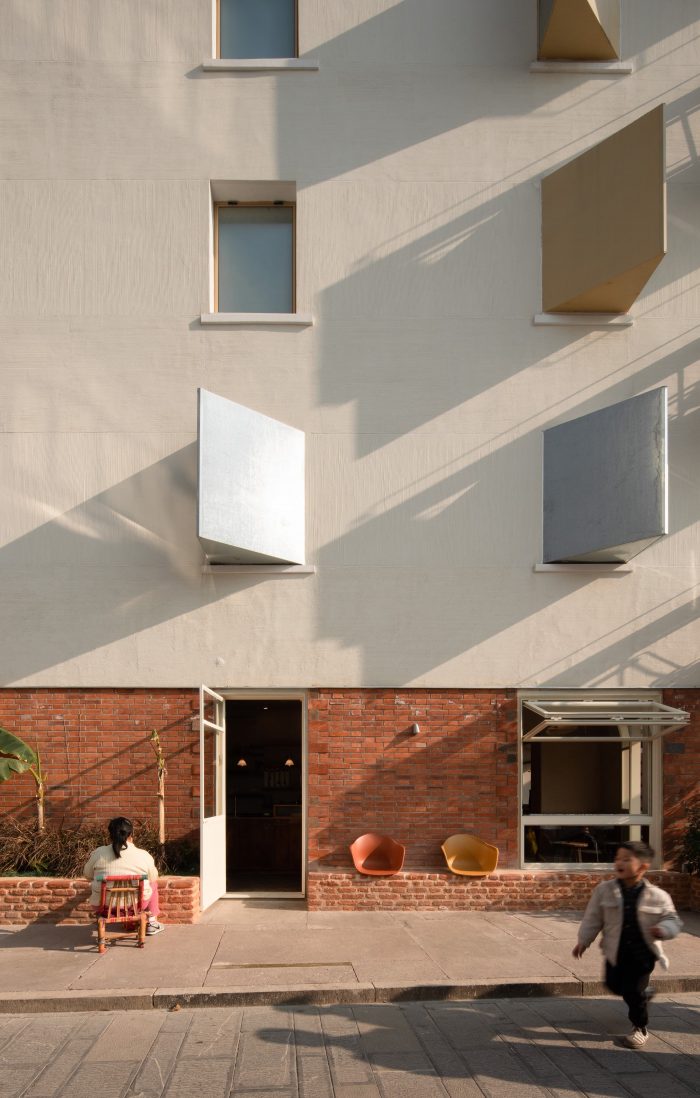
在建筑门窗的设计上,尽可能使建筑以开放的姿态融入周边社区。底层餐饮区立面采用大量开启式的玻璃门窗,模糊室内外界限,将内部商业空间拓展至外部街区,丰富业态的经营区域和模式。
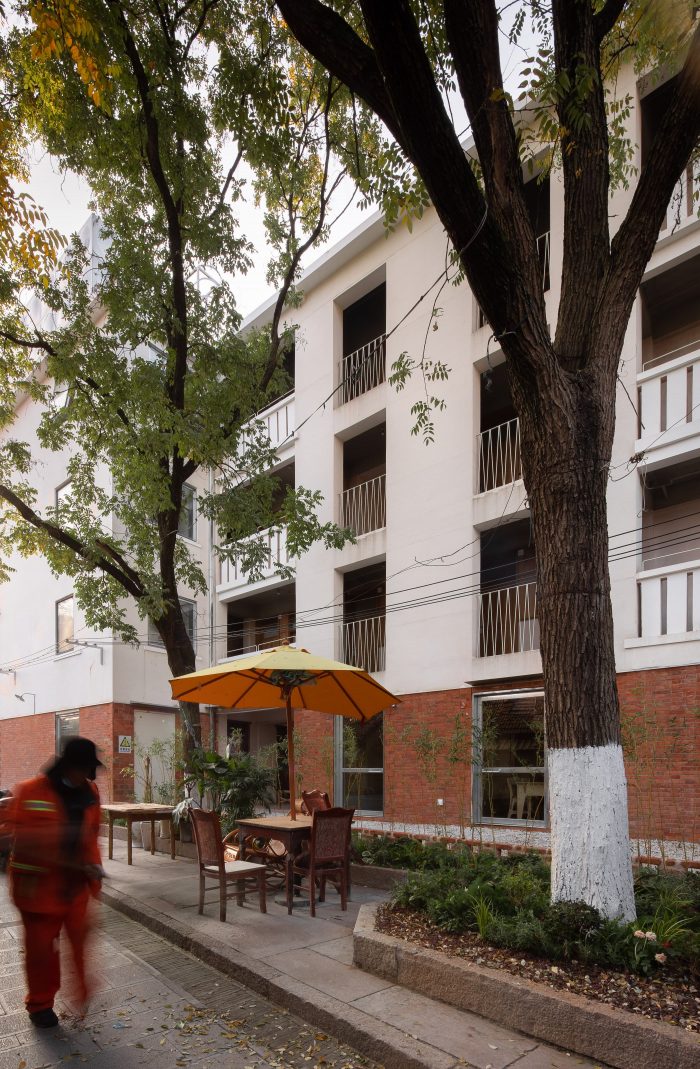
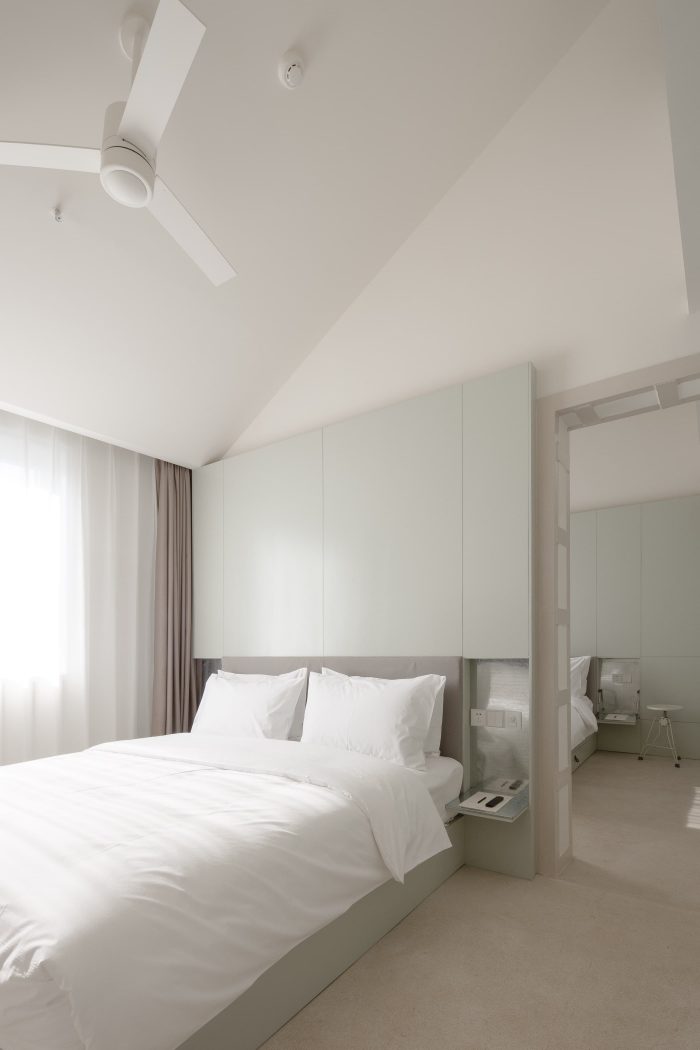
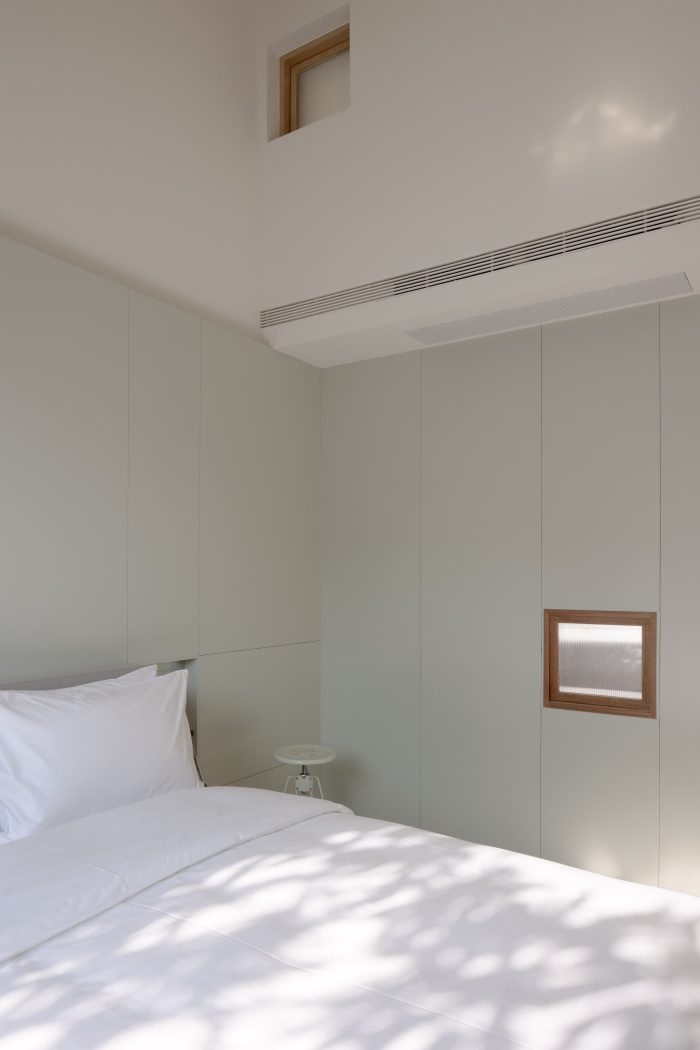
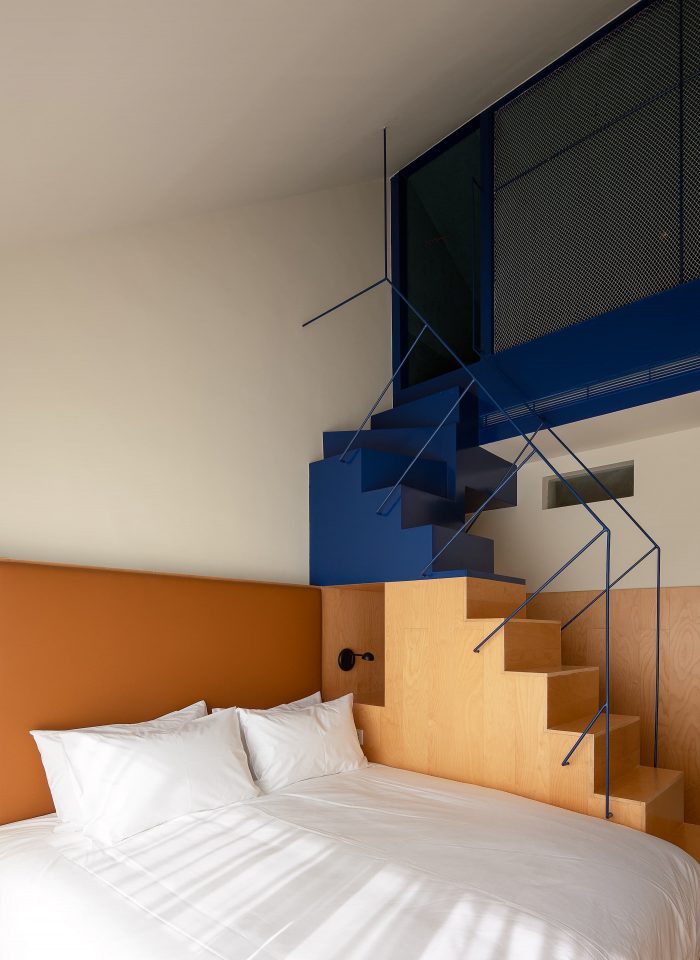
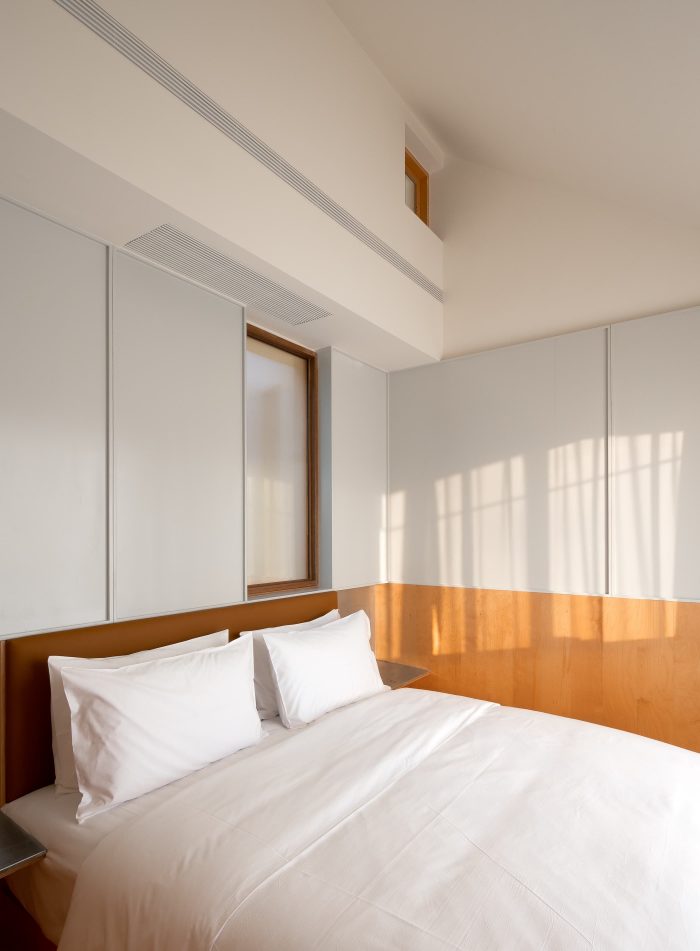
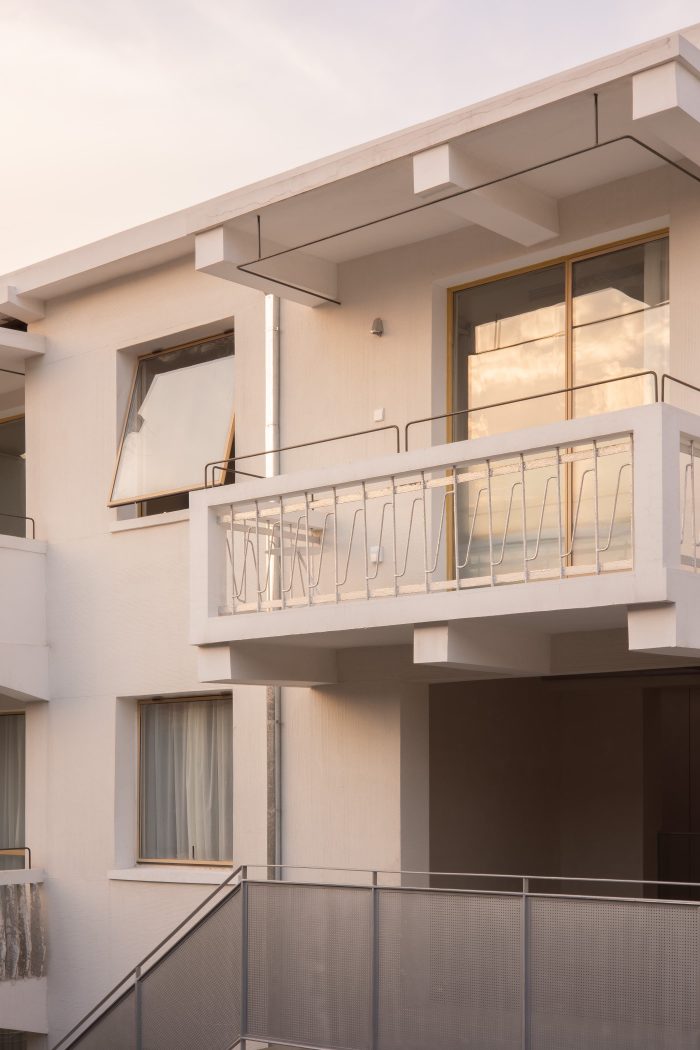
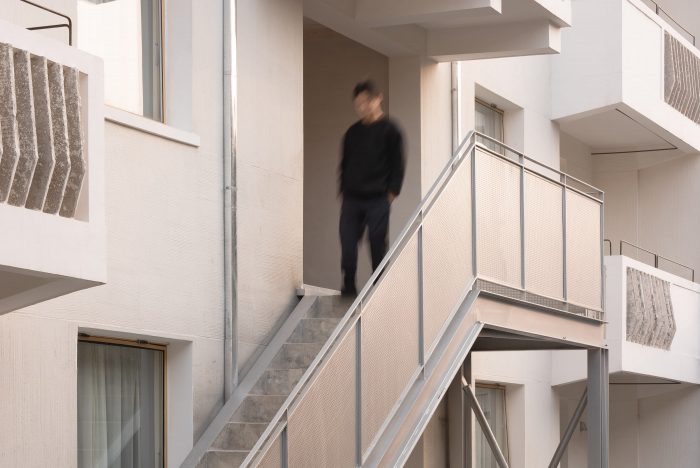
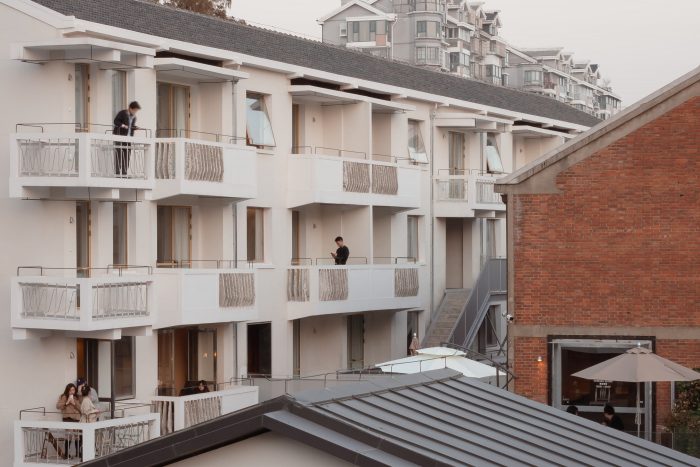
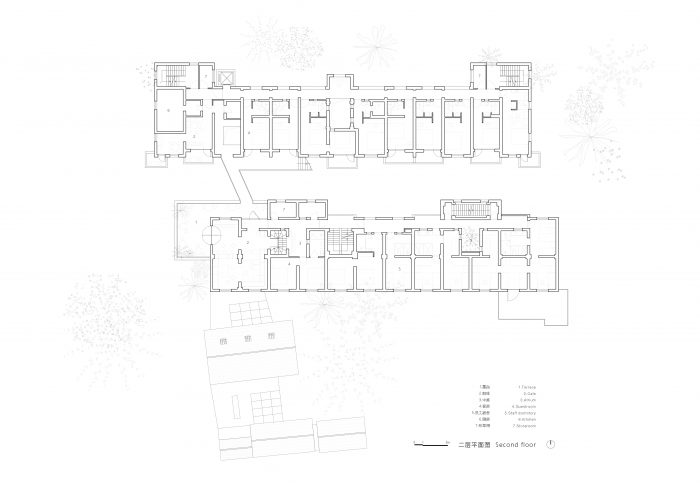
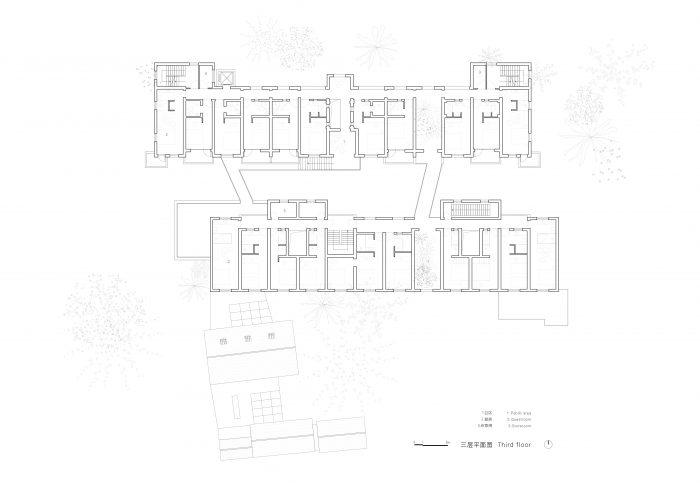
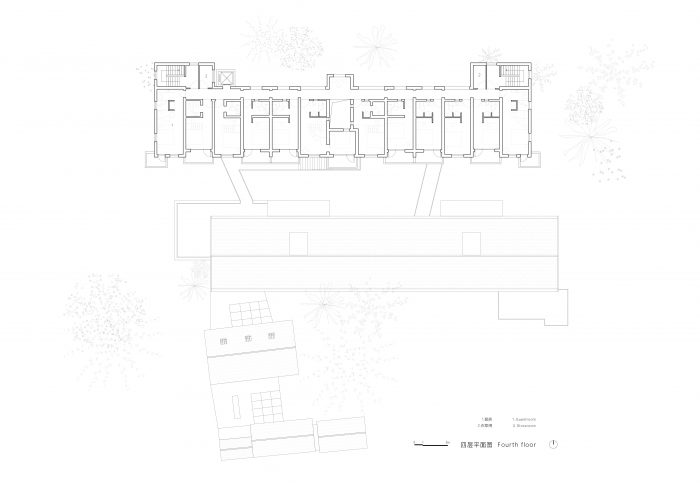
建筑二至四层为酒店客房,共有44间客房。在设计酒店公共空间时,我们试图凸显老式居民楼的建筑特色,打破现代酒店较为常见的封闭式走廊,保留原始半开敞式的公共走廊,希望客人能体验到老城区的生活方式。
In the design of the building doors and windows, the building is integrated into the surrounding community with an open attitude as much as possible. Many open glass doors and windows are used on the ground floor restaurant façade, blurring the boundary between interior and exterior, expanding the internal commercial space to the external neighborhood, and enriching the business areas and modes of the business.
The second to fourth floors of the building are hotel rooms, with a total of 44 rooms. When designing the public space of the hotel, we tried to highlight the architectural features of the old residential buildings, breaking the closed corridors more common in modern hotels and retaining the original semi-open public corridors, hoping that guests can experience the lifestyle of the old town.
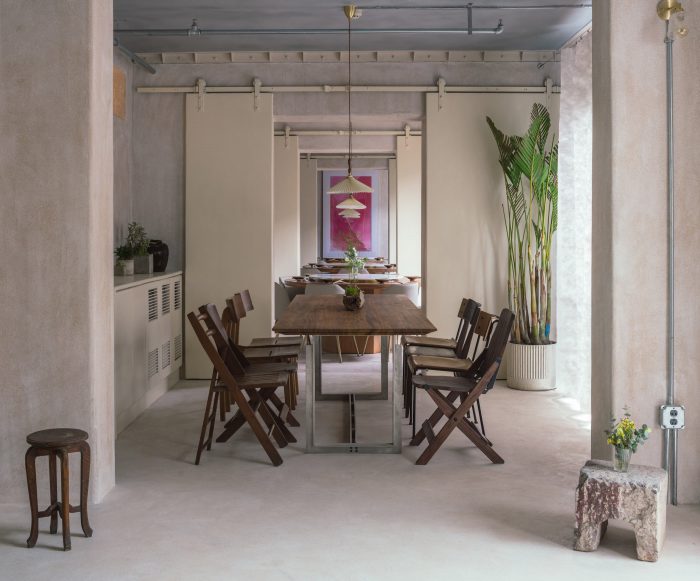
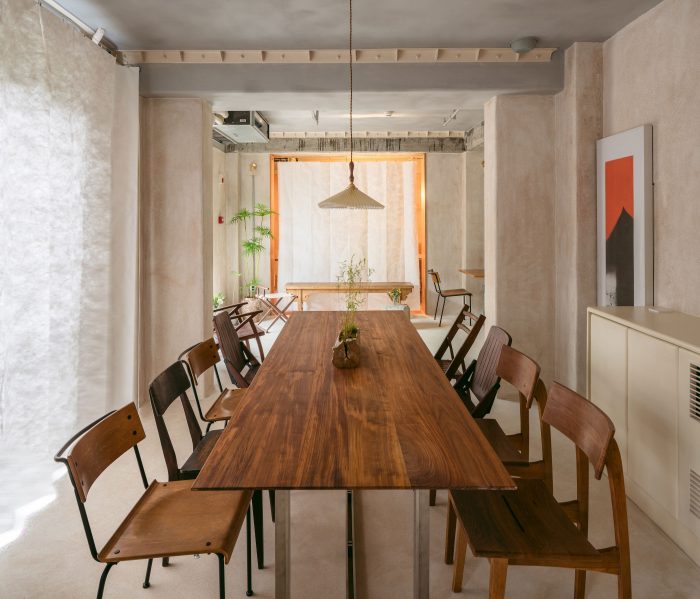
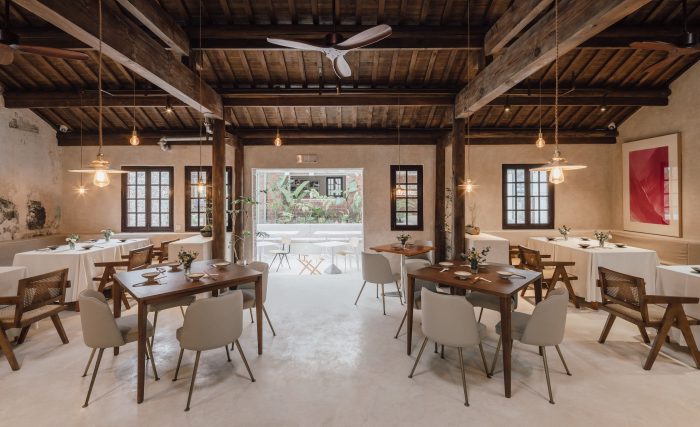
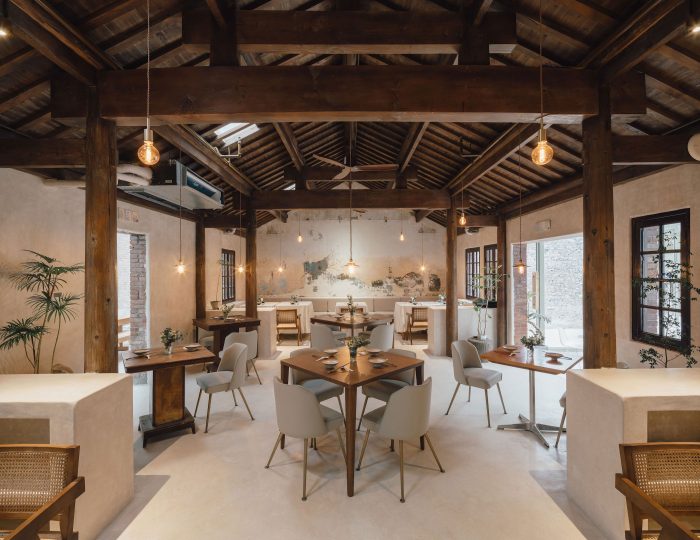
一层的商业空间通过裸露出原有的木结构屋顶、预制板、后期加固时所采用的混凝土梁以及角铁等构件,尽量凸显出原始建筑的个性。
餐厅保留了一面斑驳的老墙面,业主邀请了艺术家魏全儒先生根据现有破损墙面进行壁画创作,得到了出其不意的效果。带有时间痕迹的混凝土梁与肌理丰富的米色水磨石涂料、木饰面,裸露的灯具及设备管道,不同时间的物件互相碰撞,又保留统一的质朴格调,在老建筑里诉说着新的故事。
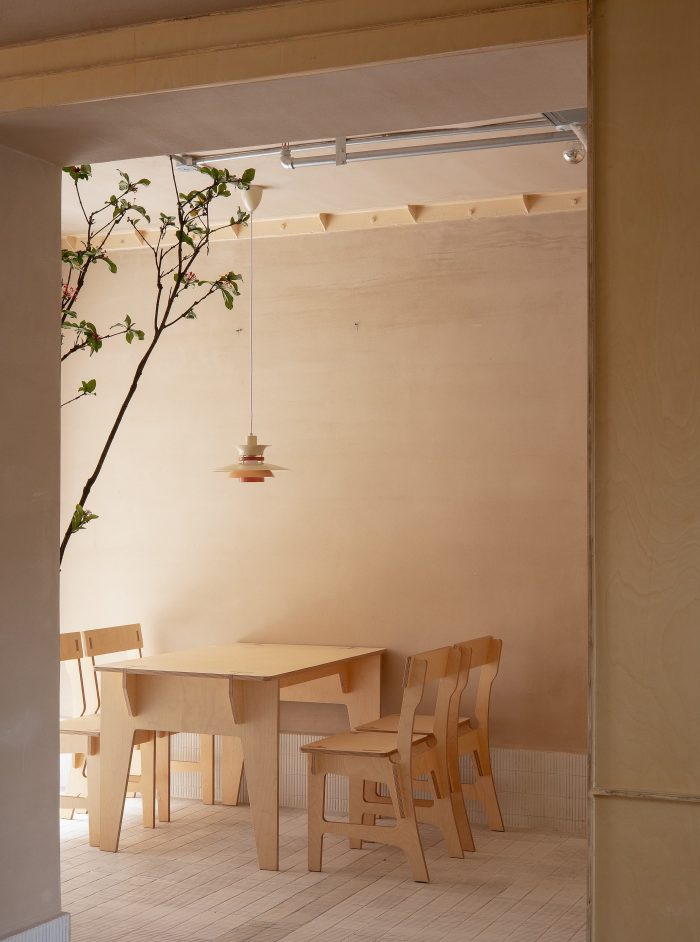
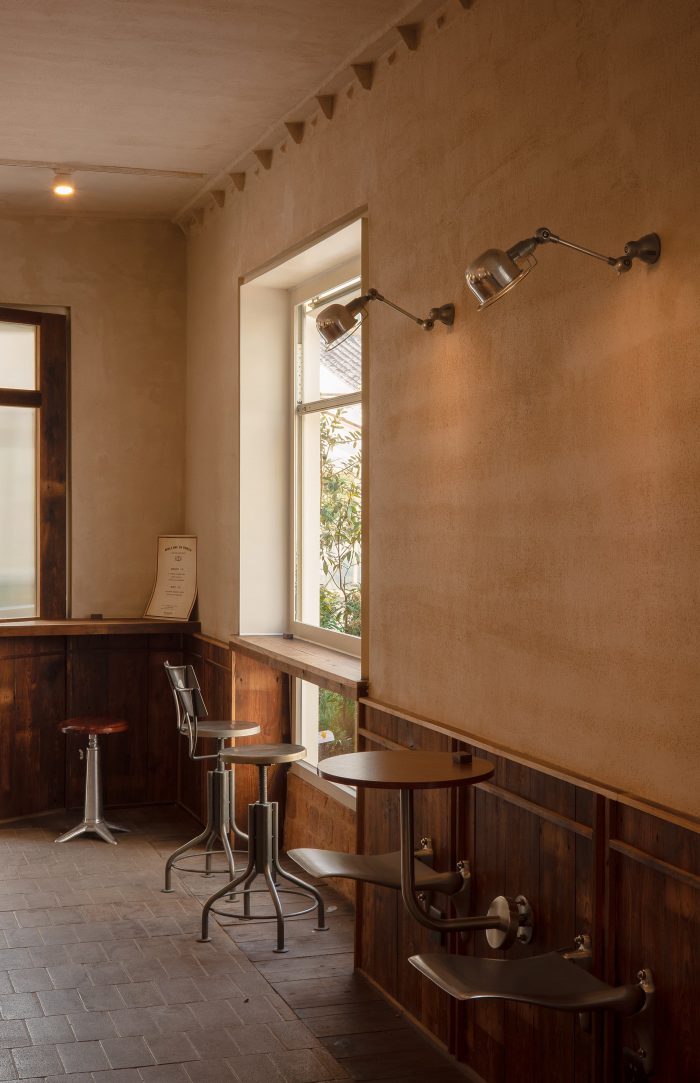
咖啡厅的墙裙选用了拆迁时留下的废弃木门作为材料,搭配手工打磨的浅色批砂墙面,契合了咖啡店所需求的复古主题。
The commercial space on the first floor is designed to bring out the character of the original building by exposing the original wooden roof and prefabricated panels, as well as the concrete beams and angle iron used in the later reinforcement.
The restaurant retains an old, mottled wall, and the owner invited Mr. Quanru Wei, an artist, to create a mural based on the existing damaged wall to get an unexpected effect. The concrete beams with traces of time and rich texture of beige terrazzo paint and wood veneer, exposed lamps and equipment pipes, objects from different times collide with each other and retain a unified rustic tone, telling a new story in the old building.
The wainscoting of the café is made of discarded wooden doors left over from the demolition, and the hand-polished light-colored sanding wall surface fits the retro theme demanded by the café.
Interior Designer: SZ-ARCHITECTS
Interior Area: 4288m²
Design Year: 2019.11-2020.11
Completion Year: 2021.12
Lead Designer: Zhikun Zhang
Design Team: Yue Liu, Hua Xu, Xin Liang, Ivan Yu, Xinkai Ye, Deyong Kong
Clients: Nanjing Huaji Hotel
Photographer: Mata Okawa, Runzi Zhu
Editor: Zhikun Zhang
Translator: Shuang Li
City: Nanjing, Jiangsu
Country:China