
圣约翰-保罗二世教堂的建造是一个独特的故事,因为从表达建造教堂的意图、奠基到教堂的祝圣,几乎过去了二十年。整个设计和施工过程是由当地社区组织的,而建筑的资金主要来自于捐款。
The construction of the Saint John Paul II Church is a unique story, as almost two decades passed from when the intention to build the church was expressed and the laying of the foundation stone to the consecration of the church. The entire design and construction process was organized by the local community while the construction of the building was largely funded by donations.
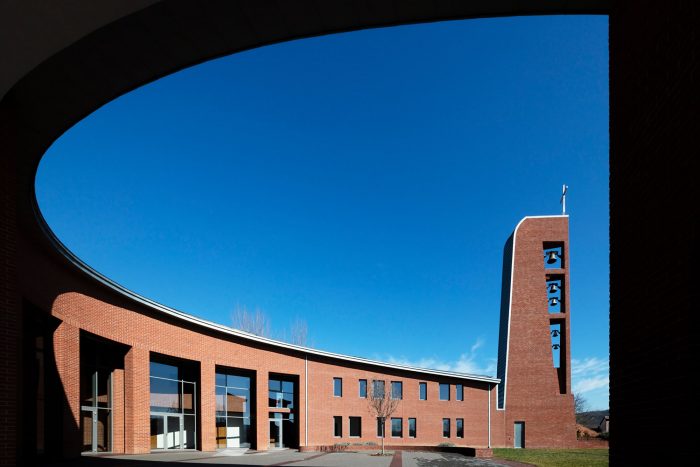
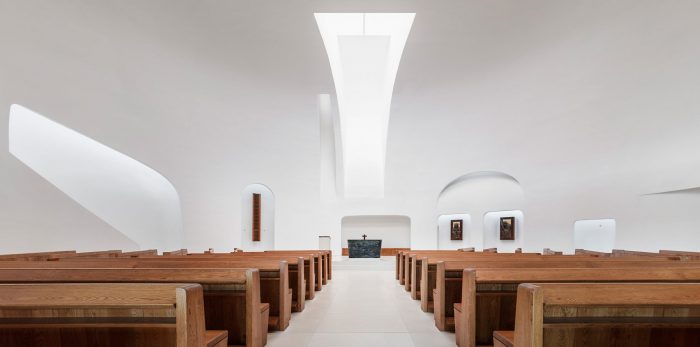
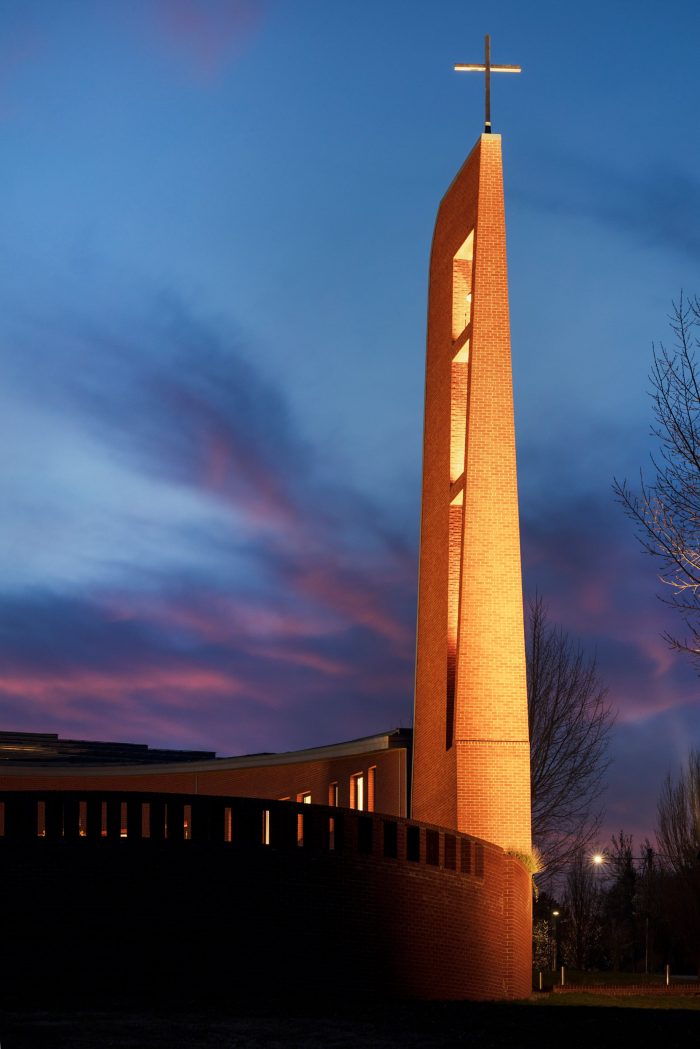
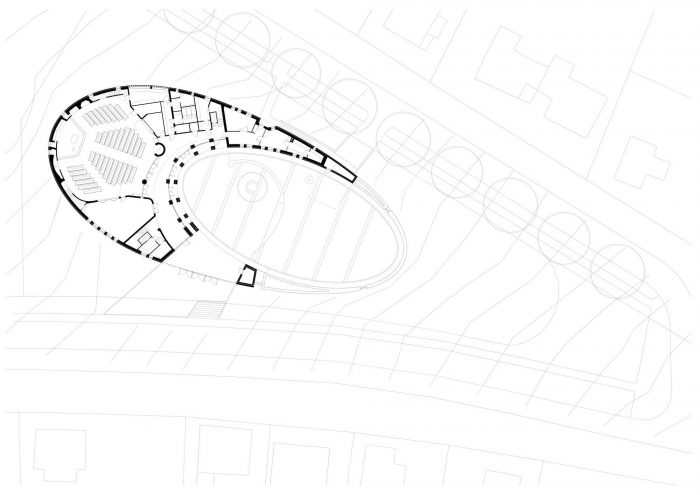
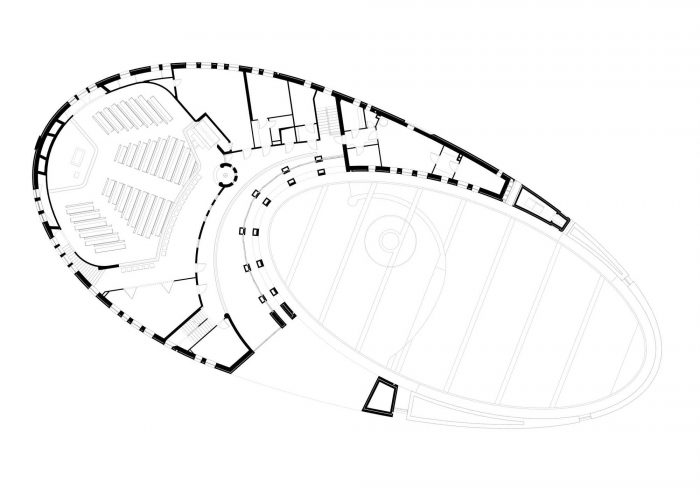
这座新教堂位于布达佩斯附近,建在帕蒂村的一个住宅区内。用于举行弥撒的椭圆建筑体现了在异质环境中的不变性。该设计不仅包括宗教功能:礼仪空间周围有公共和教育室、活动空间、客房、教区住宿、办公室和服务室,它们被安排在一个统一的平面图中,也包括了花园。该建筑为当地社区生活的全方位服务。因此,教堂已成为音乐会、展览和儿童活动的场所,而花园则成为接待和休闲活动的场所。
The new church, situated near Budapest, was built in a residential area of the village of Páty. The elliptical building for holding mass embodies constancy in a heterogeneous environment. The design includes more than just religious functions: the liturgical space is surrounded by communal and educational rooms, an event space, guest rooms, a parish lodging, offices, and service rooms, which are arranged in a unified floor plan that also incorporates the garden. The building serves the full spectrum of local community life. Thus, the church has become a venue for concerts, exhibitions, and children's events, and the garden has become one for hospitality and leisure activities.
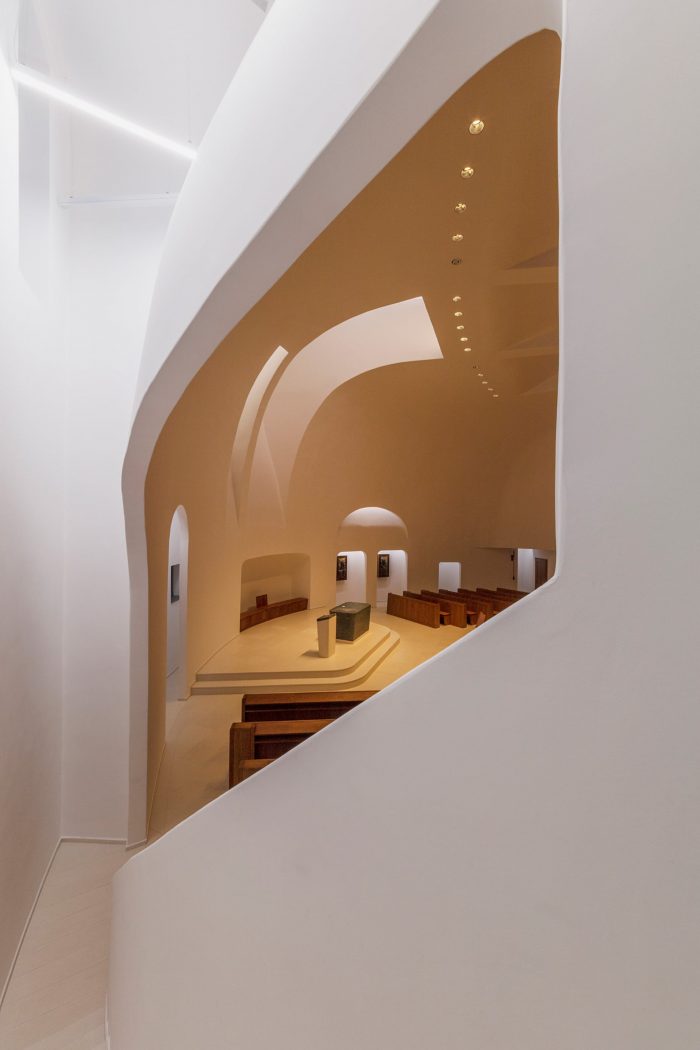
教堂空间的设计--建筑的内部核心--是为了应对近几十年来礼仪方面的变化而设计的。因此,该建筑可以被视为当代宗教建筑的实验的一部分,以创造一种教会模式,其中重点已转向社区的积极参与。
The design of the church space - the inner core of the building - was designed to respond to the changes in the liturgy that have taken place in recent decades. Thus, the building can be regarded as part of an experiment by contemporary religious architecture to create a kind of church model in which the emphasis has shifted towards the active participation of the community.
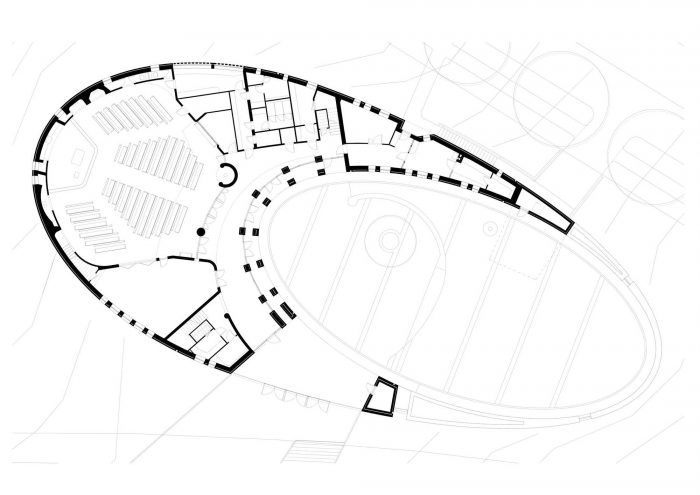
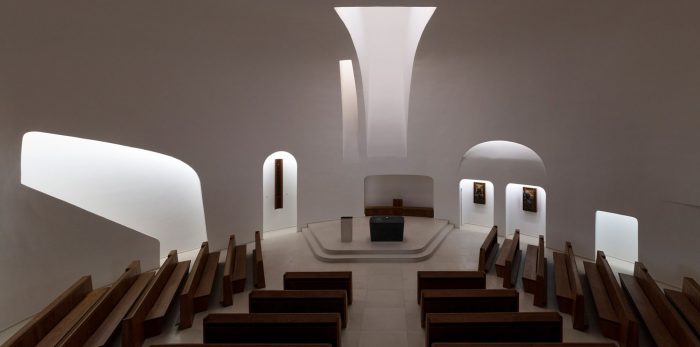
其结果是,空间组织向中心靠拢,主殿失去了焦点,出现了一个教堂花园,而礼仪空间唤起了由巴洛克教堂典型的天顶封闭的圣殿。历史上教堂建筑的传统以一种新的形式出现:花园和教堂空间的断裂角度,即主殿和圣所的轴线,是中世纪以来的一个象征,也是对破碎身体的隐喻。
The result is a spatial organization converging towards a center with the main nave losing its focus and appearing as a church garden, while the liturgical space evokes the sanctuary closed by an apse typical of a Baroque church. The traditions of historical church architecture appear in a new formulation: the broken angle of the garden and the church space, that is, of the axes of the main nave and the sanctuary, is a symbol known since the Middle Ages, and a metaphor for the broken body.
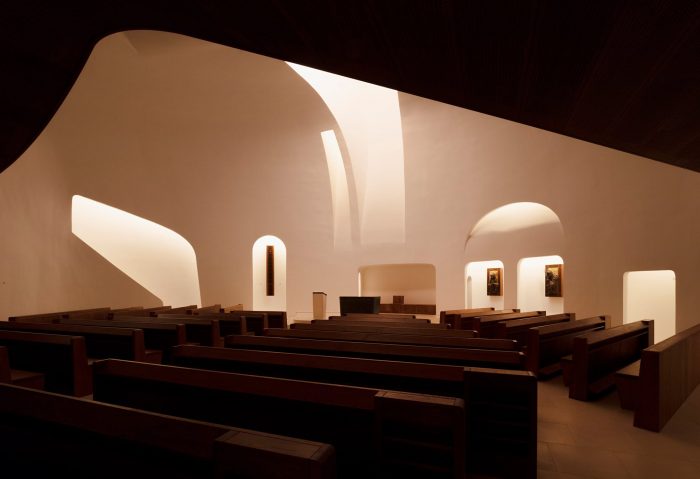
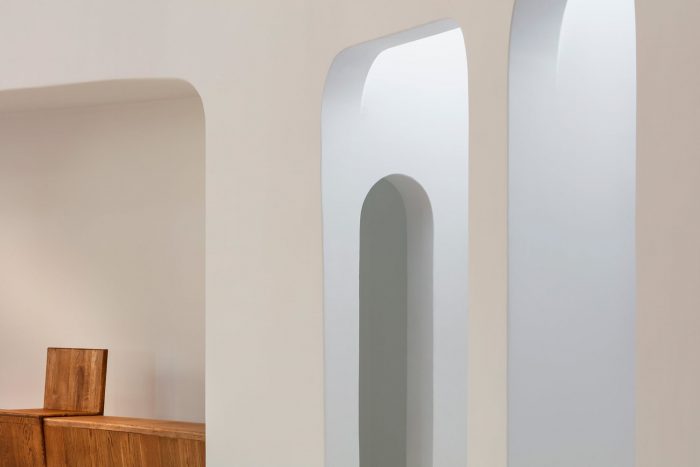
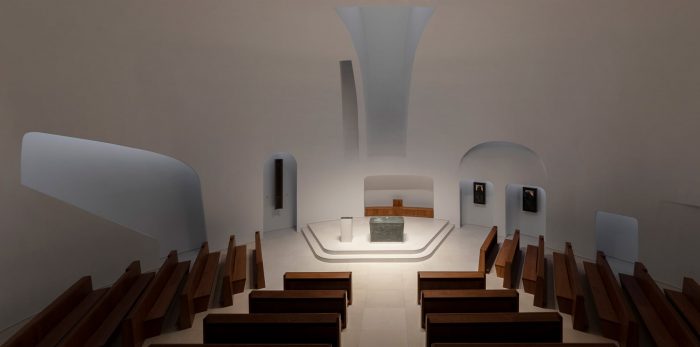
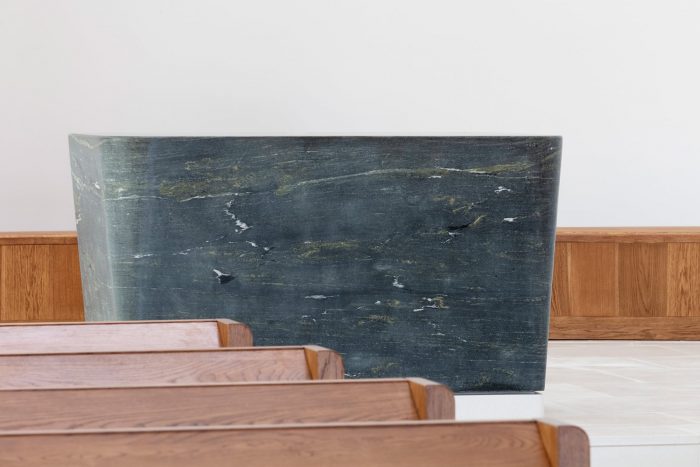
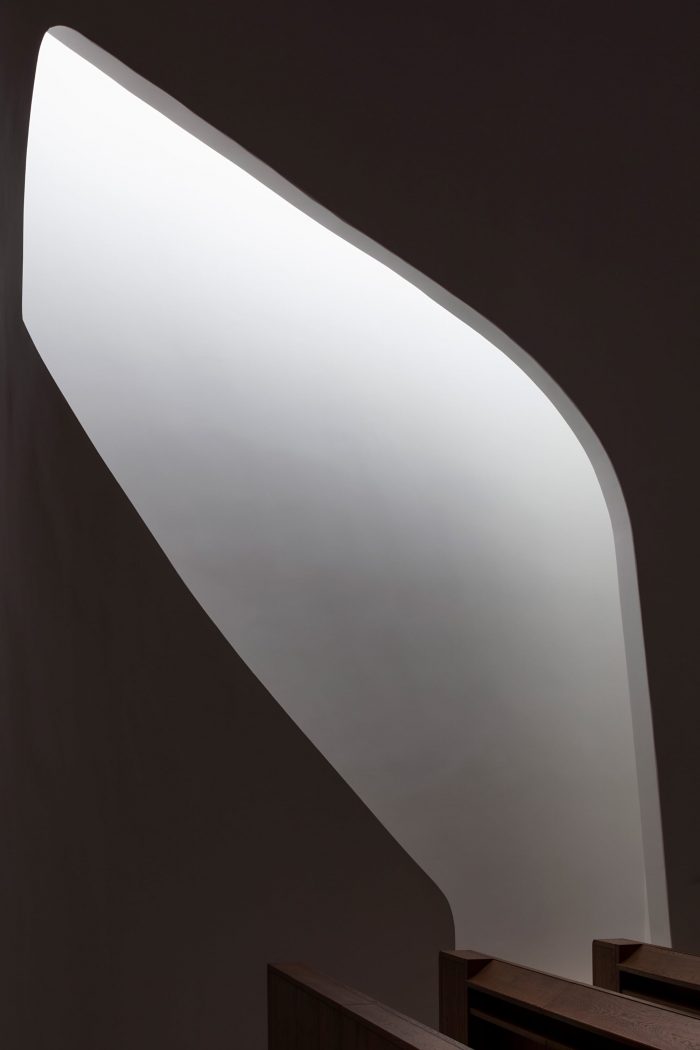
教堂空间中最突出的元素是祭坛的绿色石块。祭坛的接近,照亮中心的自然光,以及家的感觉,激发了赎罪和敬畏。关于建筑技术,该建筑最复杂的部分是钢筋混凝土穹顶,其中空间的气氛是由散射光和定向光创造的,根据神圣的功能强调了重点。
The most prominent element of the church space is the green stone block of the altar. The proximity of the altar, the natural light illuminating the center, and the feeling of homeliness inspire atonement and awe. Regarding construction technology, the most complex part of the building is the reinforced concrete dome, in which the atmosphere of the space is created by diffused and directed lights, emphasizing accents according to the sacral functions.
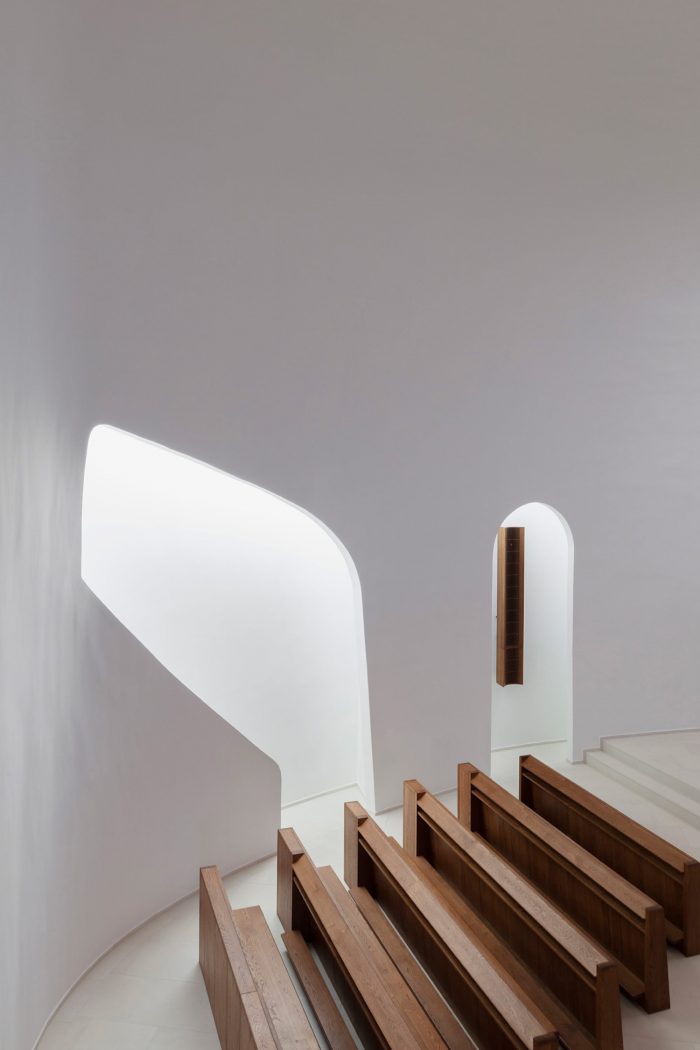
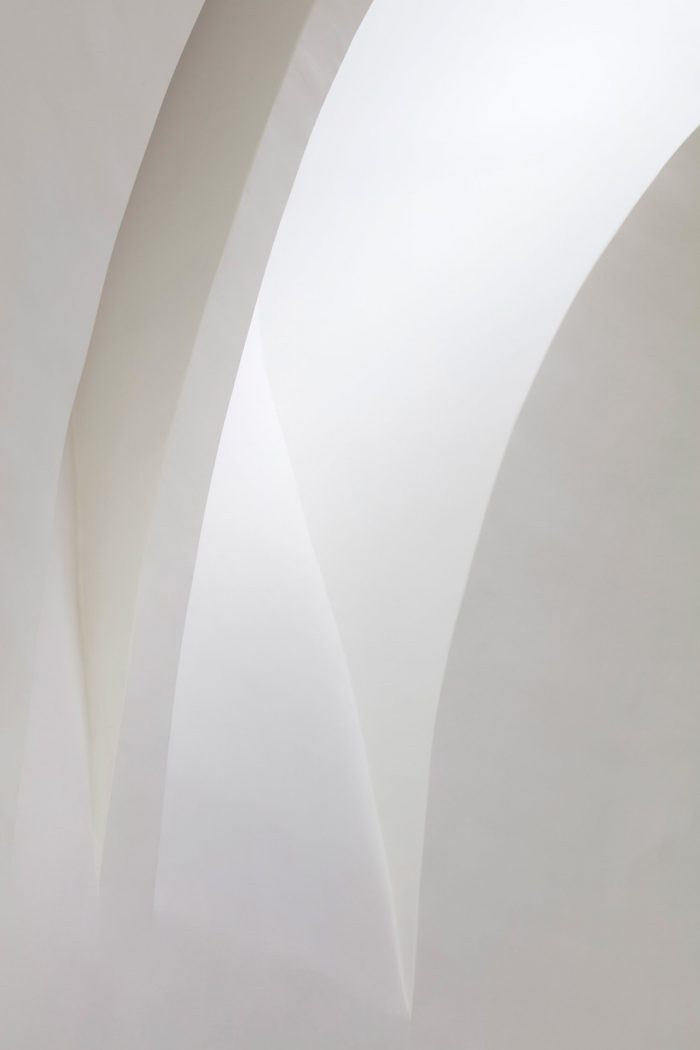
教堂的雕塑般的天顶实际上是一个与中轴线对称的平移表面,由一排位于特定空间曲线上的相同的弧线产生。所谓的生成面使经济规划和实施成为可能,为结构的建设提供了最佳成本。
The sculpture-like apse of the church is, in fact, a translational surface symmetrical with the central axis, resulting from a row of identical arcs situated along a given spatial curve. The so-called generated surface created made economic planning and implementation possible at an optimal cost for the construction of the structure.
当代建筑的出现也对其建筑环境产生了长期的积极影响。教堂建设的重要信息是,高质量的建筑可以在以社区为基础的组织框架内实施,不需要专业管理,也不需要给定的经济背景。
The emergence of contemporary architecture also has a long-term positive impact on its built environment. The important message of the construction of the church is that high-quality architecture can be implemented within the framework of a community-based organization, without professional management and regardless of the given economic background.

Architects: Robert Gutowski Architects
Area : 980 m²
Year : 2020
Photographs :Tamás Bujnovszky
Manufacturers : iGuzzini, All light, Rőben Brick
Principal Designer & Author : Robert Gutowski
Design Team : Ákos Boczkó, Gáspár Bollók, Barnabás Dely-Steindl, Hunor László Kovács, István Kövér, Attila Révai, Béla Ákos Szokolay
Structure Design : Zoltán Klopka
Engineering : András Lantos, Gáspár Sándor, Gellért Mérő
Fire Protection : János Mészáros
Landscape Design : Attila Páll
Artworks : Csaba Ozsvári, István Böjte Horváth
City : Páty
Country : Hungary