
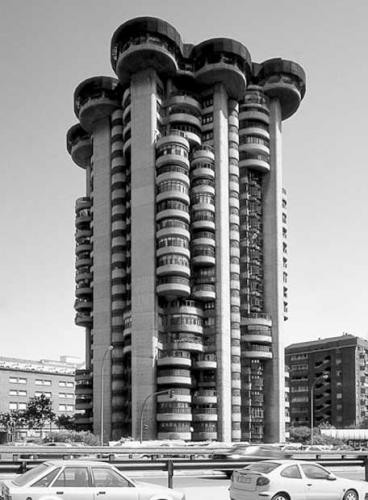
布兰卡斯塔是西班牙有机主义运动的建筑标志。由弗朗西斯科-哈维尔-萨恩斯-德-奥伊萨设计,于1969年完工,这座外露的混凝土塔楼高出马德里的天际线71米,也是当时最复杂和创新的钢筋混凝土结构之一。它也是当时最复杂和创新的钢筋混凝土结构之一,没有现浇混凝土所具有的典型的直线型特征。更多细节请见下文。
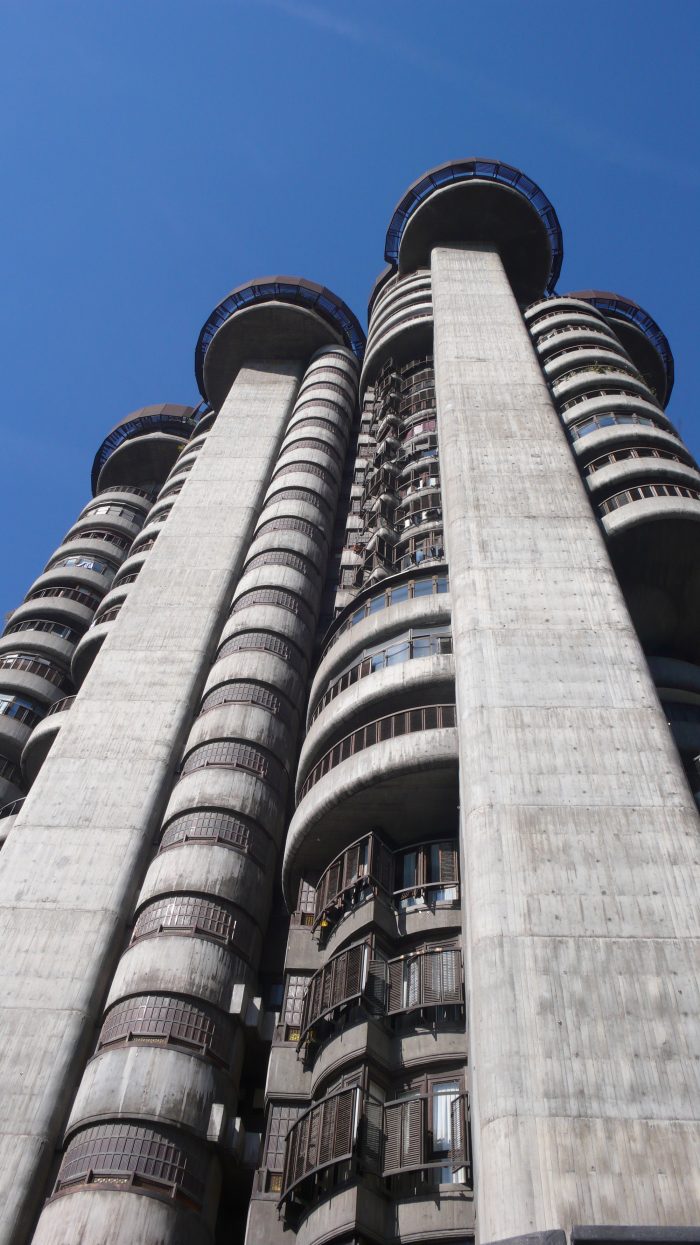
The Torre Blancas is an architectural icon of the Spanish Organicism movement. Designed by Francisco Javier Sáenz de Oiza and completed in 1969, this exposed concrete tower rises 71 meters above the Madrid skyline. It also stands as one the most complicated and innovative reinforced concrete structures of the era, absent of the typical rectilinear qualities associated with cast-in-place concrete. More details after the break.
受John Huarte的委托,该建筑原计划是两座建筑中的一座。Sáenz de Oiza和他的团队,包括Juan Daniel Fullando和Rafael Moneo,开始设计一座打破传统住宅建筑的塔楼。
Commissioned by John Huarte, the building was originally slated to be one of two constructed. Sáenz de Oiza and his team, which included Juan Daniel Fullando and Rafael Moneo set about to design a tower that would break the typical conventions of residential architecture.
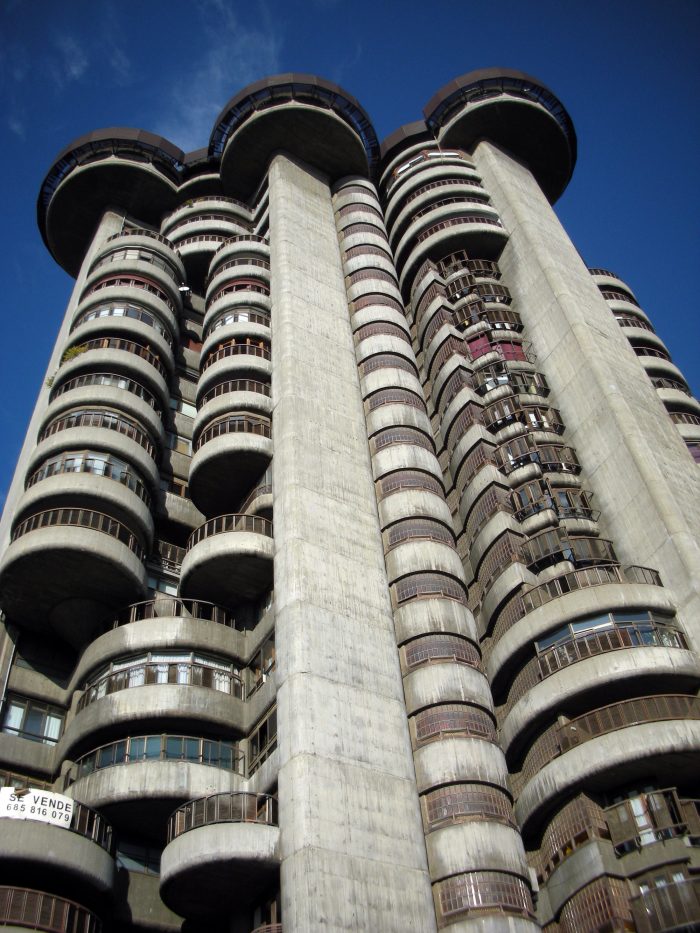
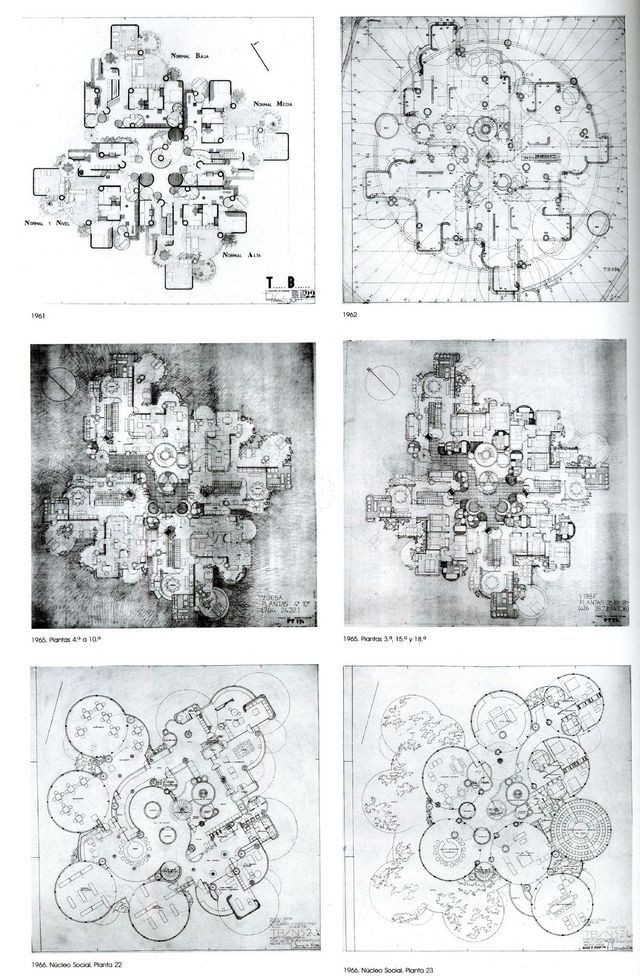
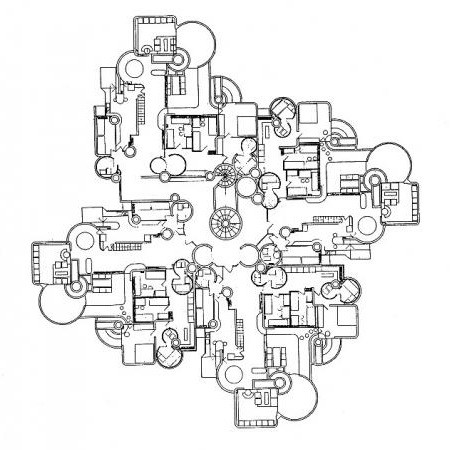
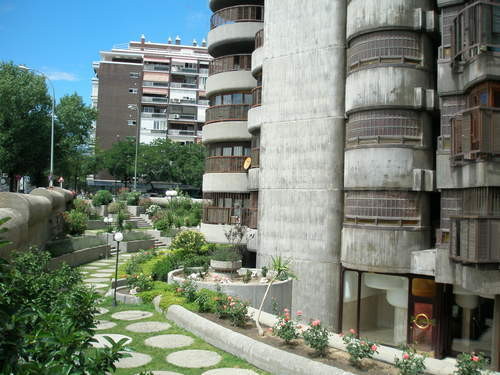
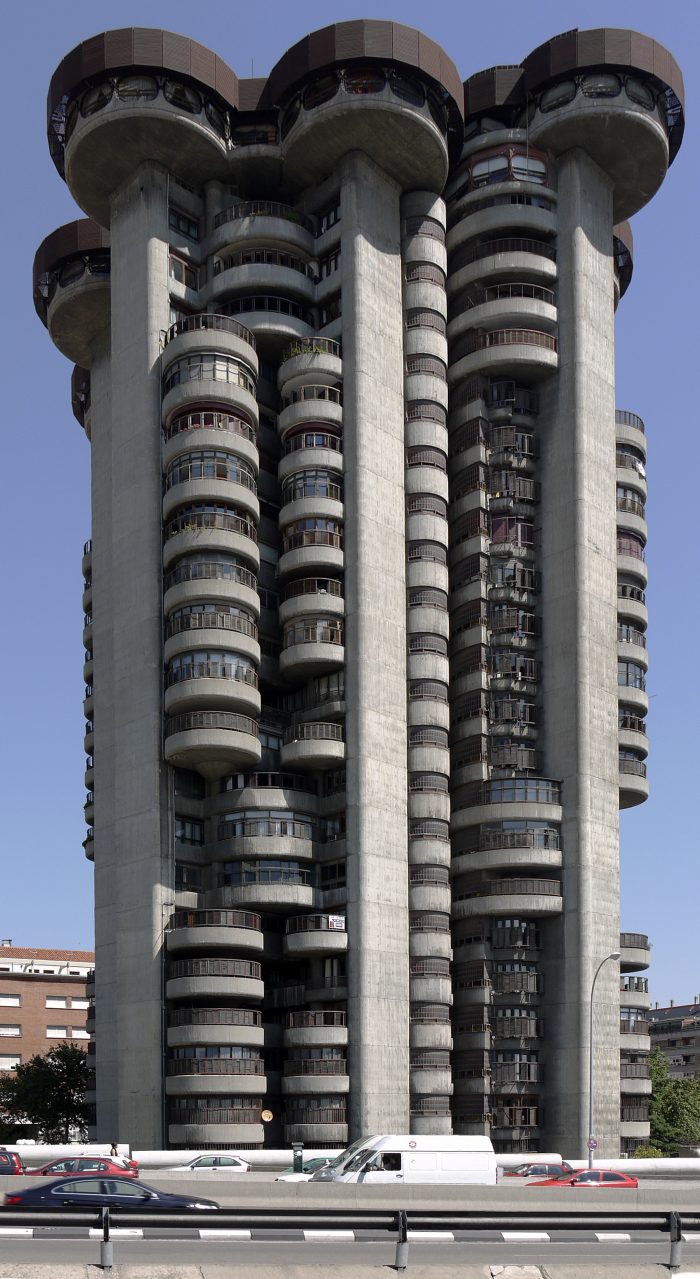
在欧洲众多的布鲁特主义塔楼拔地而起的时代,这座塔楼从不同的角度接近了高层建筑的方程式。基本的体量是通过圆柱形来构思的,而这些圆柱形又通过较小的圆形的叠加而进一步转化。虽然一些室内空间表现出最小的线性特质,但它们通过使用圆形和曲线的次要空间被打破和改变。这种语言贯彻到阳台上,阳台的形式是半圆形的,用于柔化主要圆形体量的尖角交汇处。
Completed in an era where numerous Brutalist towers were rising up across Europe, this tower approached the high-rise equation from a different angle. The basic volumes are conceived via cylindrical forms that are further transformed through the superimposition of smaller circular forms. While some of the interior spaces exhibit minimal linear qualities, they are broken up and transformed through the use circular and curvilinear secondary spaces. This language carries out to the balconies, which are semicircular in form and serve to soften the sharp angled intersections of the primary circular volumes.
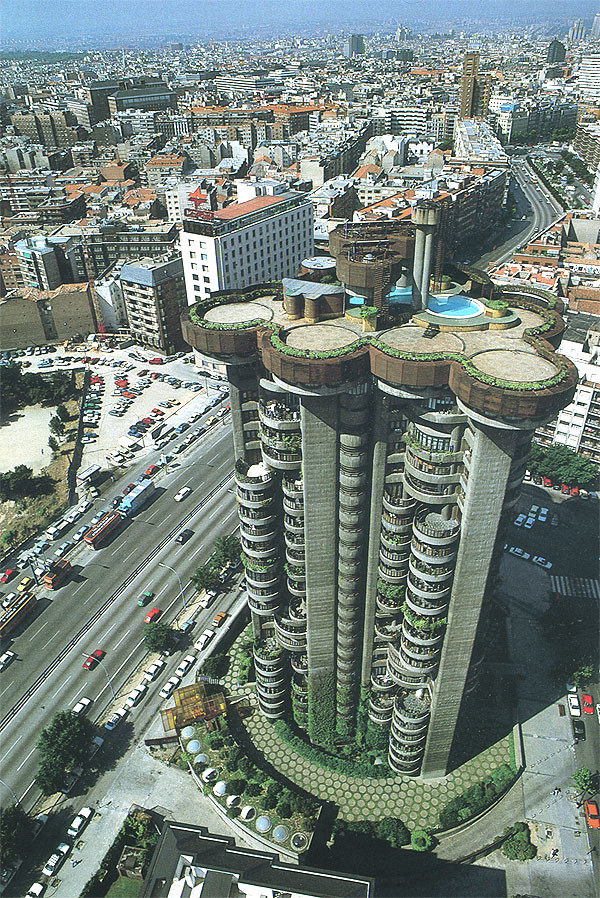
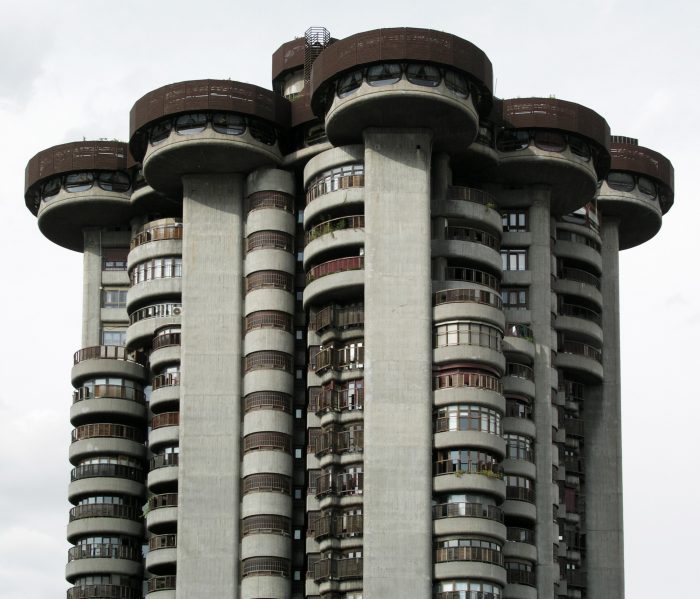
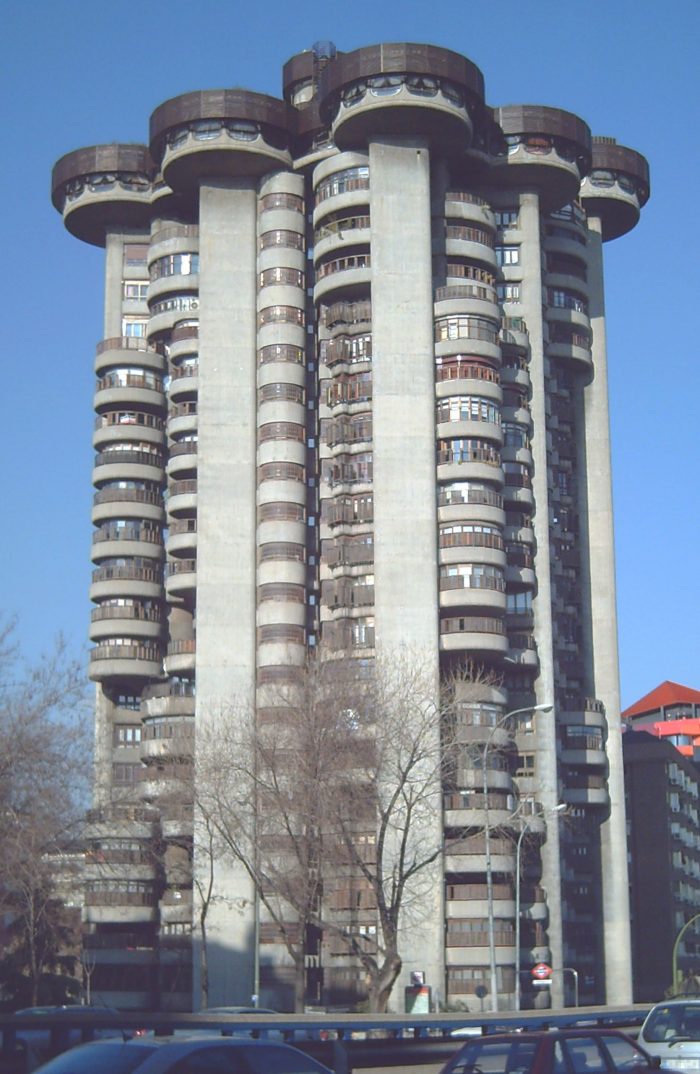
阳台在上升的过程中经常左右摇摆,创造了一种有趣的不对称节奏的体量和阴影游戏。竖直圆柱体的主要结构类型在顶部被夸大,在那里,12个形式扩大到直径10米,并悬垂在主立面之外。这些体量容纳了塔楼的公共部分,包括一个屋顶游泳池。
The balconies often jog from side to side as they rise, creating an interesting asymmetrical rhythm of massing and shadow play. The main structural typology of the vertical cylinders is exaggerated at the top, where the twelve forms expand to 10 meters in diameter and cantilever out past the main façade. These volumes house the communal portion of the tower, including a rooftop pool.
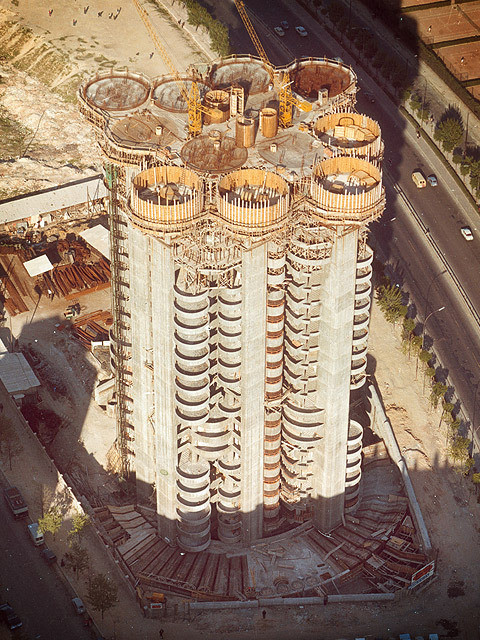
与典型的柱梁式建筑方法不同,Sáenz de Oiza选择以一种类似树木有机生长模式的方式来突出混凝土固有的强度和美感。外部承重墙通过外部阳台横向稳定,让人联想到挂在树枝上的树叶。
Departing from the typical column and beam construction method, Sáenz de Oiza chose to highlight the strength and beauty inherent within concrete in a manner that resembles the organic growth patterns of trees. Exterior load bearing walls are laterally stabilized through the exterior balconies, which are reminiscent of leaves hanging off branches.
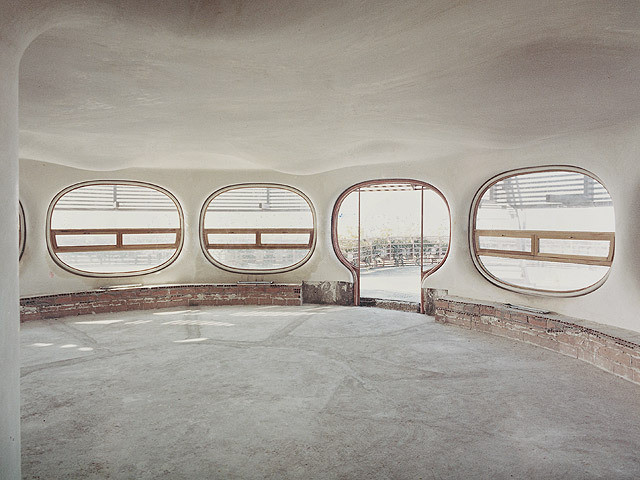
位于塔楼中部的一个圆形混凝土体,包含主要的螺旋楼梯,作为楼板的 "树干",连接外部和内部。结构的内在有机性贯穿于塔楼的各个方面,甚至连墙体也从地板到天花板无缝地流动着。
A circular concrete volume located within the middle of the tower that contains the main spiraling staircase functions as the ‘tree trunk’ for the floor slabs to connect from exterior to interior. The intrinsic organic nature of the structure is carried throughout all aspects of the tower, even the walls flow seamlessly from floor to ceiling.
外墙混凝土的粗糙感通过阳台上的木质花丝屏风的使用而得到缓和,这些屏风相对于外墙面的位置有所不同。塔楼顶部的悬臂式体量以木质窗格为特色,紧靠椭圆窗的上方。进一步柔化外部的是藤蔓和植物,它们已经在底部生根,并开始爬上外墙。
The rawness of the exterior concrete is moderated by the use of wooden filigree screens on the balconies that vary in position relative to the face of the exterior façade. The cantilevered volumes on the top of the tower feature wooden scrims located immediately above elliptical windows. Further softening the exterior are vines and plants that have taken root at the base and begun to climb up the facade.
地面广场延续了曲线型的类型,采用圆形铺路石和挡土墙,围绕建筑基座上升和下沉。地面和墙面的内部处理大量使用了白色大理石,与公共空间中泛滥的雕塑元素完美融合。
The ground plane plaza continues the curvilinear typology with round paving stones and retaining walls that rise and dip around the building base. White marble is used extensively for the interior treatment of the floors and walls, which merge seamlessly with the sculptural elements that proliferate the public spaces.
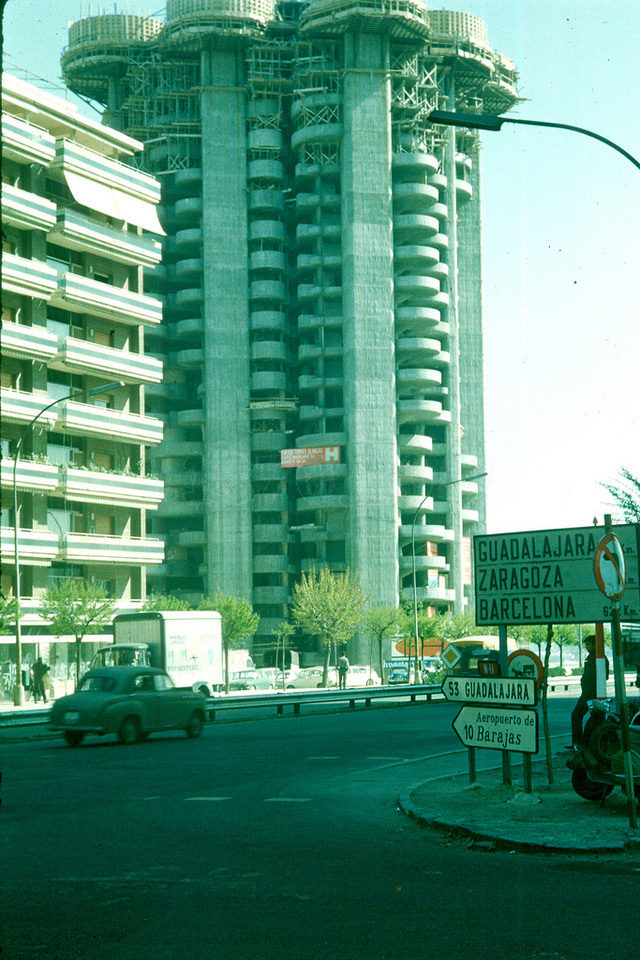
Torre Blancas仍然是当时现代运动的标志性建筑,并在1974年获得欧洲卓越奖。其波浪形的外观美学与内部一样,即使经历了40多年的风化,仍然令人印象深刻。Sáenz de Oiza创造和定义空间的方法使设计真正植根于有机建筑的基础。
The Torre Blancas remains an iconic landmark to the ingenuity of the modern movement of its era, and was awarded the European Excellence Award in 1974. Its undulating exterior aesthetics remain as equally impressive as the interior, even after more than 40 years of weathering. Sáenz de Oiza’s approach to creating and defining spaces resulted in a design that truly has its roots in the foundation of organic architecture.
建筑师:Francisco Javier Sáenz de Oiza
年份:1969年
城市: 马德里
国家:西班牙
Architects: Francisco Javier Sáenz de Oiza
Year: 1969
City: MADRID
Country: Spain